
Visa and OpenAI AI Payments: Why AI Spending With Your Credit Card Could Get Messy
Jun 26, 2026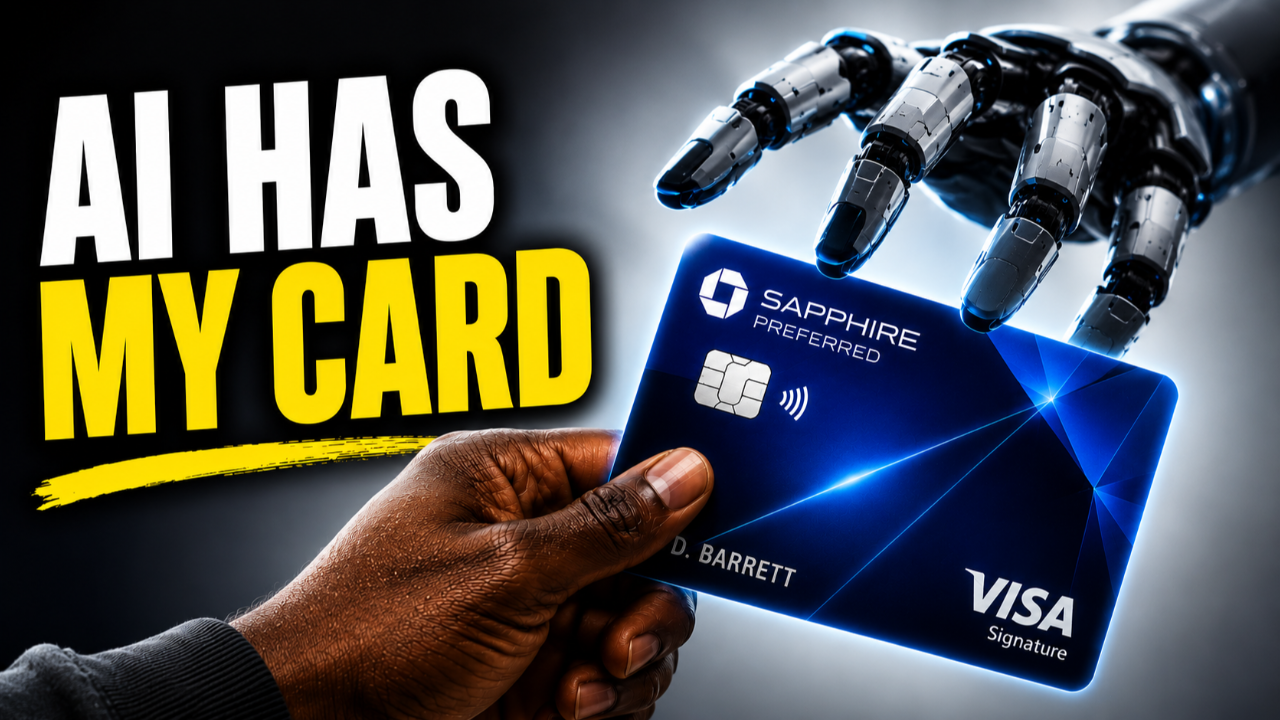
Visa just announced a partnership with OpenAI that could eventually allow AI agents to make purchases using your credit card.
And honestly, I do not think enough people are asking the obvious question.
Why would I want AI spending my money?
Because once AI agents start shopping and paying on your behalf, the old fraud question gets a lot more complicated.
Normally, when you see a charge you do not recognize, the question is simple:
Did you make the purchase?
Or did someone else?
But what happens when you authorized the AI, and then the AI authorized the purchase?
That is where this whole thing starts getting uncomfortable.
Quick Answer
Visa and OpenAI are working on AI-powered commerce where AI agents may eventually help users shop and complete payments through Visa’s payment network. The upside is convenience, but the risk is that AI spending could blur the line between purchases you personally made and purchases your AI agent made for you. The biggest concern is not only fraud. It is also AI making confident mistakes with your real money.
This Is Bigger Than a New Checkout Feature
This is not just a new payment button.
Visa is helping build the infrastructure that could allow software to spend money on your behalf.
That is a big shift.
Today, you may manually approve every purchase.
Tomorrow, you may approve spending limits.
After that, the AI may handle purchases inside those limits with less day-to-day involvement from you.
And that is where things start getting uncomfortable.
Because convenience and control usually move in opposite directions.
The more convenient something becomes, the less involved you are.
And when the thing becoming more convenient is tied to your credit card, that deserves real attention.
We Have Seen This Pattern Before
This is not the first time payments have become easier.
First, we stored card numbers online.
Then we saved cards inside apps.
Then digital wallets became normal.
Then we started tapping phones and watches to pay.
Every step felt a little strange at first.
Then people got used to it.
AI agent payments feel like the next step in that progression.
But this time, the jump is much bigger.
Because you are not just storing a payment method.
You are potentially giving software permission to act for you.
That is different.
A wallet stores your card.
An AI agent can make decisions.
That is the line people need to understand.
The Question Nobody Can Fully Answer Yet
Let’s say you tell an AI:
“Find me the best laptop under $1,000.”
The AI searches.
It compares options.
It picks one.
It places the order.
Then the laptop shows up at your door.
And it is trash.
Wrong model.
Wrong seller.
Wrong specs.
Bad return policy.
Now who made the mistake?
Was it the merchant?
Was it the AI?
Was it you?
That question is easy to laugh at until real money is involved.
Now imagine the same situation with:
-
Travel bookings
-
Subscriptions
-
Software purchases
-
Event tickets
-
Business expenses
-
Hotel reservations
-
Inventory orders
-
Contractor tools
-
Monthly services
Suddenly the answer is not so clear.
And neither is the dispute.
The Old Fraud Question Gets More Complicated
For decades, credit card fraud has mostly revolved around one basic question:
Did you authorize the purchase?
If the answer was no, you had a clearer fraud path.
But AI agent payments create a new gray area.
What happens when you authorized the AI agent, but you disagree with what the AI did?
That may not look like traditional fraud.
It may look like an authorized purchase that went wrong.
And that is the messy part.
Because the bank, payment network, merchant, AI platform, and consumer may all be looking at the same charge from different angles.
The consumer may say:
“I did not buy this.”
The AI platform may say:
“The user gave permission.”
The merchant may say:
“We received a valid payment.”
The bank may say:
“The transaction was authenticated.”
That is where the line between “I bought this” and “the AI bought this” starts getting blurry.
AI Does Not Need to Be Hacked to Cost You Money
A lot of people hear a story like this and immediately think about hackers.
That is a real concern.
But it is not the only concern.
What worries me just as much is ordinary AI mistakes.
Because AI makes mistakes all the time.
Wrong information.
Wrong links.
Wrong assumptions.
Wrong recommendations.
Wrong interpretation of instructions.
Now imagine those mistakes connected to your bank account or credit card.
That is the scary part.
The AI does not have to be hacked to cause damage.
It just has to be confidently wrong.
An AI agent could believe it is helping you while doing exactly the wrong thing.
That is much harder to detect than obvious fraud.
Spending Limits Help, But They Do Not Solve Everything
One of the obvious safeguards is spending limits.
And yes, spending limits matter.
If AI agent payments become common, I would want strict limits from day one.
But spending limits do not solve every problem.
A $500 mistake is still a mistake.
A $1,000 mistake is still a mistake.
A recurring subscription the AI signs up for could keep charging long after the original decision.
A bad business purchase could create operational problems.
A wrong travel booking could ruin a trip.
So yes, spending limits are important.
But they are not enough by themselves.
The system also needs clear controls, alerts, approval settings, merchant restrictions, and dispute rules.
Small Business Owners Should Pay Attention Too
Consumers are one side of this.
Business owners are another.
Mastercard has already been building business-side agentic payment systems.
The idea is that AI agents could eventually help businesses handle purchases, subscriptions, services, software, and other transactions automatically.
And if you run a business, you already know how messy expenses can get.
People forget subscriptions.
Software costs creep up.
Free trials turn into paid plans.
Employees use the wrong card.
Old tools keep billing.
Now imagine adding AI-driven purchasing on top of that.
Could it save time?
Absolutely.
Could it create new headaches?
Absolutely.
Because one bad purchasing decision repeated automatically can cost serious money.
That is especially true if AI agents start managing recurring expenses, software renewals, vendor purchases, travel, or inventory.
Automation is powerful.
But automated spending needs oversight.
The Business Risk Is Not Just One Bad Purchase
For business owners, the risk is not only that an AI buys one wrong thing.
The bigger risk is that the AI builds a pattern.
Wrong subscription.
Wrong vendor.
Wrong renewal.
Wrong software tier.
Wrong travel policy.
Wrong expense category.
Wrong reorder quantity.
And if no human is watching closely, those mistakes can repeat.
That is how a small issue becomes a cash-flow problem.
This is why business owners should be extra careful before giving AI purchasing authority.
Especially if the AI is connected to a high-limit business credit card, corporate card, or operating account.
What I Would Do If AI Card Payments Become Common
If this becomes widely available, I would not rush to connect my highest-limit credit card.
I would not connect the card that handles all my important bills.
And I definitely would not give an AI agent unrestricted purchasing authority.
At least not at first.
I would want:
-
Low spending limits
-
Real-time alerts
-
Manual approvals
-
Merchant restrictions
-
Category restrictions
-
Easy card lock controls
-
Clear dispute rules
-
Separate cards for AI purchases
-
No access to my main bill-pay card
-
No unrestricted recurring subscription authority
That is the only way I would even consider testing this early.
Not because I think the technology is evil.
But because mistakes are inevitable.
And once mistakes involve your money, they become a lot more serious.
Use a Separate Card for AI Purchases
If AI purchasing becomes normal, one of the smartest moves may be using a separate card.
Not your main credit card.
Not your highest-limit card.
Not the card tied to your mortgage, utilities, insurance, or important recurring bills.
A separate card creates a cleaner line.
If something goes wrong, the damage is easier to isolate.
You can monitor the charges more clearly.
You can lock or replace the card without disrupting your whole financial life.
And if the AI agent starts making purchases you do not like, you are not untangling your entire wallet.
That may become one of the most important rules for AI-powered spending.
American Express Is Already Thinking About Protection
American Express is also working on agentic commerce tools.
And what stands out to me is that Amex is already talking about things like payment credentials, intent intelligence, cart context, and support for disputes.
That tells me the industry already knows this is not simple.
Because if AI payments were smooth and obvious, companies would not need to build so much infrastructure around intent, authentication, and disputes.
That is the part people should notice.
The payment companies know the future of AI spending depends on trust.
And trust requires controls.
My Take on AI Agent Payments
I think AI purchasing is coming whether people want it or not.
The big tech companies are moving in that direction.
The payment networks are moving in that direction.
Merchants will likely move in that direction too.
And consumers may adopt it faster than they expect because convenience is powerful.
But I also think we are entering a world where the line between “I bought this” and “the AI bought this” starts getting blurry.
That is not a small change.
That is a fundamental change in how spending works.
Visa may frame this as a smarter checkout experience.
And maybe they are not completely wrong.
But from where I sit, this also looks like the beginning of a future where software does not just help you spend money.
It helps decide how your money gets spent.
And I am not sure most people are ready for that.
Frequently Asked Questions
Can AI agents really make purchases with your credit card?
Visa, Mastercard, American Express, and other payment companies are building infrastructure for agentic commerce, where verified AI agents may eventually help users shop and complete payments. The exact experience will depend on the platform, card issuer, merchant, and user permissions.
Does AI need to be hacked to make a bad purchase?
No. AI can create problems without being hacked. The bigger everyday risk may be the AI misunderstanding instructions, choosing the wrong product, picking the wrong seller, or making a confident but bad recommendation.
Who is responsible if an AI buys the wrong item?
That is one of the biggest unanswered questions. If you gave the AI permission to act, but the AI made a bad purchasing decision, the dispute may be more complicated than traditional fraud.
Should I connect my main credit card to an AI shopping agent?
I would be cautious. If AI purchasing becomes available, I would prefer using a separate card with low limits, real-time alerts, manual approvals, and merchant or category restrictions.
Could AI agent payments help small businesses?
Yes. AI agents could eventually help small businesses manage purchases, subscriptions, services, software, travel, and vendor payments. But business owners need strong controls because automated spending mistakes can become expensive quickly.
What controls should AI payments have?
At minimum, I would want spending limits, real-time alerts, manual approvals, merchant restrictions, category restrictions, clear dispute rules, and the ability to instantly lock or remove payment access.
Final Thoughts
AI agent payments are not just another checkout feature.
They represent a bigger shift in who makes spending decisions.
For years, payment innovation has been about making checkout faster.
Now it is starting to move toward letting software act on your behalf.
That may be convenient.
But convenience is not the same thing as control.
And when your credit card is involved, control matters.
So if AI-powered spending becomes common, I would move slowly.
Use low limits.
Use alerts.
Use manual approvals.
Use a separate card.
And do not assume the AI will always make the same decision you would have made yourself.
Because the future of payments may not just be tap-to-pay.
It may be ask-the-AI-to-pay.
And that is a much bigger leap than people realize.