
U.S. Bank Credit Card Approval Secrets From a Former Supervisor
Jun 30, 2026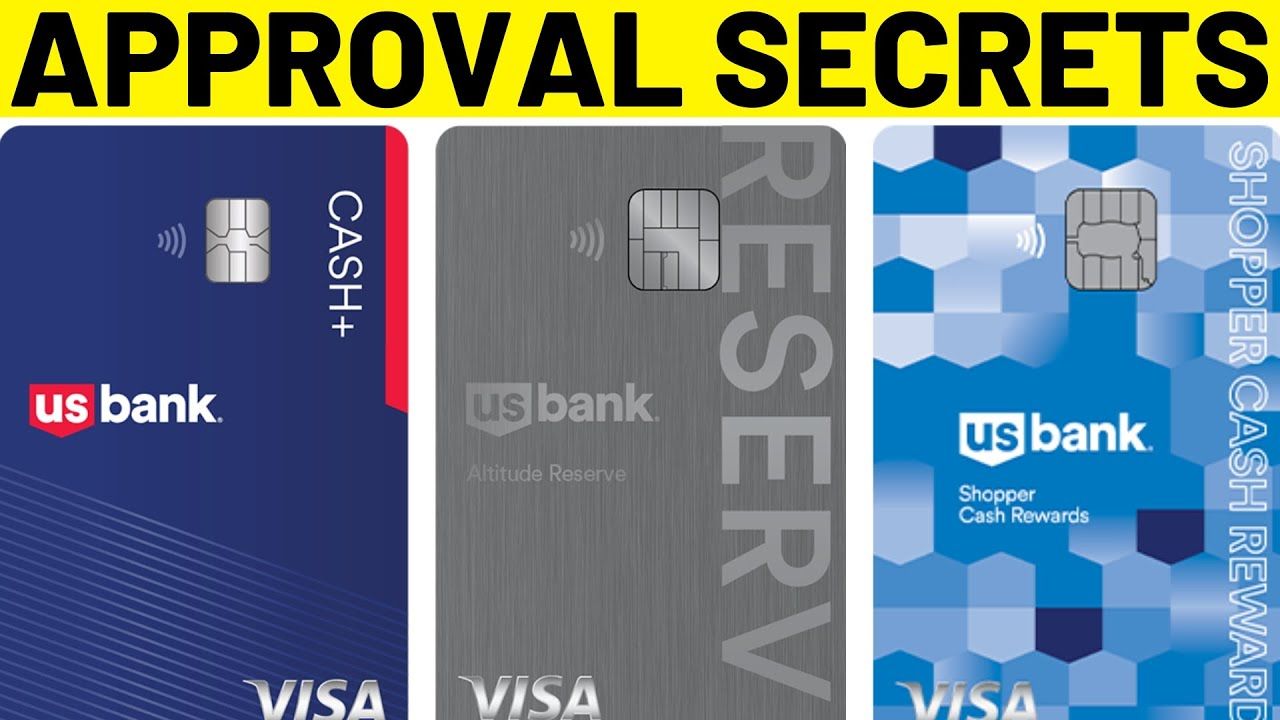
A former U.S. Bank Solutions Supervisor shared a ton of behind-the-scenes details about how U.S. Bank handles credit card approvals, credit limits, account reviews, reporting, and customer relationships.
And some of it is exactly what I expected.
U.S. Bank is relationship-heavy.
They can be inquiry-sensitive.
They care about your overall profile, not just your score.
But a few details were surprising.
According to this former employee, U.S. Bank has a hidden customer relationship score, may give tiny starting limits to people with high FICO scores if they have no relationship, and may automatically decline certain credit limit increase requests if your FICO score is under 700.
That is the kind of stuff you need to know before applying.
Because with U.S. Bank, a good score helps.
But a good score by itself may not be enough.
Quick Answer
U.S. Bank can be tough on credit card approvals because it appears to care heavily about existing banking relationships, recent inquiries, credit score, behavior scores, and internal account history. According to a former U.S. Bank Solutions Supervisor, people with high FICO scores can still receive low starting limits if they have no relationship with the bank, while customers with checking, savings, or other accounts may have better odds. These are former-employee data points, not official published underwriting rules, so results may vary by card, state, bureau, score model, relationship, and manual review.
Disclosure: This article may contain affiliate links, which means I may earn compensation if you click or apply through certain links.
Helpful resource: If you want to compare U.S. Bank and other business credit cards with 0% APR offers, my 0% APR Business Credit Card Database can help you research cards, intro APR periods, bureau pulls, and approval data points before applying.
U.S. Bank Is a Relationship Bank
The biggest theme from the former supervisor was simple:
U.S. Bank likes relationships.
That does not mean you cannot get approved without one.
But it does mean a checking account, savings account, secured card, prior card, mortgage, loan, or long account history may help your application look stronger.
The former supervisor said they would not recommend a U.S. Bank card if you have no existing accounts with the bank.
That is strong.
They even said they had seen people with 820 FICO scores get approved with only a $500 starting limit simply because they had no U.S. Bank relationship.
That is painful.
Imagine walking in with an 820 score and getting starter-card treatment.
That is U.S. Bank in a nutshell.
Why a High FICO Score May Not Be Enough
A high FICO score is important.
But it is not the whole approval.
U.S. Bank may also care about:
-
Existing relationship
-
Recent inquiries
-
Number of new accounts
-
Income
-
Internal behavior score
-
Deposit relationship
-
Payment history
-
Credit depth
-
Product selected
-
Manual underwriting review
That is why two people with similar scores can get very different outcomes.
One person with no relationship may get $500.
Another person with a savings account, checking account, and clean report may get thousands.
The score opens the door.
The relationship may decide how wide the door opens.
The $300 Savings Account Data Point
One of the most interesting data points involved a small savings account.
The former supervisor said they believed their own Cash+ card came back with a $5,500 limit instead of a $500 starting limit because they had about $300 parked in a U.S. Bank savings account before applying.
They had only held the savings account for around two weeks.
That does not mean $300 guarantees a better limit.
It does not.
But it does show how even a small relationship may help.
With U.S. Bank, going in completely cold may be the wrong move.
A simple deposit account could make the application look less random.
What Score Do You Need for a U.S. Bank Credit Card?
The former supervisor said you do not need a 700 FICO score to be approved for every U.S. Bank card.
They mentioned seeing approvals below that range, including a reported approval around 580 with extensive credit history.
But that does not mean low scores are easy.
Their practical recommendation for a card like Cash+ was at least around 600 FICO, with few inquiries and a decent profile.
For premium products, the recommended score was much higher.
For Altitude Reserve, the former supervisor said they had not seen anyone with the product under 720, so they recommended being over 720 on TransUnion.
That point needs review because the Altitude Reserve has reportedly been discontinued for new applications.
The 700 FICO Threshold
This was one of the most useful details.
According to the former supervisor, U.S. Bank may use a 700 FICO threshold for certain account actions.
They said a 700 FICO may matter for:
-
Fee reversals
-
Promotional APR offers
-
Many credit limit increase requests
-
Automatic credit limit increase decisions
They also said the system may automatically decline a credit limit increase if you are under 700 or if you requested one within the last 6 months.
That is important.
If you are sitting at 680 and wondering why U.S. Bank will not increase your limit, this may explain it.
Your account may not even be getting a friendly review from the system.
U.S. Bank Can Be Very Inquiry-Sensitive
U.S. Bank has a reputation for being sensitive to inquiries.
The former supervisor confirmed that reputation.
They said U.S. Bank will not touch you if you have several inquiries.
That may sound dramatic, but it lines up with a lot of data points.
U.S. Bank tends to prefer clean reports.
If you are planning an application spree, U.S. Bank should probably be one of the first banks you apply with.
Not the last.
Because once your report is full of hard pulls, U.S. Bank may see you as risky or credit-hungry.
How Many Inquiries Are Too Many?
There is no exact number.
The former supervisor did not give a hard rule.
But they said multiple inquiries are taken into consideration and recommended making U.S. Bank the first card you apply for within a 6-month window.
That is the safe way to think about it.
If you want a U.S. Bank card, do not apply after opening three other cards.
Clean first.
U.S. Bank second.
Everything else after.
Are U.S. Bank Pre-Approvals Reliable?
The former supervisor was not impressed with U.S. Bank’s prequalification tool.
They said they would not rely on it as a strong approval indicator.
That does not mean the tool is useless.
But it means you should not treat a prequalification result like a guaranteed approval.
Some issuers have strong pre-approval tools.
Some do not.
With U.S. Bank, based on this data point, the relationship and full underwriting review may matter more than a simple online prequalification screen.
What to Do If You Get a Low Starting Limit
If U.S. Bank approves you with a low starting limit, you may not be stuck forever.
The former supervisor said you can speak with underwriting and ask for a manual review for a higher credit limit.
That is important.
Some people get approved, see a $500 limit, get mad, and close the card immediately.
I understand the frustration.
But closing immediately may waste the hard pull.
A better move may be to call underwriting, ask for manual review, and see whether they can reconsider the starting limit.
No guarantee.
But it may be worth trying before you throw the card away.
U.S. Bank Credit Limit Increase Rules
Credit limit increases are where U.S. Bank gets tricky.
According to the former supervisor, U.S. Bank often processes a hard pull for requested credit limit increases.
They said U.S. Bank processes a hard pull for pretty much anything requested.
That is a major warning.
If you are used to soft-pull credit limit increases from other banks, do not assume U.S. Bank works the same way.
Before requesting a limit increase, ask clearly whether it may result in a hard inquiry.
And assume it might.
How to Request a U.S. Bank Credit Limit Increase
The former supervisor shared a few useful details.
They said:
-
Requests over $4,500 will automatically be reviewed
-
You will never be approved for more than you request
-
If you are under 700 FICO, the request may need review
-
If you requested an increase within 6 months, the system may decline
-
If you are over 700 and the request is reasonable, the system may approve or counteroffer
That is the playbook.
Do not request too little if you actually need more.
But do not request something wild either.
If the request is too big, expect review.
Should You Ask High or Low?
This is the problem.
If you ask too low, U.S. Bank will not give more than you asked for.
If you ask too high, you may trigger review or denial.
So you need to be strategic.
A request around $4,500 or less may have a better shot at being handled more smoothly, based on the former supervisor’s comments.
But if you genuinely need a larger increase and your income supports it, you may still request more and accept that it may go to review.
The key is knowing what you are triggering.
The Six-Month Rule
The former supervisor repeatedly mentioned 6 months as a good rule of thumb with U.S. Bank.
That applies to things like:
-
Waiting between credit limit increase requests
-
Waiting before applying for another card
-
Giving account changes time to season
-
Avoiding too many recent inquiries
U.S. Bank seems to like patience.
If you are impatient, this may not be your favorite bank.
But if you play the long game, the relationship may improve over time.
U.S. Bank Balance Reporting
The former supervisor said U.S. Bank reports the current balance owed every 30 days, usually between the 30th and the 5th of the month.
They also said February may report around the 27th or 28th.
This is important for utilization strategy.
Many credit card issuers report your statement balance.
U.S. Bank has long had data points suggesting it may report balances based on the end-of-month balance instead.
That means your reported utilization may not match what you expected if you only pay before the statement closes.
With U.S. Bank, you may want to pay down before the end of the month.
Should You Change Your Due Date?
The former supervisor said it may make sense to adjust your due date later in the month or pay the balance down before reporting.
Due dates can be adjusted, but it may take a full billing cycle to take effect.
That matters if you are trying to control reported utilization.
If U.S. Bank reports near month-end, you do not want a high balance sitting there on the last business day of the month.
Pay it down before that.
Do not wait until the statement cuts if your goal is a clean credit report.
Does U.S. Bank Use FICO 9?
The former supervisor said they heard from a current Solutions rep that U.S. Bank uses the FICO 9 scoring model for credit decisions on new credit card accounts.
This needs review.
Score models can vary by product, time, bureau, and internal system.
But it is an important data point.
FICO 9 treats some information differently than older models.
So a person’s FICO 8 and FICO 9 may not be identical.
Before applying, check as much as you can, but understand that the score you see may not be the exact score U.S. Bank uses.
Do U.S. Bank Business Cards Report to Business Credit?
The former supervisor said U.S. Bank pulls information from Dun & Bradstreet but does not report business credit card accounts to business credit bureaus.
That is a big claim.
If true, it matters for business owners who are trying to build business credit.
Some business cards are useful for spending but do not build the business credit reports the way people expect.
So if your goal is business credit building, verify reporting before applying.
Do not assume a business credit card reports to D&B, Experian Business, or Equifax Business just because it has the word “business” on it.
U.S. Bank Business Credit Cards and 0% APR
U.S. Bank is also known for strong business credit cards with 0% APR offers.
The newer U.S. Bank Business Shield Visa is especially interesting because U.S. Bank announced a 0% introductory APR for up to 18 billing cycles when applying in branch and 12 billing cycles when applying digitally.
That is the kind of detail business owners need to know.
The same bank.
The same card.
But a different intro APR period depending on how you apply.
That is why application channel matters.
If you are applying for business funding through credit cards, do not just click the first online application you see.
Sometimes the branch path is better.
Product Changes With U.S. Bank
The former supervisor said a representative can usually see right away whether you are eligible for a product change.
That is useful.
If you have an older U.S. Bank product and want something like Cash+, calling cardmember service may be the best starting point.
But product changes depend on account eligibility.
You may need to wait for a semi-annual account review if no offers are available.
And do not assume annual fees will be waived.
The former supervisor said representatives were generally not supposed to waive annual fees under normal circumstances.
Annual Fee Waivers and FlexPoints
For FlexPerks-style products, the former supervisor said reps could sometimes redeem 3,500 FlexPoints toward an annual fee.
But completely waiving the fee was not common.
This is useful because many people call and ask for annual fee waivers without understanding what reps can actually do.
Sometimes a points redemption or retention-style option is more realistic than a full waiver.
But this is old product-specific information and needs review before publishing in a current card guide.
U.S. Bank and Military Annual Fees
The former supervisor said another department handled military accounts, but they were “99% positive” annual fees were not waived for active duty.
This absolutely needs review.
Military benefit rules can be complicated, and banks may have policies tied to SCRA or MLA requirements.
Do not rely on an old employee comment for current military annual fee treatment.
If you are active duty, contact U.S. Bank directly and ask about your specific account and legal protections.
Joint Accounts and Removing Co-Applicants
The former supervisor said U.S. Bank generally will not remove an applicant or co-applicant from an account unless there is a divorce decree or similar legal documentation.
That is important for people who opened joint accounts.
If your fiancé, spouse, or co-applicant is on the card, removing them may not be simple.
The former supervisor said the best option may sometimes be closing and reapplying.
But that can create new inquiries, account-age changes, and approval risk.
Do not do that casually.
Call U.S. Bank first.
U.S. Bank Blacklist Risk After Settlement or Bankruptcy
The former supervisor said U.S. Bank has its own internal collections team and that settling an account for less than the full balance can make future approvals harder.
They also said including U.S. Bank in bankruptcy can lead to being blacklisted.
That is not shocking.
Many banks have long memories when they lose money.
But the details matter.
A settlement does not always mean permanent denial.
Bankruptcy does not always mean never again.
Still, if you burned U.S. Bank in the past, expect a harder road back.
Internal Credit Recovery and Reporting Disputes
The former supervisor said U.S. Bank has an internal credit recovery department where disputes can be mailed or faxed.
They also said accurate negative reporting is unlikely to be changed.
That is important.
A bank is generally not required to remove accurate negative reporting just because you ask nicely.
If the reporting is wrong, dispute it.
If it is accurate, removal is much harder.
Do not pay someone who promises guaranteed deletion of accurate reporting.
The Hidden Customer Relationship Score
This was one of the most interesting parts.
The former supervisor said U.S. Bank definitely has a customer relationship score.
They said underneath the FICO score in the system, there is a “behavior” score for the specific account.
Frontline reps are not trained on exactly how it is calculated.
But the existence of a behavior score explains a lot.
U.S. Bank may not only ask:
“What is your FICO score?”
It may also ask:
“How do you behave with us?”
That can include usage, payments, account age, balances, and relationship history.
Account Inactivity Can Lead to Limit Cuts and Closure
The former supervisor said U.S. Bank may close inactive accounts after around one year to one and a half years.
They also said U.S. Bank may first decrease the credit limit and then close the account completely.
That is a major warning.
Using one U.S. Bank card does not protect your other U.S. Bank cards.
The behavior score may be account-specific.
So if you have three U.S. Bank cards and only use one, the other two may still be at risk.
Put small recurring charges on cards you want to keep open.
Then pay them in full.
Can You Reopen a Closed U.S. Bank Card?
The former supervisor said you may be able to request reopening within 60 days of closure.
But it may still result in a hard pull.
That matters.
Do not assume a closed account can be reopened easily.
If you get a closure notice, act quickly.
And if the card is important to your credit profile, avoid getting to that point in the first place.
U.S. Bank vs. Elan Financial Cards
The former supervisor said Elan accounts are held to a different standard than U.S. Bank products.
They also said Elan cards were prioritized in the call queue and that Edward Jones accounts serviced through Elan automatically had late payment fees waived.
That is a fascinating data point.
U.S. Bank owns Elan Financial Services, but that does not mean every U.S. Bank rule applies exactly the same way to Elan-issued cards.
If you have an Elan-backed card through a local bank, credit union, or brokerage relationship, the servicing rules may differ.
That can affect customer service, fees, and account treatment.
Secured Card Graduation
The former supervisor recommended keeping a secured U.S. Bank card open for at least one year with on-time payments before requesting an unsecured product.
For the Korean Air secured line, they suggested a minimum score around 680 before requesting graduation.
That is useful if you are rebuilding.
Do not rush secured card graduation too early.
Use the secured card.
Pay on time.
Let the relationship build.
Then ask when your profile actually supports it.
What This Means for Cash+ Applicants
The U.S. Bank Cash+ card is still a popular no-annual-fee cash back card because it lets you choose two 5% categories each quarter, up to the quarterly cap.
But based on these insider comments, Cash+ applicants should be strategic.
Before applying, consider:
-
Opening a small savings or checking relationship
-
Letting the account season
-
Keeping inquiries low
-
Paying utilization down
-
Avoiding recent app sprees
-
Checking your TransUnion report
-
Preparing for possible manual review
-
Calling underwriting if the limit is too low
Cash+ is not just about the score.
It is about the full relationship and risk picture.
What This Means for Premium U.S. Bank Cards
Premium U.S. Bank cards are a different game.
The former supervisor said they would want to see at least 720 for Altitude Reserve approval, based on their experience.
But the Altitude Reserve has reportedly been discontinued for new applications, so this section is more useful as a historical underwriting lesson than a current application guide.
The bigger point still stands:
Premium products require stronger profiles.
For higher-end U.S. Bank products, you should assume the bank wants:
-
Higher scores
-
Low inquiries
-
Strong income
-
Clean history
-
Existing relationship
-
Higher spend potential
Do not treat premium U.S. Bank cards like easy approvals.
What I Would Do Before Applying for U.S. Bank
If I were trying to maximize my odds with U.S. Bank, I would do this:
First, stop applying for other cards for several months.
Second, open a checking or savings account if it makes sense.
Third, park a small amount of money there and let it season.
Fourth, pay down utilization before month-end.
Fifth, make sure TransUnion is clean.
Sixth, apply for U.S. Bank before any other cards in an app strategy.
Seventh, call underwriting if the application goes pending or the limit comes back too low.
That is the cleanest approach.
Frequently Asked Questions
Is U.S. Bank hard to get approved for?
U.S. Bank can be harder than some issuers because it appears to care heavily about relationships, inquiries, recent accounts, and internal behavior. A high score helps, but it may not guarantee a high starting limit.
Does U.S. Bank care about existing relationships?
Yes, based on many data points and the former supervisor’s comments, existing deposit or credit relationships can help. Some applicants with high FICO scores have reportedly received tiny limits without a relationship.
What credit score do you need for U.S. Bank Cash+?
The former supervisor recommended at least around 600 FICO for Cash+, with few inquiries and a solid profile. Stronger scores and an existing U.S. Bank relationship may improve your odds and starting limit.
Does U.S. Bank do hard pulls for credit limit increases?
According to the former supervisor, U.S. Bank often uses hard pulls for requested credit limit increases. Always ask before requesting and assume a hard inquiry may happen.
When does U.S. Bank report credit card balances?
U.S. Bank has many data points showing it reports current balances around the end of the month or early the next month. If utilization matters, consider paying balances down before the last business day of the month.
Does U.S. Bank have an internal relationship score?
According to the former supervisor, U.S. Bank has a customer relationship or behavior score visible internally near the FICO score. Frontline reps may not know how it is calculated.
Conclusion
U.S. Bank is not a simple approval bank.
They care about more than your credit score.
They care about relationship.
They care about inquiries.
They care about behavior.
They care about account history.
And according to this former supervisor, they may use internal behavior scores that most customers never see.
That explains why someone with an 820 score can get a $500 limit while someone with a small savings account and a cleaner relationship may get a stronger approval.
So if you want a U.S. Bank card, do not apply randomly.
Build the relationship.
Keep inquiries low.
Pay utilization down before month-end.
Give the account time.
And call underwriting if the system gives you a weak result.
With U.S. Bank, patience matters.
The people who understand that usually have a much better shot than the people who just chase the card and hope.