
9 Things That Are a Complete Waste of Money in 2026
Jun 25, 2026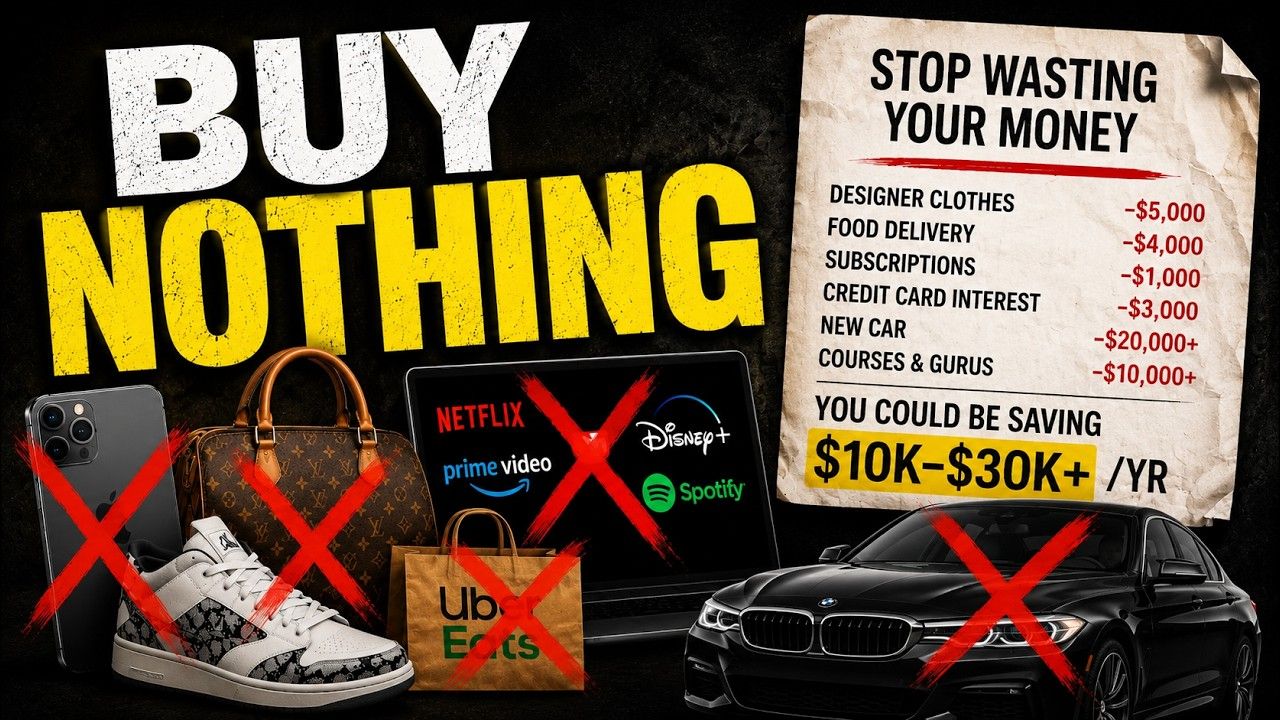
Some money mistakes do not feel dangerous while they are happening.
They feel normal.
A small upgrade.
A little reward.
A status symbol.
A subscription you forgot about.
A new phone you probably did not need.
But over time, these “small” decisions can start draining your bank account faster than your next paycheck can hit.
And the scary part is that most people do not realize how much money is leaking until they finally sit down and do the math.
Here are 9 things that are a complete waste of money in 2026.
Disclosure: This article may contain affiliate links, which means I may earn compensation if you click or apply through certain links.
Quick Answer
The biggest wastes of money in 2026 are usually not one-time purchases. They are repeated habits like paying credit card interest, upgrading tech too often, forgetting about subscriptions, overusing food delivery, buying status items, and financing things that do not build wealth. The goal is not to stop enjoying life. The goal is to stop letting emotional spending quietly steal your future options.
1. Credit Card Interest
Credit card interest might be one of the biggest wealth killers on this list.
Because interest compounds fast.
Especially when people only make minimum payments.
That is why some people feel trapped financially even though they make decent money. The balance barely moves, but the interest keeps stacking up in the background every single month.
And this is where people get confused about credit card rewards.
Because if you are carrying balances month after month, those points and cashback rewards can become meaningless real fast.
The interest wipes out the value.
Think about the math.
Most cashback cards give people around 2% back.
Some cards offer 5% in certain categories.
Some newer cards may try to push that number higher.
But if you are paying 25% to 30% or more in credit card interest, that math gets ugly fast.
Getting excited about earning 2% while paying 30% makes no sense.
Credit cards can be amazing tools if you control them.
But they become financial quicksand if they start controlling you.
Estimated savings potential: around $3,000 per year
Helpful resource: Before applying for another card blindly, it may be worth checking my Free Credit Card & Loan Pre-Approval Master List so you can find cards that may let you check your odds before taking a hard pull: https://courses.calbartoncashback.com/pre-approval-master-list-Blog
2. Expensive Designer Clothes
I believe in function and performance over brand name.
Always have.
And social media has a lot of people backwards right now.
People are spending thousands trying to look wealthy before they actually become wealthy.
That could mean:
-
$1,200 shoes
-
$800 belts
-
Luxury logos everywhere
-
Watches bought mostly for status
-
Designer items purchased to impress strangers
And I get it.
Branding is powerful.
Status psychology is powerful.
People do not just buy products anymore.
They buy identity.
They buy the feeling of being associated with wealth, success, exclusivity, or a certain lifestyle.
But if you are carrying credit card debt, stressing over bills, or struggling to build savings, spending thousands on designer clothes makes no sense.
Now, if you are already financially set for life, do whatever you want.
But if you are still trying to build wealth, your money should be buying freedom first.
Not approval from strangers.
Half the time, people are buying the logo more than the actual quality.
Estimated savings potential: around $5,000 per year
3. Upgrading Tech Every Year
This one gets people bad.
Especially with phones.
At this point, a lot of people can easily go 3 to 4 years without seeing a meaningful upgrade in their technology.
You are probably not missing as much as the marketing makes you feel like you are missing.
Phone companies are just extremely good at making tiny upgrades feel emotionally urgent.
A slightly better camera.
A slightly thinner design.
A new button.
A new color.
A small feature you may barely use.
And suddenly people convince themselves they need a new phone financed over 36 months.
Meanwhile, the phone they already have works perfectly fine.
That is why I barely care about most new tech launches anymore.
A lot of upgrades today feel incremental, not revolutionary.
If your current device works, holds a charge, takes decent pictures, and does what you need it to do, upgrading every year is probably more emotional than practical.
Estimated savings potential: around $1,000 per year
4. Subscriptions You Forgot About
Forgotten subscriptions bother me to no end.
Because some companies know full well that a huge percentage of people forget what they signed up for.
And every month, money quietly leaves people’s checking accounts while they barely notice.
$9.99 here.
$14.99 there.
$24.99 somewhere else.
Then suddenly you are bleeding hundreds or even thousands of dollars a year on things you barely use.
Streaming apps.
Software tools.
Fitness apps.
Trial offers.
Memberships.
Add-ons.
The dangerous part is that each charge looks small by itself.
But the total can be ridiculous.
This is why I think everyone should review their subscriptions every few months.
And if you are dealing with free trials, some credit cards allow virtual card numbers or temporary card numbers, which can help you avoid getting trapped by forgotten renewals.
At the end of the day, it is still your responsibility to stay on top of what you sign up for.
But these little financial parasites can quietly drain your cash flow if you let them.
Estimated savings potential: around $1,000 per year
5. Lottery Tickets
I know this one will upset some people.
But most lottery players are not investing.
They are fantasizing.
And I understand why.
Everybody dreams about the giant breakthrough moment.
The overnight transformation.
The massive win that fixes everything.
I remember when I worked at the LIRR, some of my old coworkers used to pool their money together constantly to buy lottery tickets.
Every week, everybody would throw money into the pot hoping this was finally going to be “the one.”
And nobody ever won anything meaningful.
Looking back on it now, that money could have been used so much better.
Because statistically, most people are repeatedly throwing money into a hole hoping life changes.
Meanwhile, saving and investing consistently can feel boring.
But boring is often what actually works financially.
Estimated savings potential: around $1,500 per year
6. Constant Food Delivery
Food delivery has exploded over the last few years.
And financially, it can get ugly fast.
Too many people treat food delivery apps like a full-blown meal plan now.
And once you add everything up, it is easy to see why it wrecks cash flow.
You have:
-
Delivery fees
-
Service fees
-
Tips
-
Inflated menu prices
-
Small order fees
-
Random app charges
Suddenly, a basic meal costs $30.
And if someone does that multiple times per week, or every day, the yearly cost can become insane.
Personally, I’m on a strict paleo diet, so most places do not even work for me anyway.
That naturally forces me to eat cleaner and avoid ordering out constantly.
But even if you are not following a specific diet, food delivery should probably be kept to a minimum if you are trying to save money.
It is convenient.
But convenience can quietly become expensive.
Estimated savings potential: around $4,000 per year
7. Fitness Equipment That Becomes Furniture
The Peloton craze immediately comes to mind here.
People get emotionally hyped, spend thousands on a bike, and then a few weeks later it becomes a clothes hanger.
Do not be that person.
My personal rule is simple:
Start with entry-level equipment first.
Then, only after a couple solid months of heavy usage, earn the upgrade.
That approach saves a lot of money because motivation is temporary.
Usage is what matters.
Most people buy the expensive setup before they prove consistency to themselves.
That is backwards.
If you cannot use the basic version consistently, the expensive version probably will not fix that.
The better move is to prove the habit first, then upgrade later if you actually need to.
Estimated savings potential: around $2,000 per year
8. Overpriced Courses and Guru Programs
I’m definitely stepping on toes with this one.
But some people are spending insane amounts of money chasing information.
$10,000 masterminds.
$20,000 coaching programs.
$50,000 networking events.
And some people are putting this stuff on credit cards.
That is dangerous.
I am not saying every course is bad.
I sell educational products myself, so that would be hypocritical.
But there is a huge difference between buying proven value and buying hope.
My personal rule is this:
I only buy from people after they have already provided good value for free first.
That tells me a lot.
If someone’s free content is already helping me, there is a much higher chance their paid material may be worth considering.
But if all they offer is hype, pressure, luxury lifestyle marketing, and vague promises, I get very cautious.
Too many people emotionally buy hope instead of buying proven value.
That is where people get burned.
Estimated savings potential: $10,000 or more per year
9. Brand-New Cars
I have never bought a brand-new car in my life.
Not once.
Even my most recent car purchase was already over a year old.
And the crazy part is the price had already dropped about $25,000 from the original MSRP.
Somebody else absorbed that depreciation hit instead of me.
And the car still basically felt brand new.
That is why I will probably always lean slightly used over brand new.
Because the math usually makes more sense.
A brand-new car can feel amazing at first.
But the moment you drive it off the lot, depreciation starts doing its thing.
Now, if you are financially secure and a brand-new car fits your plan, that is your choice.
But for a lot of people trying to build wealth, buying slightly used can free up thousands of dollars that can be used for savings, investing, debt payoff, or business opportunities.
Estimated savings potential: $20,000 or more
Tiny Decisions Can Create Massive Consequences
The goal is not to never enjoy your life.
The goal is to make sure temporary comfort and emotional spending do not sabotage your long-term freedom.
Financial stress usually does not come from one giant mistake.
A lot of the time, it comes from hundreds of small decisions repeated over and over again for years.
Credit card interest.
Forgotten subscriptions.
Food delivery.
Designer purchases.
New tech.
Lottery tickets.
Expensive cars.
Overpriced courses.
None of these may destroy your finances in one day.
But together, they can quietly bleed $10,000 to $30,000 or more per year without you realizing where the money went.
Sometimes improving your finances is not about making more money immediately.
Sometimes it starts with plugging the leaks.
Because something interesting happens when you stop wasting money.
You stop needing as much money.
And when you stop needing as much money, you start building something most people never have.
Options.
Frequently Asked Questions
What is the biggest waste of money in 2026?
Credit card interest is one of the biggest wastes of money because it can compound quickly and erase the value of cashback, points, and rewards. If you are carrying balances month after month, the rewards usually do not matter nearly as much as the interest cost.
Are credit card rewards worth it if I carry a balance?
Usually, no. If you are paying high interest, the cost of the balance can easily wipe out the value of the rewards. Credit card rewards make the most sense when you pay the balance in full and avoid interest.
How often should I review my subscriptions?
A good rule is to review your subscriptions every 60 to 90 days. Look for apps, trials, memberships, streaming services, software tools, or recurring charges you no longer use.
Is buying a used car always better than buying new?
Not always, but buying slightly used can often save thousands of dollars because someone else absorbs the early depreciation. The right choice depends on the price, mileage, warranty, financing terms, and your overall financial situation.
Are expensive courses always a waste of money?
No. Some courses, coaching programs, and events can be valuable. The problem is buying based on hype, pressure, or hope instead of proven value. A good rule is to buy from people who have already helped you for free first.
What should I do first if I feel like I’m wasting money?
Start by reviewing your recurring charges, credit card interest, food delivery spending, and recent impulse purchases. Those are usually some of the easiest leaks to identify and fix quickly.
Final Thoughts
Wasting money usually does not feel dramatic while it is happening.
It feels small.
Normal.
Harmless.
But those small decisions can stack up fast.
The point is not to become cheap or miserable.
The point is to stop spending money on things that do not actually improve your life.
Because when you cut the waste, you create breathing room.
And when you create breathing room, you get options.
Options to save.
Options to invest.
Options to pay down debt.
Options to walk away from bad situations.
Options to stop depending on credit cards, loans, or banks to rescue you from every bad week.
That is the real win.