
Premium Credit Cards Are Getting Too Expensive
Jun 29, 2026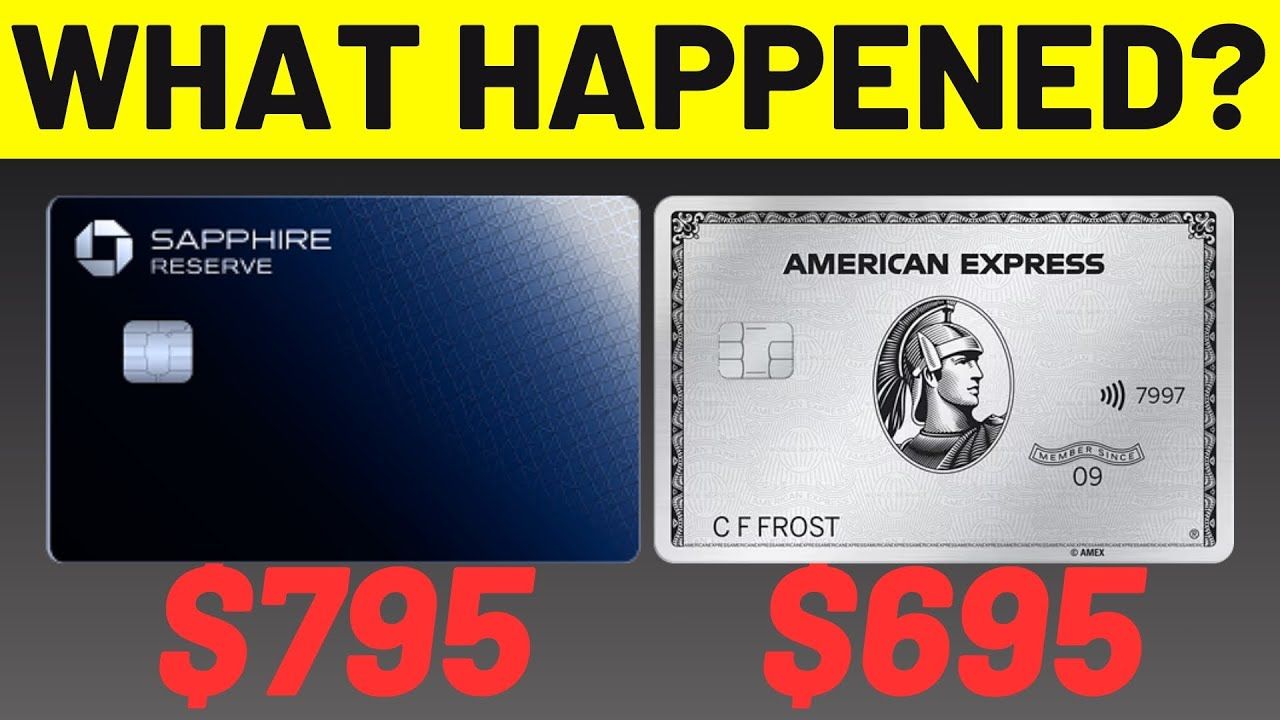
Seriously, have we lost our minds?
Chase raised the annual fee on the Sapphire Reserve to $795. American Express raised the Platinum Card annual fee to $895. These are not small fees anymore. That is real money coming out of your pocket every single year. Chase lists the Sapphire Reserve at a $795 annual fee, and Amex lists the Platinum Card at $895.

And here is the part that bothers me.
A lot of people are paying these huge annual fees because the cards make them feel like they are winning.
Airport lounges. Uber credits. Hotel credits. Dining credits. Metal cards. Fancy apps. “Exclusive” experiences.
But when you run the math, many people are not actually saving money.
They are spending more money and calling it value.
Disclosure: This article may contain affiliate links, which means I may earn compensation if you click or apply through certain links.
Quick Answer
Premium credit cards can be worth it if you naturally use the travel credits, lounge access, hotel perks, and statement credits without changing your spending habits. But if you carry credit card debt, forget to use credits, travel only once or twice a year, or spend more just to “use the benefits,” the card can become an expensive lifestyle subscription. Before paying $795 or $895 for a card, make sure the card saves you more money than it costs.
The Premium Credit Card Trap
Premium credit cards used to feel different.
Cards like the Amex Platinum and Chase Sapphire Reserve were built for frequent travelers, business owners, and points people who knew how to squeeze every dollar of value out of them.
Now?
A lot of these cards feel more like overpriced lifestyle memberships.
The Amex Platinum annual fee is now $895. Chase Sapphire Reserve is now $795. That is not a small “card fee.” That is a serious bill. (American Express)
The CFPB found that annual fee volume more than doubled from $3.0 billion in 2015 to $6.4 billion in 2022. So even if fewer people are paying annual fees overall, the people who do pay them are paying a lot more. (Consumer Financial Protection Bureau)
That tells you exactly what is happening.
Banks figured out that premium cardholders will pay big fees if the card feels exclusive enough.
They are not just selling you rewards anymore.
They are selling you a lifestyle.
Credit Card Companies Are Selling the Feeling
This is where the game gets sneaky.
Premium cards are marketed like a VIP pass to a better version of yourself.
The version of you that skips airport lines.
The version of you that sits in lounges.
The version of you that stays at luxury hotels.
The version of you that takes Uber everywhere and eats at restaurants with “exclusive reservations.”
And look, there is nothing wrong with enjoying nice things.
But most people do not actually live the lifestyle these cards are built around.
You may not fly twice a month.
You may not live near a Centurion Lounge.
You may not use every hotel credit.
You may not care about Saks, Resy, Equinox, Peloton, or whatever new brand gets added to the coupon book next.
And that is the problem.
The card makes you feel like you are getting access.
But access is not the same thing as value.
Lifestyle Inflation Disguised as Rewards
Once you have a premium card, the perks can start changing your behavior.
That is the real trap.
Suddenly, the hotel you would have booked before does not feel “good enough.”
Now you are looking at a more expensive property because it comes with a credit.
You start ordering rides more often because there is a monthly ride credit.
You shop at stores you normally ignore because the card gives you a statement credit.
You book through a travel portal because the points look better there, even if the cash price is not the best.
That is not always saving.
Sometimes that is spending more money with extra steps.
And banks know this.
They know people hate “wasting” credits.
So they break benefits into monthly, semiannual, or brand-specific pieces. That makes the card look valuable on paper, but harder to use in real life.
If a card gives you $300 in credits but makes you spend $900 you were not going to spend anyway, you did not save $300.
You got played.
The Unused Rewards Problem Is Massive
People love talking about how much value they earn from rewards.
But a lot of rewards never get used.
The CFPB found that total rewards balances at the end of 2022 were more than $33 billion across rewards accounts at major issuers. The CFPB also said those balances were up 40% compared with the fourth quarter of 2019. (Consumer Financial Protection Bureau)
That is a mountain of earned value just sitting there.
And it gets worse.
The CFPB also noted that reward values can vary widely, terms can be complex, and issuers or program managers can change redemption values. (Consumer Financial Protection Bureau)
So when you leave points sitting forever, you are taking risk.
Programs can devalue.
Terms can change.
Accounts can close.
And the “value” you thought you had can shrink.
That is why I do not like treating points like a retirement account.
Earn them.
Use them.
Do not worship them.
Who Really Pays for These Perks?
This is where things get uncomfortable.
Premium credit cards are marketed to people who pay in full, travel often, and know how to maximize benefits.
But the credit card system is not funded only by those people.
Bankrate’s 2026 Credit Card Debt Report found that 47% of American cardholders carry credit card debt, basically flat from 48% the year before. Bankrate also found that 61% of people with card debt had been in debt for at least a year. (Bankrate)
That means almost half of cardholders are not just earning rewards.
They are paying interest.
And that interest is not cheap.
Federal Reserve data showed commercial bank credit card rates at 21.00% for all accounts and 21.52% for accounts assessed interest in the latest reported period. (Federal Reserve)
So while some people are sipping drinks in airport lounges, other people are carrying balances at brutal interest rates.
That does not mean every premium-card user is doing something wrong.
But it does mean the reward system has winners and losers.
And if you are carrying a balance, you are usually not the winner.
If You Carry a Balance, Rewards Are Not the Priority
Let’s keep this simple.
If you are paying 21% interest, I do not care how nice the lounge is.
The math is ugly.
A $15 monthly credit does not matter if you are paying $150 a month in interest.
A sign-up bonus does not matter if you are stuck making minimum payments for years.
A metal card does not matter if your emergency fund is gone and your credit utilization is climbing.
Bankrate found that fewer than half of credit card debtors have a plan to pay off their debt, and 22% do not think they will ever get out of credit card debt. (Bankrate)
That is the part nobody wants to talk about.
A rewards card can be a tool.
But if you are carrying expensive debt, the tool is working against you.
Helpful resource: If you are carrying high-interest credit card debt and want to compare a fixed-payment option, SoFi Personal Loans may be worth reviewing. SoFi says its personal loans can be used to consolidate high-interest credit card debt, but approval, rates, fees, and funding depend on underwriting. (SoFi)
The Airport Perk Problem
One of the best examples of the premium card trap is the airport experience.
On paper, the benefits look amazing.
Clear credit.
Global Entry or TSA PreCheck credit.
Priority Pass.
Lounge access.
Uber credits.
Point upgrades.
But real life does not always care about the brochure.
I came across one traveler’s story that summed it up perfectly.
They were flying out of San Francisco expecting the premium-card experience. They had Clear and TSA PreCheck, but the line was still painfully slow. Then they tried to use Priority Pass and got turned away from multiple lounges because they were not accepting Priority Pass members at that time. Then their ride cost more than expected. Then the flight upgrade they wanted was not available.
All the perks.
None of the value.
That is the part people forget.
A benefit is only worth something if it actually works when you need it.
If the lounge is full, the credit is annoying to use, the hotel is overpriced, or the upgrade space does not exist, the “value” on the benefits page starts falling apart fast.
Ask Yourself This Before Paying a Premium Annual Fee
Before you pay $795, $895, or whatever the next premium card fee becomes, ask yourself one question:
Am I actually using this card, or am I paying for the idea of it?
Be honest.
Not “I could use the credits.”
Not “Technically, it has over $3,000 in value.”
Not “I might travel more next year.”
What did you actually use over the last 12 months?
If you are paying a huge annual fee, you should be able to answer these questions clearly:
-
Did I get more value than the annual fee?
-
Did I save at least $100 more than I paid?
-
Did I use the credits naturally?
-
Did I avoid carrying a balance?
-
Did I avoid spending more just to justify the card?
-
Did the travel benefits actually work when I needed them?
-
Would I still buy these things without the card?
That last question is the killer.
If you would not have bought it without the card, it may not be a savings.
It may be a spending trigger.
The “Break Even” Trap
A lot of people defend premium cards by saying, “I break even.”
But breaking even is not the goal.
Think about it.
You are not winning if you pay $895, track 12 different credits, change your spending habits, book through certain portals, remember random activation deadlines, and end the year saving $8.
That is not a strategy.
That is unpaid administrative work.
For a premium card to make sense, it should not just break even.
It should clearly improve your financial life.
That could mean:
-
You travel often and use lounge access naturally
-
You already book hotels where the credits apply
-
You already use the rideshare or dining credits
-
You redeem points for high-value trips
-
You pay the card in full every month
-
You do not spend extra just to use perks
If the card creates more work, more spending, and more stress, it is probably not a premium card for you.
It is a premium bill.
What Most People Should Use Instead
If you are not living a heavy-travel lifestyle, you probably do not need a luxury travel card.
You may be better off with something boring.
And boring can be powerful.
A no-annual-fee cash back card can put real money back in your pocket without forcing you into a maze of credits.
A 0% intro APR card can help you manage a large planned purchase or balance transfer if you have a payoff plan.
A simple rewards card can help you build credit without turning your wallet into a spreadsheet.
The goal is not to have the fanciest card.
The goal is to use the card that fits your actual life.
Helpful resource: Before applying for another card, my Free Credit Card & Loan Pre-Approval Master List can help you check soft-pull pre-approval tools so you are not wasting hard pulls chasing the wrong card.
When a Premium Credit Card Can Still Make Sense
I am not anti-premium cards.
I am anti-bad math.
A premium card can make sense if you are already the person the card was built for.
For example, it may make sense if you:
-
Fly often
-
Use airport lounges several times a year
-
Pay your balance in full every month
-
Redeem points at strong value
-
Naturally use the travel credits
-
Naturally use the dining or rideshare credits
-
Travel enough to benefit from hotel perks
-
Track your benefits without stress
-
Would buy the same things even without the card
That is the difference.
If the card fits your life, great.
If you have to reshape your life around the card, stop.
When You Should Downgrade or Cancel
You should consider downgrading or canceling a premium card when the math stops working.
That might be the case if:
-
You are carrying a balance
-
You do not travel much anymore
-
You are forgetting to use credits
-
You are spending more to “unlock value”
-
Lounge access is too crowded or unreliable
-
You do not redeem points well
-
The annual fee increased and your usage did not
-
You can get similar value from a cheaper card
Just be smart before closing any card.
Check whether closing the account could affect your credit utilization, rewards balance, downgrade options, or future eligibility for bonuses.
Sometimes downgrading to a cheaper card is cleaner than closing.
Sometimes closing is the right move.
But paying a huge fee just because you are attached to the card is not a strategy.
That is emotion.
Frequently Asked Questions
Are premium credit cards worth the annual fee?
They can be worth it if you naturally use the credits, travel benefits, lounge access, and rewards without spending more than you normally would. If you have to force the benefits or carry a balance, the card probably is not worth it.
What is the annual fee for the Chase Sapphire Reserve?
Chase currently lists the Sapphire Reserve with a $795 annual fee and a $195 fee for each authorized user. Terms can change, so check Chase before applying or renewing.
What is the annual fee for the Amex Platinum Card?
American Express currently lists the Platinum Card annual fee at $895 for a basic card. Amex says the card offers over $3,500 in annual value, but your real value depends on how many benefits you actually use. (American Express)
Should I keep a premium card if I carry credit card debt?
Usually, no. If you are paying high interest, your first priority should be getting the balance under control. Rewards rarely beat credit card interest. Consider a payoff plan, a lower-interest option, or a 0% balance transfer strategy if you qualify and can avoid running the cards back up.
Why do premium credit cards have so many credits?
Credits make the card look more valuable on paper. But many credits are split by month, brand, or category, which makes them harder to use. The bank benefits when people pay the annual fee but do not fully use the benefits.
Is it better to downgrade or cancel a premium card?
It depends. Downgrading can help you avoid the annual fee while keeping the account history and credit line. Canceling may make sense if there is no good downgrade path or the card no longer fits. Check your rewards, credit utilization, and downgrade options first.
Conclusion
Premium credit cards are not evil.
But they are getting expensive.
And the higher these annual fees climb, the more honest you need to be with yourself.
Are you actually getting value?
Or are you paying for status?
Because there is a big difference between a card that helps you travel better and a card that quietly trains you to spend more.
The smartest credit card setup is not always the flashiest one.
It is the one that fits your real life, saves you money, protects your credit, and does not push you into debt.
So before you pay another $795 or $895 annual fee, run the math.
Not the bank’s math.
Your math.
If the card still wins, keep it.
If not, downgrade, cancel, or move to something simpler.
Because the real flex is not having a metal card.
The real flex is having control.