
Pelican Credit Union Approved a Credit Card 5 Months After Bankruptcy
Jun 29, 2026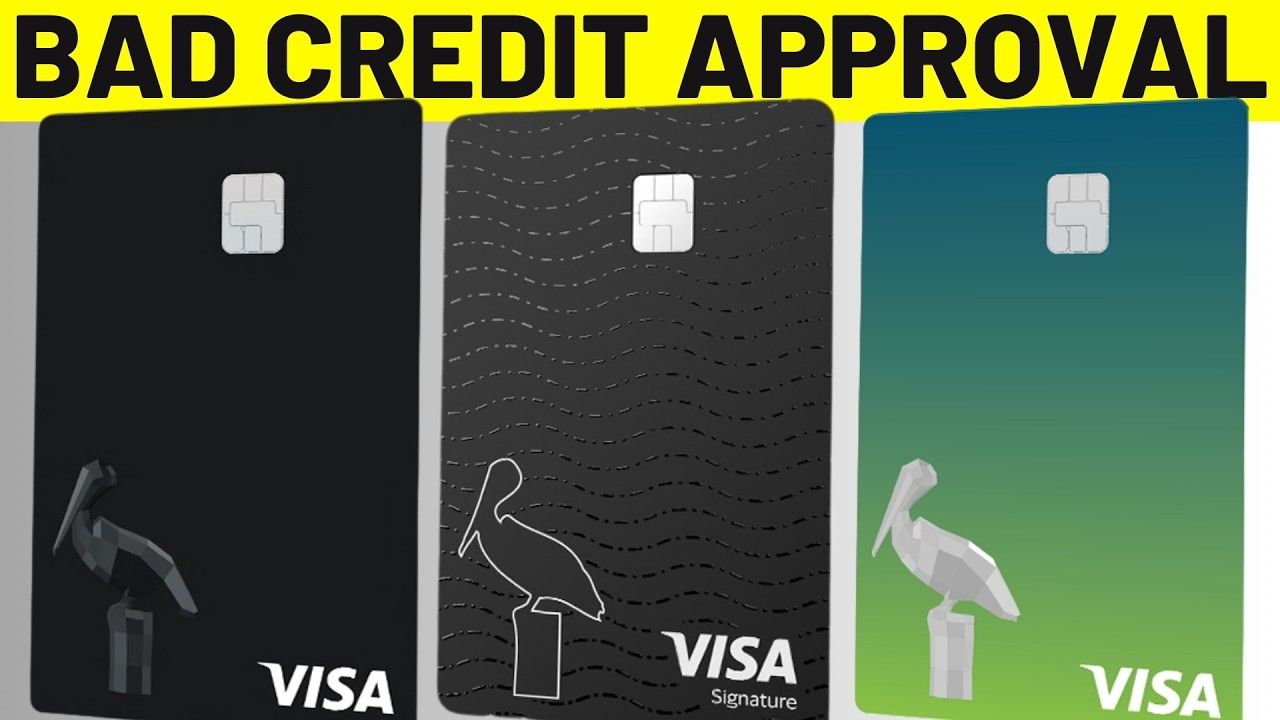
One person just got approved for a $1,000 unsecured credit card from a small credit union most people have never heard of.
And here’s the wild part:
Their Chapter 7 bankruptcy was still showing on their credit report from about five months earlier.

If you’ve ever gone through bankruptcy, you already know how heavy that feels. You watch your credit profile get wiped out. You assume lenders will treat you like damaged goods for years. And in many cases, they do.
But every now and then, a small credit union shows up and reminds us that the financial system is bigger than Chase, Capital One, Amex, and the other big names everyone talks about.
This time, the credit union is Pelican Credit Union.
Disclosure: This article may contain affiliate links, which means I may earn compensation if you click or apply through certain links.
Quick Answer
Pelican Credit Union recently had a data point where someone was approved for a $1,000 Pelican Prime Visa after a Chapter 7 bankruptcy discharge only a few months earlier. The credit union reportedly pulled Equifax, and the bankruptcy was still reporting at the time of approval. This does not mean Pelican guarantees bankruptcy approvals, but it does show that some smaller credit unions may be more open to rebuilding profiles than many large banks.
Helpful resource: If you’re looking for smaller credit unions that may be easier to work with than big banks, my 150+ Credit Unions Anyone Can Join Database can help you research more options.
The Small Credit Union Behind the Approval
The credit union is called Pelican Credit Union.
You may also see older references to Pelican State Credit Union, because some records and older branding still use that name.
And Pelican is not one of those massive credit unions with $30 billion or $50 billion in assets.
It is much smaller.
That matters.
Sometimes smaller credit unions move differently. They may still use credit scores, credit reports, and underwriting systems, but they can also feel more relationship-driven than the giant banks.
That does not mean they approve everybody.
But it does mean they may look at a rebuilding profile differently than a bank that automatically shuts the door the second it sees a fresh bankruptcy.
The Bankruptcy Approval Data Point
Here is the timeline that was shared.
The person had a Chapter 7 bankruptcy discharged in September.
Then, just a few months later:
February 26: Approved for Pelican Credit Union membership
March 2: Applied for the Pelican Prime Visa
March 3: Approved for a $1,000 credit limit
The application reportedly pulled Equifax.
The bankruptcy was still showing on the credit report at the time.
Their Equifax FICO score was reportedly in the low 600s, around 623.
Now, $1,000 may not sound like a life-changing approval.
But if you have ever rebuilt credit after bankruptcy, you know the first real unsecured card matters.
That first approval can become the foundation.
It gives you a clean positive tradeline. It gives you a chance to show on-time payments. It gives lenders new data to look at instead of only seeing the bankruptcy.
That is how rebuilding starts.
Not with a $25,000 limit.
With a lender willing to say yes first.
Why This Approval Matters
A Chapter 7 bankruptcy can stay on your credit report for up to 10 years.
So when someone gets approved only a few months after discharge, that matters.
It does not erase the bankruptcy.
It does not mean the profile is fully recovered.
It does not mean everyone else will get approved.
But it shows something important:
Some lenders are willing to work with people during the early rebuild.
That is the part most people miss.
After bankruptcy, a lot of people assume their only options are secured cards, predatory cards, or annual-fee junk cards with tiny limits.
And yes, those are common.
But they are not the only path.
A small credit union can sometimes give you a better rebuilding option than a big bank or a fee-heavy subprime card.
The Card: Pelican Prime Visa
The data point was for the Pelican Prime Visa.
This is Pelican’s basic credit card.
Based on Pelican’s public credit card page, the Prime Visa has:
-
No annual fee
-
Variable APR
-
Balance transfer promotion availability
-
Credit limits listed up to $50,000
-
Credit approval based on creditworthiness
That “up to $50,000” part does not mean a fresh bankruptcy profile is getting $50,000.
Let’s be real.
The data point was $1,000.
And for someone only months out of Chapter 7, that is still a strong rebuilding approval.
The key is that this was not a secured card.
It was an unsecured approval.
That is what makes it interesting.
Pelican Also Has a Secured Card for Rebuilding
Pelican also offers the Pelican Pledge Visa, which is their secured credit card.
That card is designed for people who want to build or repair credit, and the available limit is secured by your own money.
So if someone does not qualify for the unsecured Prime card, the secured option may still be worth looking at.
That gives Pelican two possible angles for rebuilders:
-
Try for an unsecured approval if your profile supports it
-
Use the secured Pledge card if you need a safer rebuilding path
Again, approval is not guaranteed.
But this is the type of setup rebuilders should pay attention to.
Why Credit Unions Can Be Different
Credit unions are not banks.
They serve members, not outside shareholders.
That does not mean they are charities.
They still care about risk. They still pull credit. They still deny people. They still have underwriting standards.
But many credit unions were built around member service, financial wellness, and community relationships.
Pelican even promotes financial wellness and credit counseling resources for members.
That matters for someone rebuilding after bankruptcy.
A big bank may see a fresh bankruptcy and instantly say no.
A smaller credit union may still say no too.
But sometimes, they may be more open to starting small and letting you prove yourself.
That is exactly what a $1,000 approval can do.
Pelican’s Online Membership Process Looks Smooth
The credit card approval was not the only interesting part.
The membership process also stood out.
One person who joined Pelican described the online membership application as one of the smoothest credit union account-opening experiences they had seen.
That matters because a lot of credit unions still feel outdated.
Some make you upload documents, wait days, call in, mail forms, or go through slow manual verification.
Pelican’s process looked cleaner.
The application reportedly asked for a driver’s license photo, verified identity quickly, and provided account access shortly after approval.
The user also mentioned getting a member number, account numbers, online banking access, and even the ability to choose a debit card design.
That may sound small.
But when you have dealt with clunky credit union applications before, those small details matter.
Does Pelican Use ChexSystems?
Several user reports said Pelican did not check ChexSystems for membership, at least based on their early 2026 experiences.
That is not the same as an official guarantee.
Banks and credit unions can change account-opening systems.
They can also use different verification tools depending on the product, profile, or application path.
But this is still worth noting because ChexSystems can be a major roadblock for some people.
ChexSystems is a consumer reporting agency that tracks certain banking account problems, like unpaid overdrafts, returned items, and closed-account issues.
If you have negative banking history, it can stop you from opening new bank or credit union accounts.
So if Pelican is not using ChexSystems for some account openings, that could make membership easier for certain people.
But before you rely on that, verify it directly with Pelican.
How Can People Join Pelican Credit Union?
A lot of people assume credit unions are only for local residents.
Sometimes that is true.
But many credit unions have expanded membership paths.
Pelican lists several ways to qualify, including living in certain Louisiana parishes, working for or retiring from one of its partner employers, being a Pelican employee, having an immediate family member who qualifies, or joining one of its partner associations.
Pelican’s partner association list includes:
-
ARC Baton Rouge
-
Parents Association of Northwest Supports & Services
-
Pinecrest Parents Association
These associations may have small one-time membership fees.
That is the key for out-of-state applicants.
If you do not qualify by location, employer, or family, a partner association may create a path to membership.
But based on user reports, not everyone clearly described joining an association before applying.
So the cleaner approach may be to submit the membership application and let Pelican tell you what is required.
Do not guess.
And do not claim eligibility you do not have.
A Quick Word About Membership “Tricks”
I do not like using the word “trick” when it comes to credit union membership.
Because this is not about lying.
This is not about sneaking in.
This is not about claiming you live somewhere you do not live or using someone else’s information.
The legitimate path is simple:
Use a real membership eligibility option.
If Pelican allows partner association membership, that is a real path.
If you qualify through family, that is a real path.
If you live in an eligible area, that is a real path.
If you work for a partner employer, that is a real path.
But do not fake eligibility.
That can create problems later.
The Pelican Premier Visa Has an Interesting Walmart+ Perk
The approval data point was for the Pelican Prime Visa, but Pelican also has a more premium card called the Pelican Premier Visa Signature.
This one has a $95 annual fee.
But it also includes a Walmart+ annual membership credit, plus TSA PreCheck or Global Entry credit, based on Pelican’s current card information.
That is interesting because Walmart+ can cost about the same as the annual fee if you pay annually.
So if you already use Walmart+ for delivery, fuel discounts, or other benefits, that credit may offset most or all of the card’s annual fee.
But be careful.
That does not automatically mean the card is worth it.
A card perk is only valuable if you were already going to use it.
If you would not pay for Walmart+ without the card, then the “value” is not as clean.
Should You Apply for Pelican After Bankruptcy?
Maybe.
But do not take one data point and turn it into a guarantee.
The person in the data point had a Chapter 7 bankruptcy still reporting and got approved for $1,000.
That is encouraging.
But your result can depend on:
-
Your FICO score
-
Which bureau is pulled
-
Your bankruptcy discharge date
-
Any accounts included in bankruptcy
-
Current utilization
-
New accounts after bankruptcy
-
Income
-
Employment
-
Debt-to-income
-
Relationship with Pelican
-
Membership eligibility
-
Internal credit union rules
-
Recent inquiries
-
Whether you have unpaid banking issues
If your bankruptcy was just discharged, you may want to start small.
Open membership first.
Build the relationship.
Consider secured options if needed.
Keep deposits and activity clean.
Then apply when your profile looks stable.
That is usually smarter than rushing into applications just because one person got approved.
What To Do Before Applying
Before applying for any credit union card after bankruptcy, get your profile organized.
Here is what I would check:
-
Are all bankruptcy accounts reporting correctly?
-
Does your report show the correct discharge status?
-
Is your utilization low?
-
Do you have any new positive accounts reporting?
-
Are there any errors on your reports?
-
Do you know which bureau the lender may pull?
-
Do you meet membership eligibility?
-
Do you have proof of identity ready?
-
Can you fund the membership savings account?
-
Are you comfortable with a small starter limit?
The worst thing you can do after bankruptcy is start panic-applying.
That usually leads to denials, inquiries, and frustration.
Rebuilding is not about applying everywhere.
It is about applying where your profile has a real shot.
Helpful resource: If you want to compare soft-pull options before risking more inquiries, my Free Credit Card & Loan Pre-Approval Master List can help you research cards that may let you check offers first.
Why Small Credit Unions Are Worth Studying
This Pelican data point is a reminder that the credit world is bigger than the major banks.
There are thousands of credit unions across the country.
Some are conservative.
Some are strict.
Some are quirky.
Some are surprisingly generous.
And some are willing to take a chance on a rebuilding borrower when the big banks will not.
That does not mean every small credit union is bankruptcy-friendly.
It does mean rebuilders should not only look at the same five banks everyone talks about.
Sometimes the best opportunity is hiding at a credit union you have never heard of.
Frequently Asked Questions
Is Pelican Credit Union bankruptcy-friendly?
There is at least one recent data point showing a $1,000 Pelican Prime Visa approval after a Chapter 7 bankruptcy discharge only a few months earlier. That is encouraging, but it is not a guarantee. Pelican still reviews creditworthiness.
What credit bureau does Pelican Credit Union pull?
The bankruptcy approval data point reported an Equifax pull for the Pelican Prime Visa. Bureau pulls can vary by product, state, profile, and lender process, so verify before applying.
Can you join Pelican Credit Union out of state?
Pelican lists multiple membership paths, including certain Louisiana parishes, partner employers, family eligibility, and partner associations. Some partner associations may create a path for people who do not live in Louisiana, but you should confirm eligibility directly with Pelican before applying.
Does Pelican Credit Union use ChexSystems?
Some user reports said Pelican did not check ChexSystems during membership opening in early 2026. That should be treated as a data point, not an official permanent rule. Account-opening systems can change.
Is the Pelican Prime Visa secured or unsecured?
The Pelican Prime Visa appears to be an unsecured basic credit card. Pelican also offers the Pelican Pledge Visa, which is the secured card designed for building or repairing credit.
Is a $1,000 credit limit good after bankruptcy?
Yes, it can be. A $1,000 unsecured approval only a few months after Chapter 7 discharge can be a strong rebuilding step. The goal is not the starting limit. The goal is getting a clean positive account reporting and building from there.
Conclusion
Pelican Credit Union may not be a household name, but this data point is worth paying attention to.
A person with a Chapter 7 bankruptcy still reporting got approved for a $1,000 unsecured Pelican Prime Visa only a few months after discharge.
That does not mean Pelican approves everyone after bankruptcy.
But it does show that smaller credit unions can sometimes create opportunities that big banks ignore.
If you are rebuilding, do not assume the game is over.
Start small.
Look for relationship-based lenders.
Check your reports.
Clean up errors.
Use secured cards when needed.
And when you apply, apply with a plan.
Because after bankruptcy, the first lender willing to trust you again can be the one that helps you start rebuilding for real.