
How to Get Business Credit With Bad Personal Credit
Jun 29, 2026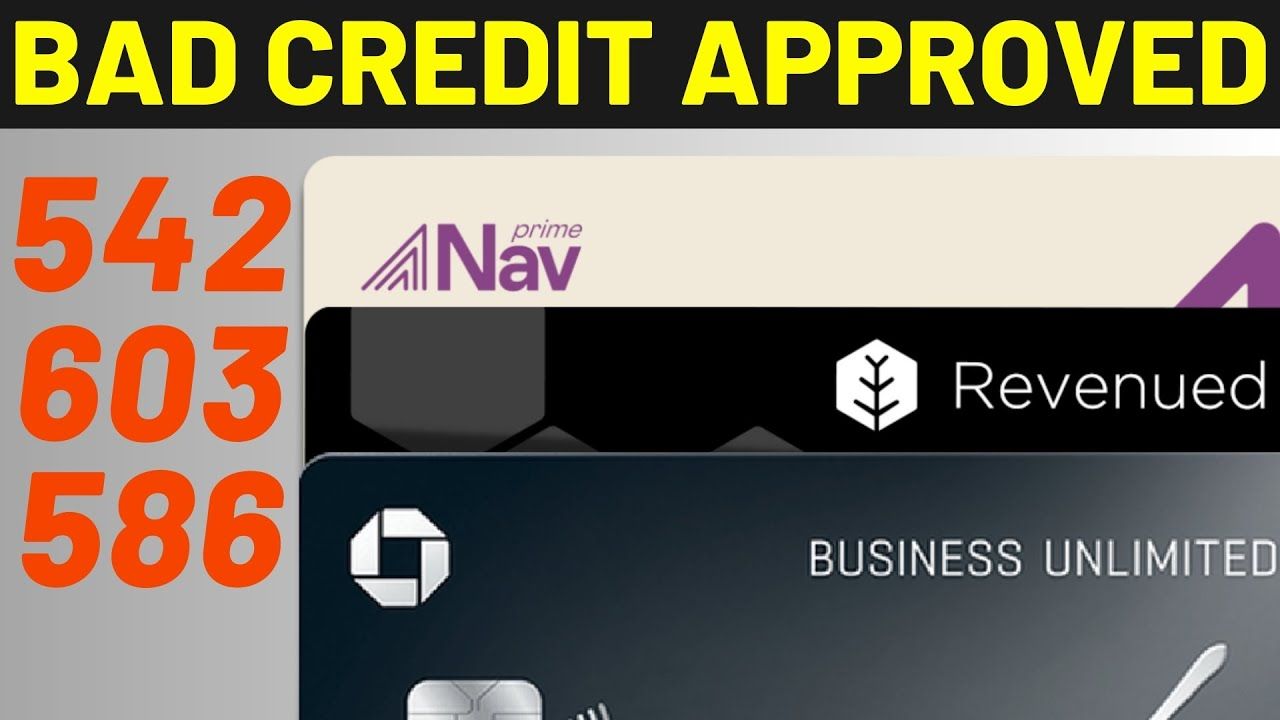
You can get business credit with bad personal credit.
But you need to be realistic about the path.
If your personal credit score is sitting somewhere between 300 and 670, most traditional business credit cards are going to be tough. A lot of banks still lean heavily on your personal credit when you apply for small business cards.
So if your credit is damaged, maxed out, or full of old mistakes, you need a different strategy.
That does not mean your business is stuck.
It means you need to use products and funding paths that care more about business revenue, cash flow, business credit building, or a stronger credit partner.
And if you are a barber trying to expand, a contractor trying to buy materials, a flooring company trying to stock up, or a service business trying to survive slow-paying clients, this matters.
Quick Answer
Yes, you can get business credit with bad personal credit, but the best option depends on what your business already has. If your business has real revenue, revenue-based options like Revenued may be worth reviewing. If your business is brand new or has little revenue, Nav Prime may help you start building business credit with no hard credit check, but it is more of a business credit-building tool than a high-limit funding solution.
If your personal credit is bad and your business has no revenue yet, your options get much tighter. At that point, you may need to build business credit first, improve personal credit, use a legitimate credit partner, or look at alternative lending once the business has enough sales.
Why Bad Personal Credit Makes Business Funding Harder
A lot of new business owners think an LLC and EIN automatically separate them from their personal credit.
That sounds good.
But that is not how most small business credit cards work.
Most traditional business credit card issuers still check your personal credit. Many also require a personal guarantee, which means you may be personally responsible if the business does not pay.
That is why bad personal credit can block you, even when the business is real.
Maybe your credit took a hit before you started your business.
Maybe you maxed out personal cards trying to buy inventory, tools, ads, software, or supplies.
Maybe your business is making money now, but your personal credit report still looks messy.
That is exactly where alternative business credit products can help.
But you need to match the product to your situation.
Option 1: Revenued Flex Line for Revenue-Based Business Funding
If your personal credit is the problem but your business is bringing in real deposits, Revenued is one of the first options I would look at.
Revenued is not a normal business credit card.
That part matters.
Revenued says its Flex Line and Business Card use revenue-based financing, and the company says its service involves the purchase of future receivables, not a traditional credit card or loan. (revenued.com)
That means Revenued is looking more at your business activity than your personal FICO score.
And that is exactly why this can be useful for business owners with bad personal credit.
Why Revenued Is Different
Most business credit cards look at your personal credit first.
Revenued looks beyond that.
Revenued says its underwriting technology looks beyond your credit score to determine capital worthiness, and its FAQ says applying for the Revenued Business Card will not affect your FICO score.
That is a big deal if your personal credit is already beat up and you cannot afford another hard pull.
Revenued can also be useful because you may be able to use the card for purchases or request a cash draw when swiping does not work. Revenued says approved users can access funds in as little as 24 hours and request cash through the Flex Line dashboard.
That gives business owners more flexibility than a normal card.
Need to pay a vendor who does not take cards?
Need cash for materials?
Need working capital before the next client payment hits?
That is where this type of product can make sense.
Revenued Requirements
Here is where people need to slow down.
Revenued is not for everybody.
To qualify, Revenued currently says businesses must be a U.S. entity other than a sole proprietorship, be in operation for at least one year, have a separate business checking account, and have at least $20,000 in monthly deposits.
So if your business has bad personal credit but strong deposits, this can be interesting.
If your business has no revenue yet, this is probably not your first move.
Helpful resource: If your business has steady deposits and you want a revenue-based option that may not rely on your personal credit the same way traditional cards do, you can review Revenued.
Disclosure: This article may contain affiliate links, which means I may earn compensation if you click or apply through certain links.
Option 2: Nav Prime for Building Business Credit With Bad Personal Credit
If your business is newer or your revenue is not strong enough for bigger funding yet, Nav Prime may be a better starting point.
This is not the same thing as getting a $50,000 business line of credit tomorrow.
Nav Prime is more about building a business credit profile so your business looks better later.
And for a lot of people with bad personal credit, that is exactly where you need to start.
How Nav Prime Works
Nav says its Prime plans can help businesses build credit with up to two tradelines submitted monthly to major business credit bureaus, with no hard credit checks or minimum credit requirements. (Nav)
Nav’s Build plan currently shows pricing at $49.99 per month and includes one tradeline for the membership payment. Nav also says some plans may allow eligible customers to apply for additional tradelines, subject to availability and approval.
Nav also says its newer Nav Credit Builder Card is designed to report business payment history to business credit bureaus, does not affect personal consumer credit profiles, and is available to select customers because it is currently in beta.
That last part is important.
Do not assume every Nav member automatically gets every card feature immediately.
Check the current Nav offer before publishing or applying.
Why Nav Can Make Sense
If your personal credit is bad, you need your business to start standing on its own.
Nav can help because it gives your business tradelines.
Those tradelines can report to business credit bureaus like Experian, Dun & Bradstreet, and Equifax. Nav says its credit-building accounts can be submitted monthly to those major business bureaus.
That can help you build a business credit file over time.
And once your business credit profile gets stronger, future vendors, lenders, card issuers, and financing companies may have more to look at than just your personal FICO score.
That is the whole point.
Bad personal credit may be the reason you are stuck today.
Business credit building is how you start creating another lane.
Helpful resource: If you are trying to build business credit before chasing bigger approvals, NAV can help you monitor and build your business credit profile.
Option 3: Use a Credit Partner the Right Way
This is the part people love to talk about, but most people explain it way too loosely.
If your personal credit is shot and your business is not bringing in enough revenue yet, getting approved as the primary applicant can be hard.
One possible workaround is using a credit partner.
That could be a spouse, family member, business partner, investor, or someone with stronger credit and a real role in the business.
But let me be clear:
Do not fake ownership.
Do not lie on bank applications.
Do not add someone to business documents just to hide your credit.
Do not create a paper partnership with no real agreement.
That is how people get themselves in trouble.
Authorized User vs. Credit Partner
There are two different ideas here.
First, someone can add you as an authorized user or employee cardholder on an existing business credit card.
That may give you spending access, but it does not make the account yours.
For example, Chase says employee cards are authorized users with equal charging privileges unless spending limits are set. Chase also says the Authorizing Officer and business are responsible for account use and repayment. (Chase)
So if someone adds you to their business card, they are taking real risk.
That is not a casual favor.
Second, a credit partner may actually be involved in the business and apply as an owner, officer, or authorized representative.
That needs to be real.
If they are listed as an owner, officer, treasurer, president, or managing member, the paperwork should match reality.
And if ownership is involved, banks may ask for information about owners above certain thresholds. Chase materials, for example, note that business credit card applications may require information for owners with 25% or more ownership. (Chase)
How to Structure a Credit Partnership Safely
A real credit partnership needs a written agreement.
At minimum, you should clearly define:
-
Who is responsible for payments
-
Who controls the card
-
What the funds can be used for
-
What happens if the business cannot repay
-
What happens if one person wants out
-
Whether the partner gets ownership, profit share, fees, or repayment
-
Who gets access to statements and account alerts
-
Whether an attorney should review the agreement
This can work.
But only if it is clean.
The sloppy version is “use somebody else’s credit and hope it works out.”
The smart version is a documented business arrangement where both sides understand the risk.
Option 4: Alternative Lending When Banks Keep Saying No
Traditional banks can be brutal when your personal credit is bad.
That does not mean alternative lenders are always better.
It just means they may look at different things.
Some alternative lenders care more about revenue, bank deposits, payment history, card sales, invoices, equipment, or cash flow than a traditional bank does.
That can help business owners who are making money but still have damaged personal credit.
The original script used ROK Financial as an example of a broker-style funding option. ROK’s current public small business loan page lists same-day funding, financing from $10,000 to $5 million, and terms from 6 months to 10 years. It also says its small business loan options have a 660+ FICO benchmark and $10,000+ monthly gross sales requirement. (ROK Financial)
ROK’s homepage shows a different general qualification section with 6 months in business, $10,000+ monthly sales, and a 500 credit score.
That mismatch is exactly why you need to verify current requirements before applying anywhere.
Alternative lending can move fast, but the cost can also be much higher than traditional bank credit.
So do not just ask, “Can I get approved?”
Ask:
-
What is the total repayment amount?
-
Is it a loan, line of credit, merchant cash advance, factoring product, or revenue-based product?
-
Is there a personal guarantee?
-
Are payments daily, weekly, or monthly?
-
What happens if revenue drops?
-
Is there a prepayment discount or penalty?
-
Does it report anywhere?
-
What documents are required?
-
What is the real cost of capital?
Fast money can solve a cash flow problem.
It can also create a bigger one if you do not understand the terms.
Option 5: Fix the Business Profile Before Applying
Sometimes the problem is not just bad personal credit.
Sometimes the business also looks weak.
No real business checking account.
No consistent deposits.
No business credit file.
No website.
No business phone.
No clean records.
No proof of revenue.
No clear business address.
No real separation between personal and business money.
That makes lenders nervous.
So before you chase funding, fix the profile.
You want your business to look like a real business.
That means:
-
Open a real business checking account.
-
Stop mixing personal and business funds.
-
Build business credit tradelines.
-
Keep business information consistent.
-
Track revenue and expenses.
-
File taxes correctly.
-
Keep invoices, contracts, and bank statements organized.
-
Set up a basic website and business email.
-
Make sure your business address, phone, and ownership details match across documents.
That stuff sounds boring.
But boring gets funded.
Messy businesses get questioned.
Helpful Resource: If your business is not fundable yet, my Business Credit Buildout System is designed to help business owners build a cleaner profile before chasing credit lines and funding.
What I Would Do Based on Your Situation
Here is the simple breakdown.
If your personal credit is bad but your business has strong revenue, I would look at revenue-based options like Revenued and compare the cost carefully.
If your personal credit is bad and your business is still new, I would start with business credit building tools like Nav and focus on cleaning up the full business profile.
If your personal credit is bad and your business has no revenue, I would not pretend funding is easy. I would focus on low-risk credit building, vendor accounts, business banking, fixing personal credit, and building sales first.
If you have a trusted partner with strong credit, I would only use that route with a real agreement, real business purpose, and clean paperwork.
If you are looking at alternative lenders, I would compare the total cost, not just the approval amount.
Because bad credit funding is not just about getting money.
It is about getting money in a way that does not crush the business later.
Suggested internal links to add during publishing: Business Credit Cards That Don’t Report to Personal Credit, No-PG Business Credit Cards, How to Build Business Credit With a New LLC, What to Do Before Applying for Business Funding, and Best Business Checking Accounts for New Businesses.
Frequently Asked Questions
Can I get business credit with bad personal credit?
Yes, but your options depend on your business. If you have strong revenue, revenue-based funding may be available. If you have little or no revenue, you may need to build business credit first before bigger funding becomes realistic.
Can I get a business credit card with no credit check?
Some business credit-building cards and revenue-based products may avoid a traditional hard credit pull. Nav says its credit builder card has no personal or business credit checks, but it is currently in beta and subject to eligibility.
Does Revenued check personal credit?
Revenued says applying for the Revenued Business Card will not affect your FICO score, and its underwriting looks beyond credit score to determine capital worthiness.
What does Revenued require?
Revenued currently says businesses must operate in the U.S., be in business over one year, have a separate business bank account, and have a bank account that has not gone negative for more than three days in a month. Its application page also says businesses need at least $20,000 in monthly deposits and must be an entity other than a sole proprietorship.
Is Nav Prime good for business credit?
Nav Prime can be useful if your goal is to build business credit. Nav says eligible plans can submit up to two tradelines monthly to major business credit bureaus, but credit-building results vary and some businesses may not see improved scores.
Should I use a credit partner for business funding?
Only if the partnership is real, documented, and both sides understand the risk. Do not misrepresent ownership, roles, income, or control just to get approved.
Conclusion
Bad personal credit does not automatically kill your business funding options.
But it does change the strategy.
If you keep applying for traditional business credit cards that judge you mainly by personal credit, you may keep getting denied.
So you need to move differently.
Use revenue-based products if your business has strong deposits.
Use business credit-building tools if your business profile is thin.
Use credit partners only when the relationship is real and documented.
Look at alternative lenders carefully, but do not ignore the cost.
And most importantly, build the business so it can stand on its own.
That is the real goal.
Not just getting one approval.
Building a business profile that lenders actually want to fund.