
How Many Credit Cards Should You Have? The Real Answer
Jul 01, 2026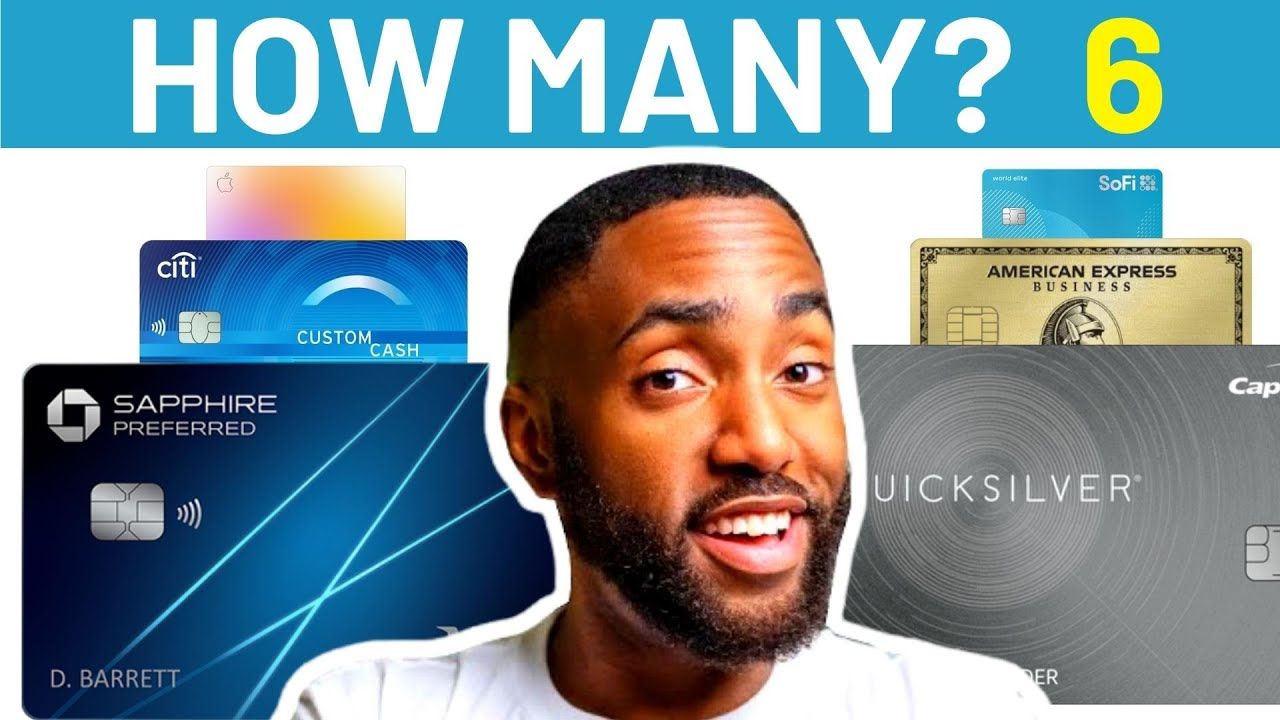
People ask this all the time:
“How many credit cards should I have?”
And the honest answer is:
It depends.
Not everyone should have the same number of cards. Some people should have zero. Some people should have one. Some people should have 2 to 5. Some people should aim for around 6. And a small group of credit card enthusiasts can responsibly manage 20, 30, or even 40 cards.
The key is not the number by itself.
The key is whether you can manage the cards without missing payments, overspending, paying interest, or creating a messy credit profile.
But if you want the short answer, most people should probably have somewhere between 0 and 6 credit cards, with 6 being an important number to understand if you are chasing a stronger credit profile.
Disclosure: This article may contain affiliate links, which means I may earn compensation if you click or apply through certain links.
Quick Answer
Most people should have between 0 and 6 credit cards, depending on how well they manage money and what their credit goals are. If you struggle with overspending or minimum payments, you may be better off with zero traditional credit cards and using safer credit-building tools instead. If you are responsible with credit, having multiple bank-issued credit cards can help with rewards, utilization, issuer diversification, and long-term FICO score strength.
If You’re Bad With Money: 0 Credit Cards
Some people should not have credit cards.
That might sound harsh, but it is true.
If you treat credit cards like free money, buy things now without thinking about repayment, and only make minimum payments every month, traditional credit cards can wreck your finances.
Credit cards are not magic.
Every swipe is borrowed money.
If you cannot pay the balance in full, the rewards do not matter. The sign-up bonus does not matter. The travel perks do not matter.
The bank is winning.
If you are in this group, your goal should not be “How do I get more cards?”
Your goal should be:
“How do I build credit without creating debt?”
Safer Options for Credit Builders
If traditional credit cards are too risky right now, consider safer options.
Authorized User Strategy
You may be able to become an authorized user on someone else’s card.
This can help build credit history if the account reports to your credit and is managed well.
But there is a catch.
You do not need physical access to the card.
In fact, if you struggle with spending, it may be smarter to be added as an authorized user without ever receiving the card.
That way you may get the reporting benefit without the temptation.
Secured Credit Cards
A secured card can be a safer first step because you usually put down a refundable deposit.
That deposit helps set the credit limit and reduces the lender’s risk.
Discover explains that some secured cards may be able to graduate to unsecured cards after a period of healthy credit habits, though not every issuer offers graduation and not every account qualifies.
The Discover it Secured Card has historically been one of the most popular secured card options, but graduation and review policies can change, so always check current terms before applying.
Credit Builder Cards
Some credit builder cards are designed to reduce the risk of overspending.
For example, Chime says its credit builder card has no annual fee, no interest, and no credit check to apply. Chime also says it reports to all three major credit bureaus.
That kind of structure can be helpful for someone who wants to build credit but does not want a normal credit card balance hanging over their head.
The point is simple:
If credit cards cause you to overspend, do not force yourself into a traditional card setup yet.
Build control first.
If You Want Simplicity: 1 Credit Card
Some people want credit to be simple.
They do not want five due dates.
They do not want rotating categories.
They do not want transfer partners.
They do not want to remember which card earns more at restaurants.
They just want one good card that works.
And that is fine.
A one-card setup can work if your goal is convenience, not optimization.
Best One-Card Setup
For a simple setup, I usually like one of two styles:
-
A strong flat-rate cash back card
-
A premium card with travel perks you actually use
A flat-rate 2% cash back card is the easiest.
You use it everywhere.
You pay it in full.
You move on with your life.
No categories.
No games.
No spreadsheets.
A premium travel card can also work if you travel enough to use the benefits.
But do not pay an annual fee just because the card looks cool.
If the benefits do not fit your life, the card is not premium.
It is just expensive.
If You Want Maximum Rewards: 2 to 5 Credit Cards
This is where most responsible credit card users should probably live.
Two to five cards can give you a strong rewards setup without turning your wallet into a part-time job.
This group treats credit cards like tools.
Every card has a purpose.
One card for groceries.
One card for dining.
One card for travel.
One card for rotating categories.
One card for everything else.
That is how you turn normal spending into real rewards.
Popular Multi-Card Setups
Some people like issuer-based setups:
-
Chase Trifecta
-
Capital One Bifecta
-
Citi Trifecta
-
Amex Trifecta
These can work well because rewards can often be combined inside the same ecosystem.
But personally, I like mixing issuers too.
Why?
Because it gives you more flexibility and more protection.
If one bank lowers your limit, denies you, freezes your account, or changes a rewards program, your whole setup does not collapse.
That matters.
Example Reward Card Categories
A strong 2 to 5 card setup might include:
-
Premium travel card
-
Flat-rate catch-all card
-
Grocery card
-
Dining card
-
Gas card
-
Rotating category card
-
Single bonus category card
-
Utility or phone bill card
-
Business card for side hustle expenses
You do not need all of these.
You just need the ones that match your real spending.
Do not get two cards that do the same job unless there is a specific reason.
For example, if you already have a strong 2% catch-all card, another 2% catch-all card may not add much.
But a grocery card or dining card might.
If You Want a Strong FICO Profile: Around 6 Credit Cards
This is where the number 6 comes in.
FICO has published research on high achievers, meaning people with very high FICO Scores. FICO’s high-achiever research focuses on habits like long account history, clean payment history, low balances, and responsible use of credit.
The source content says FICO high achievers have an average of 6 credit cards.
That does not mean 6 cards magically gives you an excellent score.
It means people with excellent scores often have more than one or two bank cards, and they manage those accounts well.
That is the key.
The number does not create the score.
The behavior does.
Why 6 Cards Can Help
Six credit cards can help for three big reasons.
1. More Available Credit Can Help Utilization
FICO says “amounts owed” makes up 30% of the FICO Score calculation, and credit card balances and utilization are heavily weighted inside that category.
Utilization is simple.
It is how much of your available revolving credit you are using.
If you have one card with a $2,000 limit and you report a $1,000 balance, you are at 50% utilization.
That can hurt.
But if you have six cards with $30,000 in total limits and you report that same $1,000 balance, your utilization is much lower.
That can help.
More cards can create more total available credit, which can make it easier to keep utilization low.
But only if you do not use the extra limits as an excuse to spend more.
2. More Accounts Can Build a Thicker File
A thicker credit file can make you look more experienced to lenders.
If you only have one card, there is not much data.
If you have six well-managed bank cards, lenders can see more repayment history, more account depth, and more proof that you can handle different credit lines responsibly.
That can help with future approvals.
Again, the key is well-managed.
Six cards with late payments is not impressive.
Six cards paid on time for years is a different story.
3. More Issuers Means More Protection
Diversifying across issuers is underrated.
If all your cards are with one bank, that bank has too much control over your credit life.
If they lower your limits or close your accounts, your available credit can disappear overnight.
A smarter setup might include cards from:
-
Big banks
-
Credit unions
-
Fintech issuers
-
Business card issuers
-
Different payment networks
This gives you backup options.
I do not want one issuer controlling my entire wallet.
Neither should you.
Helpful resource: If you want cards that may show your starting limit before approval, my 9 Credit Cards That Reveal Your Starting Limit Before Approval resource can help you avoid guessing before you apply.
If You’re a Credit Card Enthusiast: 20+ Cards Can Be Fine
Now let’s talk about the group that makes normal people nervous.
Credit card enthusiasts.
These are people with 20, 30, or even 40 cards.
And yes, this can be completely fine.
If you can responsibly manage every account, pay everything on time, avoid interest, track annual fees, use rewards correctly, and keep your credit profile clean, there is no magical rule that says you have too many cards.
The real limit is management.
Not the number.
Who Should Have 20+ Cards?
A 20-card setup is not for beginners.
It is for people who:
-
Pay every card on time
-
Track statement dates
-
Track annual fees
-
Understand issuer rules
-
Avoid unnecessary overlap
-
Use rewards strategically
-
Keep utilization low
-
Know when to product change or close cards
-
Can manage business and personal cards separately
-
Do not carry high-interest debt
That group can handle more cards because they treat the whole thing like a system.
If you are not organized, do not copy the enthusiast setup.
You will create a mess.
My Personal Setup
I am an enthusiast.
I have around 20 credit card accounts.
That does not mean everyone should copy me.
I share credit strategy, approval data points, and semi-personal credit information, so I also keep a close eye on my credit profile.
For me, credit cards are not just payment tools.
They are part of a larger strategy for rewards, limits, utilization, issuer diversification, and business planning.
But if you are still missing payments or carrying balances, do not jump to this level.
Master the basics first.
Pro Tips for Managing Multiple Credit Cards
If you decide to build a multi-card setup, these tips matter.
Diversify Across Issuers
Do not keep everything with one bank.
Use a mix of:
-
Chase
-
American Express
-
Capital One
-
Citi
-
Wells Fargo
-
Bank of America
-
Credit unions
-
Fintech issuers
-
Business card issuers
You do not need all of them.
But you want backup.
If one issuer gets weird, your whole setup should not fall apart.
Request Credit Limit Increases
Credit limit increases can help you grow available credit without opening a new card.
Focus on issuers that offer soft-pull increases when possible.
Do not blindly request increases from issuers that may hard pull.
Ask first.
Avoid Reward Overlap
Every card should have a job.
Do not build a wallet full of cards that all do the same thing.
For example, you probably do not need multiple catch-all cards unless you have a specific strategy.
A better setup covers different categories:
-
Groceries
-
Dining
-
Gas
-
Travel
-
Online shopping
-
Rotating categories
-
Flat-rate spend
-
Business expenses
That gives you more value.
Label Duplicate Cards
If you have two of the same card, label them.
This matters more than people think.
I have two Citi Custom Cash cards, so I need a system.
You can use:
-
Last four digits
-
Digital wallet nicknames
-
A label maker
-
A notes app
-
Separate spending categories
Do not trust your memory if the cards look the same.
One wrong swipe can ruin your category strategy for the month.
Keep a Simple Tracking System
If you have more than a few cards, track them.
At minimum, track:
-
Due dates
-
Statement closing dates
-
Annual fees
-
Credit limits
-
Bonus categories
-
Sign-up bonus deadlines
-
Last usage date
-
Credit limit increase dates
-
Product change options
This does not need to be fancy.
A spreadsheet works.
The more cards you have, the more important tracking becomes.
How Many Credit Cards Should You Have by Goal?
Here is the clean breakdown:
-
Bad with credit or overspending: 0 traditional cards
-
Building credit safely: Authorized user, secured card, or credit builder card
-
Simple setup: 1 strong card
-
Rewards setup: 2 to 5 cards
-
Strong credit profile: Around 6 well-managed bank cards
-
Enthusiast setup: 20+ cards if you can responsibly manage them
That is the real answer.
Not everyone needs the same number.
But everyone needs a system.
What Matters More Than the Number
Having more cards is not automatically better.
What matters more is:
-
No missed payments
-
Low utilization
-
Long account history
-
Responsible spending
-
No unnecessary interest
-
Good issuer diversification
-
Strong credit limits
-
Clean credit reports
-
A setup that matches your life
FICO’s score factors include payment history, amounts owed, length of credit history, new credit, and credit mix. Payment history and amounts owed are the two largest categories.
So if more cards help you manage utilization, build history, and diversify, great.
If more cards make you overspend, miss payments, or pay interest, stop.
Frequently Asked Questions
How many credit cards should I have?
Most people should have between 0 and 6 credit cards depending on their spending habits and credit goals. If you manage credit responsibly, 2 to 6 cards can be a strong range. If you struggle with overspending, fewer cards may be safer.
Is 6 credit cards too many?
No, 6 credit cards is not too many if you manage them responsibly. The source content says FICO high achievers average around 6 credit cards, but the number only helps if the accounts are paid on time and kept under control.
Can having too many credit cards hurt my score?
Yes, if too many cards cause missed payments, high balances, unnecessary inquiries, or a shorter average account age. But many well-managed cards can also help by increasing available credit and lowering utilization.
Should beginners get 6 credit cards right away?
No. Beginners should build slowly. Start with one good card or a secured/credit-builder option, then add cards only when you can manage payments and spending responsibly.
Is it bad to have 20 credit cards?
Not automatically. Having 20 cards can be fine for enthusiasts who track everything, pay in full, avoid annual fee traps, and manage issuer rules. But it is too much for someone who is disorganized or carrying debt.
Should I mix credit card issuers?
Yes, mixing issuers can protect you from relying too heavily on one bank. It also gives you access to different rewards programs, credit limit strategies, and approval paths.
Conclusion
There is no perfect number of credit cards for everyone.
If you are bad with money, zero traditional credit cards may be the right answer.
If you want simplicity, one card may be enough.
If you want rewards, 2 to 5 cards can build a strong setup.
If you want a stronger long-term credit profile, around 6 well-managed bank cards is a number worth paying attention to.
And if you are a true enthusiast, you can have 20+ cards as long as you can manage them responsibly.
Credit cards are tools.
Used wrong, they create debt and stress.
Used right, they help you earn rewards, grow limits, lower utilization, diversify across banks, and build a stronger credit profile.
The number matters.
But the system matters more.