
How Albert Got $47,500 With Divvy Without a Hard Pull or Personal Guarantee
Jun 30, 2026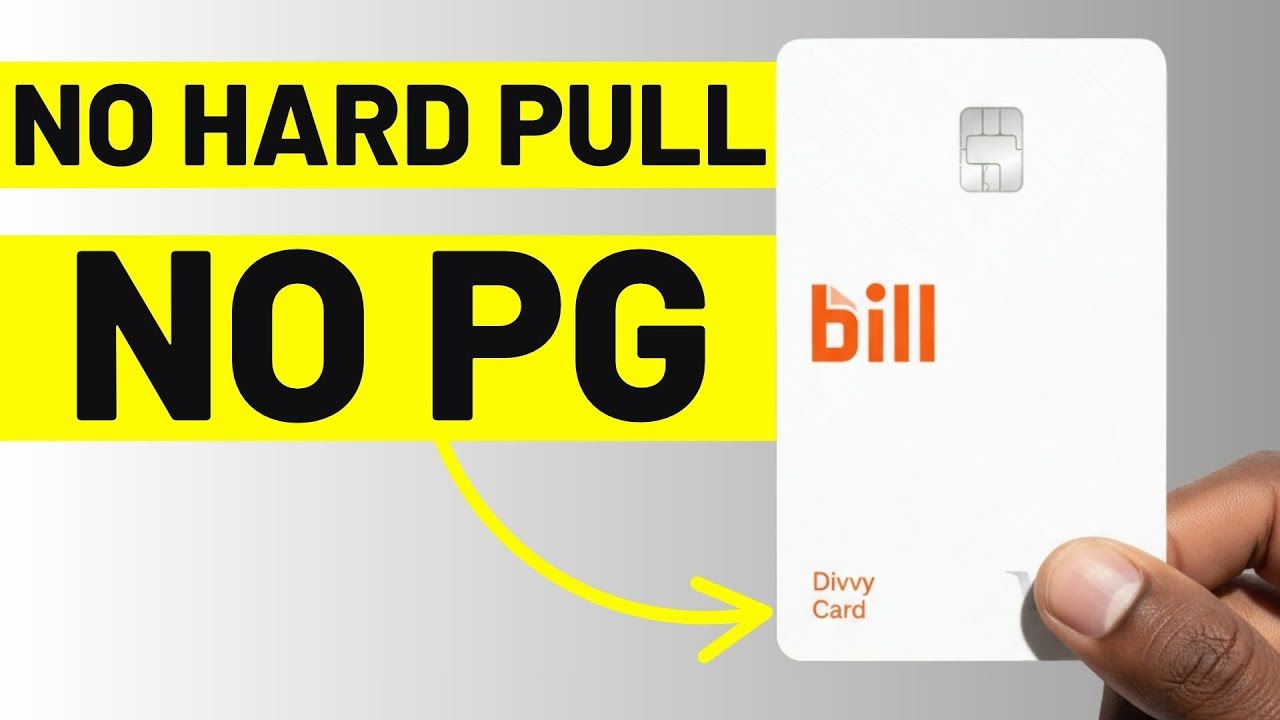
Albert got approved for $47,500 with Divvy across two business accounts.
No hard credit pull.
No personal guarantee.
No personal credit reporting from normal use.
That is why corporate cards like Divvy get so much attention from business owners.
Because when a business card does not require a personal guarantee, the approval is tied more to the business than the owner personally.
That can be powerful.
But there is a right way and a wrong way to look at this.
The wrong way is thinking no personal guarantee means “free money.”
It does not.
The right way is understanding that Divvy is a business charge card, and the business still has to pay the bill.
Albert’s story is not about getting lucky.
It is about building a fundable profile, using the card consistently, paying in full, and asking for limit increases on a schedule.
Quick Answer
Albert got approved for $47,500 total with Divvy by first starting with a smaller approval, using the card consistently, paying in full, calling every 90 days for limit increases, and applying under a second business entity. His approvals reportedly came with no hard credit pull and no personal guarantee, but results vary based on business revenue, linked bank activity, cash flow, entity details, industry, credit profile, and Divvy underwriting. Divvy can be a strong no-PG business card option, but it is still a charge card that must be paid back on schedule.
Disclosure: This article may contain affiliate links, which means I may earn compensation if you click or apply through certain links.
Helpful resource: If you want to compare Divvy with other no-PG business card options, my No PG Business Credit Card Master List can help you research cards that may not report normal activity to personal credit.
What Is Divvy?
Divvy is now part of BILL and is commonly known as the BILL Divvy Card or BILL Spend & Expense.
It is not a traditional small business credit card like Chase Ink or Amex Blue Business Plus.
It is a corporate-style business charge card with expense management tools.
That means it is designed to help businesses control spending, issue virtual cards, manage employee budgets, track expenses, and pay balances on a set schedule.
BILL publicly says credit lines can range from $1,000 to $5 million, depending on the business’s financial health and application details.
That range is huge.
But most small businesses should not expect the top end.
Your limit depends on the strength of your business.
Why Divvy Gets So Much Attention
Divvy gets attention for three big reasons.
First, applying does not impact your personal credit score.
Second, the card is known as a no-personal-guarantee option.
Third, normal card activity may help build business credit because BILL says it reports customer credit performance to the Small Business Financial Exchange.
For business owners, that combination is exciting.
You may be able to access business credit without adding a hard inquiry to your personal credit report.
You may be able to keep the card from reporting normal balances to personal credit.
And you may be able to build business credit history through responsible use.
That is the appeal.
No Personal Guarantee Does Not Mean No Responsibility
This needs to be said clearly.
No personal guarantee does not mean you can charge up the card and walk away with no consequences.
The business is still responsible for the balance.
The card still has terms.
Payments still matter.
Late payments, returned payments, misuse, fraud, or default can create serious problems for the business.
So do not treat no-PG cards like loopholes.
Treat them like business tools.
Used correctly, they can help.
Used recklessly, they can hurt your business badly.
Albert’s Starting Point
When Albert left his job in January 2024, he was stepping into entrepreneurship full force.
He wanted two things:
Freedom from the 9-to-5.
Access to capital for the businesses he was building.
But his first Divvy approval was not huge.
He reportedly started around $2,000 to $5,000.
That is not life-changing money.
A lot of people would have seen that small limit and moved on.
Albert looked at it differently.
He saw it as proof that Divvy had opened the door.
And once the door was cracked open, he started working the relationship.
From $2K to $47K
Albert did not jump from $2,000 to almost $50,000 overnight.
He built it step by step.
Every two to three months, he called Divvy.
He talked about the business.
He explained revenue growth.
He discussed new contracts.
He shared projections.
And each time, he reportedly got another $3,000 to $5,000 bump.
Those bumps may not sound massive by themselves.
But stacked together, they matter.
His consulting business eventually grew to a $26,500 Divvy line.
Then he applied under his mobility business and got another $20,500.
Total Divvy credit:
$47,000+ across two business accounts.
That is the kind of result business owners pay attention to.
Albert’s Bigger Vision
Albert was not just trying to collect another business card.
He had real business plans.
His cybersecurity consulting practice was charging around $200 to $250 per hour, and he was working with experts who could help handle larger projects.
That business had serious potential, especially with demand around cybersecurity and ransomware protection.
He also had a mobility business with bigger goals.
He wanted that company to grow into a multi-million-dollar operation.
So for Albert, Divvy was not just a card.
It was part of his capital stack.
Every approval and every limit increase helped create more breathing room.
Albert’s Personal Credit Profile
Albert had worked on his personal credit before applying.
His FICO scores were reportedly in the mid-to-high 700s, often around the 799 to 813 range.
That matters.
Even when a card is no-PG, lenders may still care about the person behind the business.
A clean personal profile can help the application look stronger.
Albert kept utilization low.
He paid on time.
He avoided a messy report.
He limited inquiries.
That foundation made him look more fundable.
Albert’s Business Credit Profile
Albert also worked on the business side.
He set up his D-U-N-S number.
He registered with NAV.
He built business tradelines.
That may sound boring.
But boring is often what gets businesses funded.
Business credit is like a resume for your company.
Every tradeline, business registration, and consistent data point helps show lenders that the business is real.
Albert did not apply with a half-built profile.
He did the foundation work first.
The Spending Strategy That Built Trust
Albert did not let the Divvy card sit unused.
He put it to work.
He reportedly cycled around $5,000 to $8,000 per month through the card.
That spending included things like:
-
Utilities
-
Bills
-
Furniture
-
Business expenses
-
Large purchases
This matters because lenders want to see usage.
If a lender gives you a business line and you never use it, there is no reason to increase it.
But if you use it responsibly and pay it back, you are showing them the line is useful.
That can support future increases.
He Paid in Full Every Time
Spending was only half the strategy.
The other half was paying.
Albert paid the card in full on schedule.
Every 30 days, the balance auto-withdrew from his bank account, and he made sure the money was there.
No missed payments.
No returned payments.
No drama.
This is critical.
Divvy is not a card to play games with.
If you want bigger limits, payment behavior matters.
Consistent spending plus clean payoff behavior tells the lender:
“This business can handle more.”
The Revenue Projection Strategy
Albert’s biggest limit-increase strategy was how he explained income.
He already had more than $20,000 per month showing in the linked business account.
But he did not only talk about collected revenue.
He also talked about contracts, future revenue, and money already lined up.
In his words, he told Divvy two or three times what he was actually making because the contracts and revenue were there, even if the money had not fully hit the account yet.
That is an important distinction.
There is a difference between making up fake revenue and projecting revenue based on real signed contracts or committed work.
Do not lie.
But also do not undersell your business if real revenue is already lined up.
Stated Income Still Needs to Be Reasonable
The script said Divvy does not verify income and uses stated income for limit increases.
That may be true in Albert’s experience.
But be careful with that.
A lender can still review your linked bank data.
They can still ask questions.
They can still decline an increase.
They can still request additional information.
So the strategy is not:
“Say whatever number sounds good.”
The strategy is:
“Understand your real revenue, contracted revenue, and projected revenue so you do not undersell the business.”
Confidence helps.
Accuracy matters more.
The Multiple-Entity Strategy
Albert’s biggest breakthrough came from using more than one business entity.
He had a consulting business.
He had a mobility business.
He applied under both.
The surprising part?
He linked both to the same business bank account and still got approved for both.
That nearly doubled his available Divvy credit.
This is powerful, but it needs caution.
Every business should be legitimate.
Every application should be accurate.
Every entity should have a real business purpose.
Do not create fake entities just to chase credit.
That can turn a good strategy into a serious problem.
The $20,500 Approval for the Second Business
The second approval was reportedly $20,500 for a newer business.
That is the kind of data point that gets attention because many new businesses struggle to get any meaningful credit.
But this second approval did not happen in a vacuum.
Albert already had:
-
A stronger business profile
-
Existing Divvy relationship
-
Linked banking activity
-
Personal credit in the high 700s
-
Prior responsible usage
-
A real business plan
-
A first account already performing
That context matters.
A brand-new business with no relationship, no bank activity, and no revenue may not get the same result.
What Divvy Did Differently
Albert said Divvy did not feel like a typical fintech experience.
He described the customer service as strong.
That stood out to him because most business owners are used to being passed around, waiting on hold, or dealing with reps who cannot answer basic questions.
According to Albert, Divvy reps were:
-
Fast
-
Professional
-
Respectful
-
Helpful
-
Good with follow-up
That matters when you are trying to grow a relationship.
A card with good limits is nice.
A card with responsive support is even better.
Instant Virtual Card Access
Another thing Albert liked was instant virtual card access.
Once approved, he could use a virtual card right away.
That matters for business owners because expenses do not always wait.
You may need to pay for:
-
Software
-
Ads
-
Vendors
-
Supplies
-
Utilities
-
Subscriptions
-
Emergency purchases
Waiting days or weeks for a physical card can slow you down.
Virtual cards solve that problem.
They also help with spend controls and separating expenses.
The 90-Day Limit Increase Routine
Albert’s repeatable move was simple:
Every 90 days, he called and asked for a limit increase.
That is not complicated.
But most business owners do not do it.
They get approved, use the card, and wait for the lender to offer more.
Albert did not wait.
He made limit increases part of his routine.
Every few months, he checked in.
He explained what changed.
He shared revenue growth.
He talked about new contracts.
And he asked.
That is how the line kept growing.
What Business Owners Can Copy
Here is the simple version of Albert’s playbook:
-
Build personal credit first
-
Set up business credit basics
-
Open and maintain a business bank account
-
Link a real business account
-
Use the card consistently
-
Pay in full every cycle
-
Keep cash flow clean
-
Call every 90 days
-
Explain real business growth
-
Include reasonable projections
-
Apply under multiple legitimate entities if applicable
None of this is magic.
It is preparation plus repetition.
How Much Revenue Do You Need for Divvy?
The script says you generally want at least $5,000 per month in business revenue running through the account to get approved.
That may be a practical data point, but current third-party reviews often describe Divvy/BILL as favoring businesses with stronger monthly revenue or cash balances.
Some sources mention higher monthly revenue or balance expectations, and BILL says limits depend on business financial health and application details.
So I would not treat $5,000 per month as a guaranteed approval threshold.
I would treat it as a lower-end target that may help but may not be enough for every business.
The stronger your bank activity and cash flow, the better.
Service Businesses Should Not Undersell Revenue
Service businesses often have revenue that is real but not collected yet.
For example:
-
A marketing agency with a signed $3,500/month retainer
-
A real estate agent with $15,000 in commissions pending
-
An IT company with recurring contracts
-
A cleaning company with service agreements
-
A consultant with signed project work
-
A coach with scheduled paid sessions
If the work is contracted or committed, it may be part of your business picture.
Do not ignore it.
But also do not exaggerate.
There is a line between a reasonable projection and a fake number.
Stay on the right side of that line.
Why Paying in Full Matters More With Charge Cards
Divvy is a charge-style product.
That means it is not designed for carrying balances like a regular credit card.
The bill is due on a schedule.
That schedule may be weekly, semi-monthly, or monthly depending on your setup and approval.
This is why cash flow matters so much.
If your business cash flow is inconsistent, a charge card can create pressure.
Before applying, ask yourself:
Can I pay this back on time every cycle?
If the answer is no, wait.
Divvy vs. Traditional Business Credit Cards
Divvy is different from a traditional business credit card.
Traditional business cards may offer:
-
Intro APR periods
-
Revolving balances
-
Personal guarantees
-
Personal credit underwriting
-
Hard pulls
-
Rewards categories
Divvy is more focused on:
-
Spend controls
-
Expense management
-
Employee cards
-
Virtual cards
-
No-PG structure
-
Business cash flow
-
Pay-in-full behavior
Neither is automatically better.
They serve different purposes.
If you need to carry a balance during a 0% APR period, a traditional business card may make more sense.
If you want no-PG spend controls and business-only liability structure, Divvy may be more attractive.
Divvy vs. Chase Business Cards
The script mentioned that many business owners do not realize a similar multi-entity strategy can work with Chase business cards.
That is true in concept.
If you have multiple legitimate businesses, you may be able to apply for Chase business cards for different entities.
But Chase and Divvy are not the same.
Chase business cards usually involve:
-
Personal guarantee
-
Personal credit underwriting
-
Potential hard pull
-
Strong sign-up bonuses
-
0% APR offers on some cards
-
Traditional revolving credit
Divvy usually involves:
-
No personal guarantee structure
-
No hard pull to apply
-
Charge-card repayment
-
Bank-link underwriting
-
Spend management tools
So yes, multiple businesses can create multiple application paths.
But the risk, underwriting, and reporting are different.
Who Divvy May Be Best For
Divvy may be a good fit if your business has:
-
Real monthly revenue
-
Clean bank activity
-
Consistent expenses
-
Strong cash flow
-
Employees or contractors who need cards
-
Need for virtual cards
-
Need for budget controls
-
A desire to avoid personal guarantees
-
A desire to avoid personal credit reporting
-
Ability to pay in full every cycle
This is not just a “get money” card.
It is a business expense-management tool.
That is how you should look at it.
Who Should Avoid Divvy
Divvy may not be a fit if:
-
Your business has unstable cash flow
-
You need to carry balances
-
You do not have real revenue
-
Your business bank account is weak
-
You cannot pay in full
-
You want a traditional 0% APR card
-
You are trying to hide personal spending
-
You do not have a real business entity
-
You are applying only because it says no PG
No-PG does not automatically mean right fit.
You still need the right business profile.
Frequently Asked Questions
Does Divvy require a hard credit pull?
BILL says applying for the BILL Divvy Card has no impact to your credit. Many users treat Divvy as a no-hard-pull business card option, but always check current application terms before applying.
Does Divvy require a personal guarantee?
Divvy is commonly known as a no-personal-guarantee business card option. That means the business is generally responsible for the balance, but you should review the current card agreement before applying.
Does Divvy report to personal credit?
Normal Divvy activity is generally not known for reporting to personal credit. BILL says it reports customer credit performance to the Small Business Financial Exchange, which can help build business credit history.
How did Albert get $47,500 with Divvy?
Albert reportedly started with a small approval, used the card consistently, paid in full, called every 90 days for limit increases, gave realistic business projections, and applied under a second legitimate business entity.
Can a brand-new business get approved for Divvy?
It can happen, based on data points, but it is not guaranteed. Divvy may consider business bank activity, revenue, cash flow, entity details, industry, and overall business financial health.
How often should you ask Divvy for a limit increase?
Albert asked every 90 days and reportedly received repeated $3,000 to $5,000 increases. That is a useful data point, but limit increase timing and approval vary by business performance and underwriting.
Conclusion
Albert’s Divvy story is powerful because it shows what can happen when a business owner treats no-PG credit like a strategy.
He did not just apply once and stop.
He built his profile.
He used the card.
He paid in full.
He called every 90 days.
He explained the business clearly.
He used real projections.
Then he expanded the strategy to a second legitimate business.
That is how a small starting line turned into almost $50,000 in Divvy credit.
But do not miss the real lesson.
The card was not the strategy.
The business profile was the strategy.
Divvy was just the tool that rewarded it.
If you want results like this, build the business first.
Clean up your profile.
Strengthen your bank activity.
Use credit responsibly.
Then ask for more when the business can actually support it.
That is how you turn a small approval into a real capital stack.