
Why I Got Denied for a Credit Card With a 780 FICO Score
Jun 25, 2026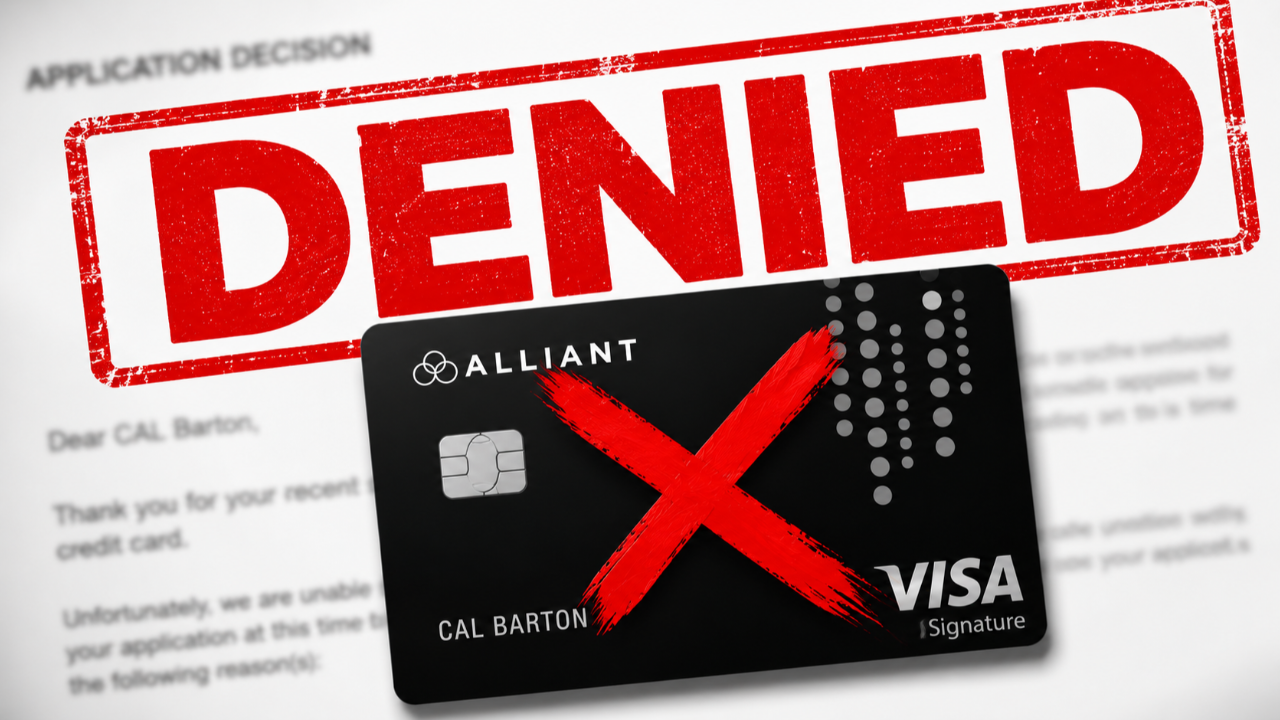
Over a year ago, I got denied for a credit card even though my TransUnion FICO score was around 780.
And I gotta say…
It bothered me more than I expected.
Because this is what most people rarely hear about credit:
You can have a great credit score and still get denied.
Your credit score matters, but it is not the only thing banks look at. In some cases, it is not even the most important thing.
Lenders are looking at the full story inside your credit report.
They are looking at your balances, utilization, inquiries, account mix, relationship history, recent activity, and whether your profile fits their internal underwriting rules.
That denial taught me a lot.
And honestly, it taught me more than some approvals ever have.
Disclosure: This article may contain affiliate links, which means I may earn compensation if you click or apply through certain links.
Before applying for a new card, it may be worth checking whether you are pre-approved first so you can avoid unnecessary hard pulls when possible.
The Credit Card Denial That Surprised Me
As someone who lives in the world of personal and business credit every day, I am constantly testing pre-approval tools.
Especially soft-pull pre-approval tools.
Because they let you look behind the curtain without risking a hard inquiry.
A few months before this denial, I noticed that Alliant Credit Union had a credit card prequalification tool.
Naturally, I wanted to test it.
So I filled everything out, submitted the form, and waited for the result.
And you know that little moment right after you hit submit?
That weird mix of curiosity and confidence where your brain is already assuming approval?
Yeah. That was me.
Then the email came in.
Denied.
Thankfully, it was only a soft pull, so my credit score was not damaged.
But what surprised me was how detailed the denial was.
Alliant showed me specific weaknesses in my profile even though my TransUnion FICO score was sitting around 780 at the time.
And that is when the bigger lesson hit me.
Reason #1: My Membership Tenure Was Too Short
One of the denial reasons was basically that my membership tenure was too short.
That one annoyed me immediately.
Because I had never banked with Alliant before.
So from my perspective, I was being penalized for not already having a relationship with them.
But this is something people seriously underestimate with credit unions.
Smaller banks and credit unions often care way more about relationships than giant national banks do.
They are asking questions like:
-
Have you banked with us before?
-
Do you keep money here?
-
Are you an actual member?
-
Did you just show up for the credit card?
-
Do we have any history with you?
And if you are applying from another state, that can make it even harder.
I was in North Carolina.
Alliant is headquartered in Chicago, Illinois.
So it is not like I had the advantage of walking into a branch, opening an account in person, and building familiarity face-to-face.
That is why relationship-building matters so much with smaller institutions.
Sometimes the move is not applying immediately.
Sometimes the smarter move is:
-
Open a checking account
-
Deposit a little money
-
Run small transactions
-
Set up ACH activity
-
Let the relationship age for 30 to 90 days
That alone can change how some lenders view you.
And here is the interesting part.
You can join Alliant from anywhere in the country through their online membership path.
So even if you do not live near Chicago, you may still be able to become a member online and start building that relationship before applying.
That is something most people with excellent credit are never going to think about until after they get denied.
Helpful resource: If you want to research more credit unions that may be open to people outside your local area, my 150+ Credit Unions Anyone Can Join Database can help you find more institutions to compare before applying.
Reason #2: My Mortgage Temporarily Disappeared
The second reason came down to brutal timing.
At the time, my mortgage had recently been transferred to a new lender.
And during that transfer, the mortgage temporarily stopped reporting to the credit bureaus.
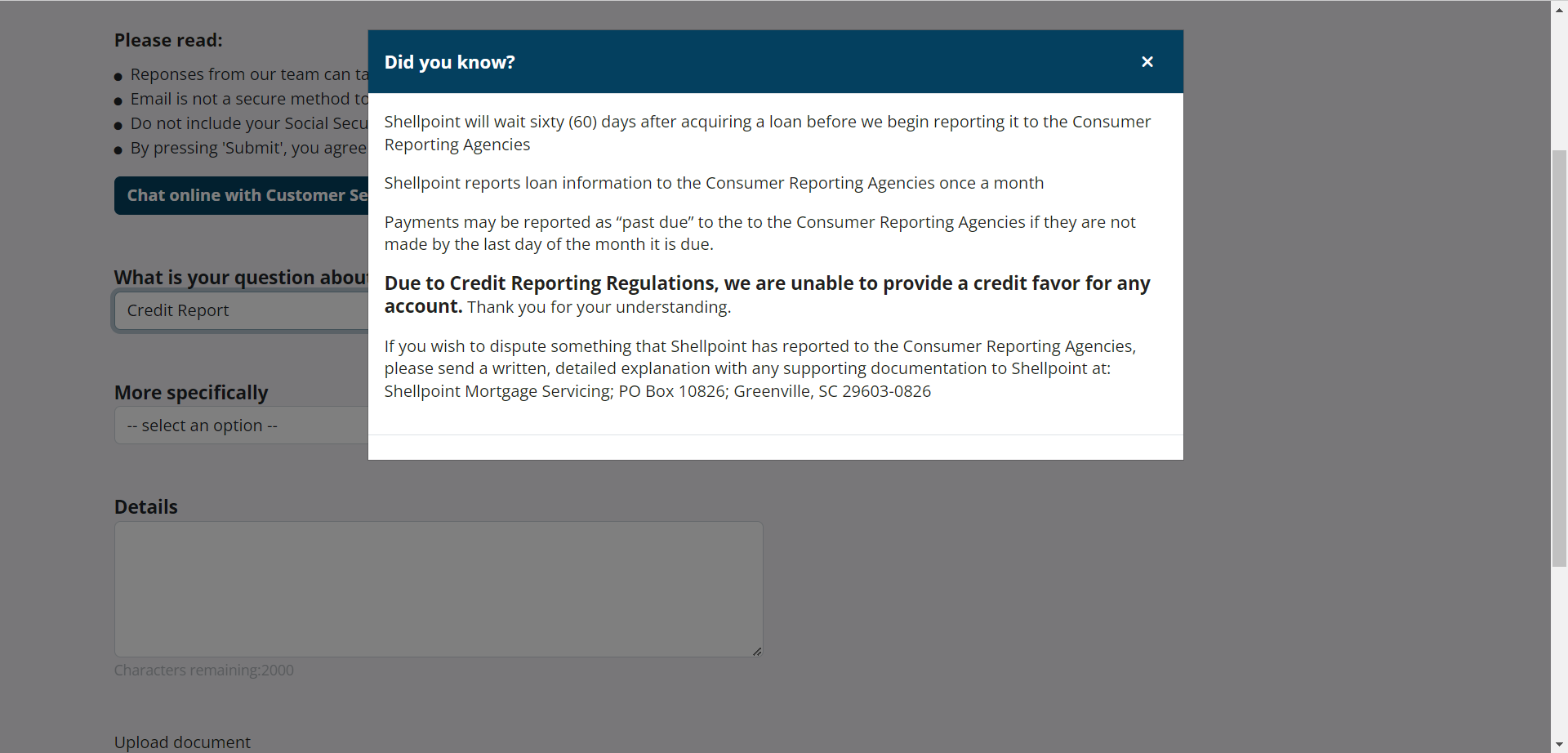
So even though I still had the mortgage, my credit report suddenly looked like I did not.
That matters.
Lenders care about mortgages more than a lot of people realize.
A mortgage can signal long-term repayment behavior. It can show that you have handled a major installment loan over time. It can also strengthen your overall credit mix.
But for a short period of time, my report temporarily lost one of the strongest installment accounts I had.
So to the lender, my profile looked weaker than it actually was.
The good news is that the mortgage eventually started reporting again.
But this was a reminder that timing matters a lot in the credit world.
Your credit profile can look very different depending on what is reporting that exact month.
That is why two people with the same score can get completely different results.
It is also why the same person can get denied one month and approved a few months later.
Reason #3: My Utilization Wasn’t Terrible, But It Wasn’t Great Either
At the time, my overall utilization was around 18%.
Most people online would probably say that is fine.
And compared to someone using 60%, 70%, or 90% of their available credit, yes, 18% is not horrible.
But lenders do not always look at utilization that casually.
What really hurt me was that a couple of individual cards had very high balances temporarily.
One card was near maxed out.
Another card was sitting extremely high too.
And lenders absolutely look at individual card utilization.
So even if your total utilization looks reasonable, a few heavily used cards can still make you look risky.
That is something a lot of people misunderstand.
The lender is not just asking:
How much debt does this person have overall?
They are also asking:
Why are these specific cards so heavily used?
That difference matters.
Especially in a stricter underwriting environment.
A person with 18% total utilization could look fine on the surface. But if that 18% is concentrated on one or two nearly maxed-out cards, the risk profile can look completely different.
Your Credit Score Is Not Your Approval Score
This is the biggest lesson from the entire experience:
Your credit score is not your approval score.
I’ll say that again.
Your credit score is not your approval score.
A FICO score is important, but banks are not just approving the number.
They are reading the report behind the number.
They are looking at:
-
Payment history
-
Current balances
-
Individual card utilization
-
Overall utilization
-
Recent inquiries
-
New accounts
-
Account age
-
Account mix
-
Relationship history
-
Recent changes to the file
And depending on the lender, certain things can trigger internal risk flags even if your score still looks strong.
That is why someone with a 760 score can get denied while someone else with a 690 score gets approved.
Because the story inside the report holds more weight than most people think.
Why People With 800+ Credit Scores Can Still Get Denied
This is also why people with 800+ credit scores sometimes get denied for what looks like a small reason.
Maybe they opened too many accounts recently.
Maybe one card is reporting too high.
Maybe their income does not support the limit they requested.
Maybe they have no relationship with the institution.
Maybe their credit file is strong, but it does not match what that specific lender wants.
A high credit score can help.
But it does not erase the rest of your profile.
Banks still have their own underwriting rules.
Credit unions still have their own risk models.
And some lenders have hard cuts that can move you into a risk bucket regardless of score.
That is the part most people miss.
They think approval works like this:
High score = approved.
But in reality, it works more like this:
Strong score + strong report + right lender + right timing = better approval odds.
That is a completely different game.
What I Would Do Differently Next Time
Looking back, there are a few things I would have done differently before applying.
First, I would have built a relationship with the credit union before testing the card.
That could mean opening a checking account, making a small deposit, and letting the account age for a bit.
Second, I would have waited until my mortgage was reporting again.
That one was just bad timing.
Third, I would have paid down the cards with high individual utilization before applying.
Not just to lower my total utilization, but to clean up the way my report looked to the lender.
Because lenders do not only look at the total number.
They look at the pattern.
And in credit, the pattern matters.
Final Thoughts
Getting denied with a 780 FICO score was frustrating.
But it was also useful.
Because it reminded me that credit card approvals are not just about having a great score.
They are about having the right profile for the right lender at the right time.
A strong score helps.
But lenders are still looking at the full report.
They want to know whether your balances look controlled, whether your accounts are stable, whether your profile has depth, and whether you have a relationship with them.
So if you have excellent credit and still get denied, do not automatically assume something is wrong with you.
Look deeper.
Check what was reporting that month.
Look at your utilization by individual card.
Look at your recent accounts and inquiries.
Look at your relationship with that bank or credit union.
Because the number at the top of your credit report is only part of the story.
The real approval decision comes from everything underneath it.