
How a New LLC Got a $50,000 Chase Ink Business Unlimited Approval
Jun 30, 2026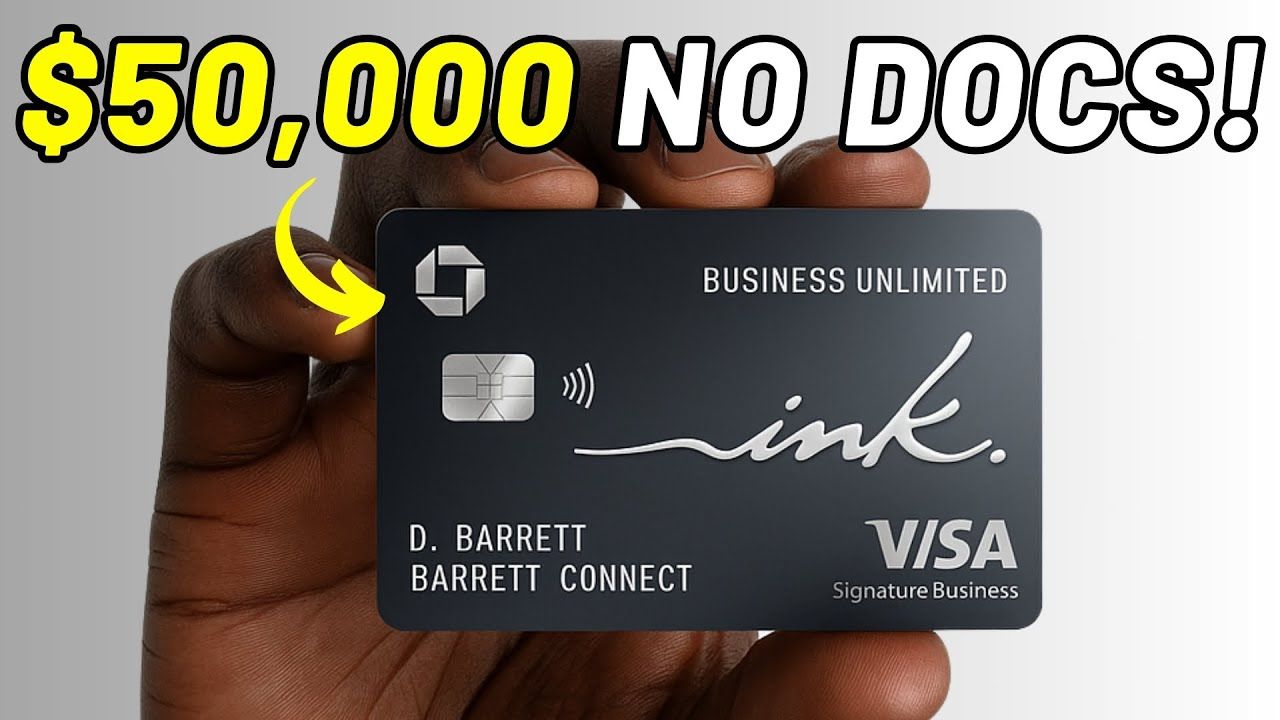
I just spoke to a business owner who got approved for a $50,000 Chase Ink Business Unlimited with a brand-new business, no collected revenue, and no financial documents.
That is not normal.
Most people hear “new LLC” and assume the bank is going to ask for bank statements, tax returns, profit and loss statements, and proof that the business has been running for years.
But this approval shows something important:
A new business can still win if the owner’s personal credit profile is strong, the banking setup looks intentional, and the application gets routed to the right person.
This was not a random online application.
This was a strategy.
And the details matter.
Quick Answer
A new LLC in South Carolina reportedly got approved for a $50,000 Chase Ink Business Unlimited with no collected business revenue and no financial document uploads. The business owner had a strong personal profile: 782 Experian FICO 8, only 1 recent inquiry, 13% utilization, no negative marks, $175,000 household W-2 income, and a newly opened Chase Business Checking relationship with a $3,000 deposit. Chase pulled Experian, the decision took about 5 business days, and the second Chase business card attempt was denied because the business was too new.
Disclosure: This article may contain affiliate links, which means I may earn compensation if you click or apply through certain links.
Helpful resource: If you are serious about stacking business credit cards with 0% APR offers, my 0% APR Business Credit Card Database can help you research banks, credit bureaus, offers, and approval data points before applying.
Why This Chase Approval Matters
A $50,000 business credit card approval can change how a business operates.
That kind of limit can help with:
-
Equipment
-
Inventory
-
Marketing
-
Software
-
Payroll timing
-
Contractor expenses
-
Supplies
-
Expansion costs
-
Cash-flow gaps
But a high limit can also create a high-risk situation if you do not have a plan.
Business credit is not free money.
It is leverage.
Used correctly, it can help you grow faster.
Used recklessly, it can bury you.
That is why this data point is so useful. It is not just about the approval amount. It shows how the business owner positioned themselves before asking Chase for a serious limit.
The Key Data Points
When people hear about a new LLC getting approved for $50,000, the first question is obvious:
“What did the profile look like?”
Here are the important data points from this approval.
State
The business owner was in South Carolina.
That matters because credit bureau pulls can vary by state, lender, product, and application path.
In this case, Chase reportedly pulled Experian.
Personal Credit Score
The applicant had a 782 Experian FICO 8.
That is excellent.
Not perfect.
Not 850.
But strong enough to put the applicant in the range where banks start taking the file seriously.
Recent Hard Inquiries
They had only 1 hard inquiry in the past 6 months.
That matters.
Banks do not love seeing someone shopping aggressively for credit.
A clean inquiry profile can make you look more stable and less desperate.
If you are trying to get approved for a large business credit line, I would rather see fewer than 3 inquiries in the past 6 months.
Cleaner is better.
Credit Utilization
The applicant had 13% utilization across all cards.
That is decent.
But I still prefer seeing utilization closer to 10% or below before a major application.
A lot of people repeat the “under 30%” rule like it is some magic number.
It is not.
Under 30% is not the goal.
It is just where things start looking less terrible.
If you want stronger approvals, especially high-limit business approvals, lower utilization usually looks better.
Credit Age
The applicant had an average account age of about 5 to 7 years.
That is enough history to show they were not brand new to credit.
Banks like seeing a track record.
A strong score is good.
A strong score with years of history is better.
Negative Marks
The applicant had zero negative marks.
No late payments.
No collections.
No bankruptcies.
No charge-offs.
That is critical.
If you want big business limits with minimal documentation, your personal credit profile needs to look clean.
The bank is taking risk based largely on you.
So you need to look safe.
The Business Profile
The business was a real estate property management company.
The LLC was only about 2 months old.
That is basically brand new.
No long operating history.
No two years of tax returns.
No 12 months of business bank statements.
And no collected revenue yet.
The business revenue was reportedly $0 collected so far, but the applicant projected $425,000 in first-year revenue.
That projection mattered.
But let’s be clear:
A projection should be believable.
Not fantasy.
Not inflated just to impress the bank.
If you tell the bank you are projecting $425,000, your business model needs to support that story.
In this case, property management can be framed as a recurring, fee-based business. That is easier to understand than some vague business idea with no clear money path.
The Personal Income Was Huge
The applicant listed $175,000 household W-2 income.
That was a major strength.
For a brand-new LLC with no collected revenue, strong personal income can help the bank feel more comfortable.
The bank may not have business tax returns yet.
It may not have 12 months of business deposits.
But if the owner has strong W-2 income, excellent credit, and a clean file, that can reduce perceived risk.
This is one of the biggest lessons from the data point:
When the business is new, the owner’s personal profile does a lot of heavy lifting.
Employees Reported
The business owner reported employees.
The script mentioned that owners or partners actively working in the business may be listed, but this needs to be handled carefully.
Do not exaggerate.
Do not invent employees.
Do not make the business look bigger than it really is.
If you actively work in your own business, that is real.
If you have partners or workers, report that accurately.
But do not turn the application into creative writing.
Business credit applications need to be credible.
If the bank asks follow-up questions, your answers need to make sense.
The Banking Setup Before Applying
Before applying for the Chase Ink Business Unlimited, this business owner opened a Chase Business Checking account.
That was the first smart move.
They did not walk in cold asking for $50,000.
They started by creating a banking relationship.
Initial Deposit
They opened the Chase Business Checking account with $3,000.
Not $30,000.
Not $100,000.
Just $3,000.
That is a realistic number for many business owners trying to set up a serious banking relationship.
The point is not that $3,000 magically unlocks $50,000.
The point is that the account looked real.
There was money in it.
There was activity.
The business owner was not showing up with a dead account and asking for a huge approval.
The 30-to-40 Day Seasoning Period
The business owner waited about 30 to 40 days before applying.
That matters.
Most people get excited and apply the same day they open the account.
That can still work sometimes.
But if you are trying to get a large limit, waiting can help.
In this case, the owner gave Chase about a month of relationship activity before asking for the card.
You will hear people say you need 90 days, 6 months, or even longer.
That may be true for some profiles and products.
But this data point shows that 30 to 40 days of smart activity can be enough when the personal profile is strong.
The Transaction Strategy
The business owner made small deposits and withdrawals 2 to 3 times per week.
Nothing wild.
No huge unexplained transfers.
No strange cash movement.
No messy activity.
Just steady, believable account usage.
That matters because banks like predictable behavior.
The goal is to make the account look alive, not suspicious.
A business account with a few weeks of normal activity looks better than an account opened yesterday with no real movement.
Coaching Helped, But Execution Mattered More
Before applying, this business owner worked with a business funding agency for coaching.
That helped them understand:
-
How to optimize their personal credit
-
How to structure business details
-
Who to approach at Chase
-
How to position the application
-
How to avoid common mistakes
But the important part is this:
They did the work themselves.
They did not rely on someone else to magically get them funded.
Coaching can give you the roadmap.
But execution still matters.
You have to open the account.
You have to clean the profile.
You have to show up correctly.
You have to communicate clearly.
You have to follow through.
Helpful resource: If you want to build a cleaner business profile before applying for funding, my Business Credit Buildout System is designed to help business owners improve fundability and prepare for business credit approvals.
How the Chase Application Was Handled
This application was handled in person with a local business banker.
That is important.
This was not a quick online application where the applicant just clicked submit and hoped for the best.
The business owner went into a branch and started with a banker.
Then, once the $50,000 request came up, the application was escalated to a Business Relationship Manager.
That is where the approval got interesting.
The original data point says the local banker was more limited, while the Business Relationship Manager had more ability to work with larger approvals.
That matters because the person handling the application can affect how the file gets positioned.
Why the Right Banker Matters
A strong profile can still get mishandled.
That is why the banker matters.
The wrong person may not know how to route the request.
The wrong person may not understand business credit.
The wrong person may push you into a smaller approval path.
The right banker or Business Relationship Manager can help get your application in front of the people who can actually handle the request.
That does not mean they can force an approval.
They cannot.
But they may help position the file correctly.
And when you are asking for $50,000, positioning matters.
The Approval Timeline
The decision took about 5 business days.
That is not instant.
But for a $50,000 business credit card approval with no financial document uploads, that is still fast.
A lot of people panic when they do not get an instant approval.
Do not do that.
Manual review is not always bad.
Sometimes manual review is where the big approvals happen.
A computer may not instantly approve a $50,000 startup business card.
But a well-positioned file can still win after review.
The Approval Ratio
Chase reportedly approved about 12% of the projected first-year business revenue.
The projected first-year revenue was $425,000.
The credit limit was $50,000.
That ratio is not crazy.
It actually makes sense.
If a business credibly projects $425,000 in first-year revenue, a $50,000 revolving line may look reasonable.
Again, the projection needs to be believable.
But this is why the business description and revenue story matter.
The bank needs to understand why the limit makes sense.
The Second Chase Business Card Attempt
After the $50,000 approval, the business owner tried for a second Chase business card.
The logic made sense.
The first application worked.
The credit score was strong.
No documents were required.
The banking relationship looked good.
So why not try to stack another Chase approval while the momentum was hot?
The second card was travel-focused, with a target around a $25,000 limit.
But this time, the outcome was different.
The Second Application Was Denied
The second Chase business card application was denied after manual review.
The official reason cited was:
Business too new.
That is the reality check.
The first approval does not mean Chase is ready to give unlimited business credit to a 2-month-old LLC.
The first card worked.
The second card did not.
And the reason was not the credit score.
It was not the income.
It was not the relationship.
It was the business age.
That tells us something important:
Chase may approve a new business once, but it can still become more cautious when you try to stack multiple cards too quickly.
Why “Business Too New” Matters
A brand-new business can sometimes get approved.
But that does not mean business age does not matter.
It still matters.
A 2-month-old LLC has no long track record.
No full year of revenue.
No tax return history.
No seasoned business banking history.
So Chase may be comfortable approving one card based on the owner’s profile, but not comfortable approving a second card right away.
That is not a contradiction.
That is risk control.
The bank already gave the business $50,000.
Asking for more immediately may have pushed the file too far.
How to Find the Right Chase Business Banker
Getting a big approval is not just about your credit score.
It is also about how you position yourself when you talk to the bank.
Do not walk in sounding desperate.
Do not walk in with a messy story.
Do not walk in asking vague questions.
You need to sound like a serious business owner.
The goal is not to beg for credit.
The goal is to explain why the credit line makes sense.
Lead With Your Personal Credit Strength
Start by framing yourself as low risk.
You can say something like:
“I have a strong personal credit profile. My FICO score is around 780, my utilization is low, and I have a perfect payment history.”
That matters because the banker is trying to understand risk.
If you lead with strengths, you frame the conversation correctly.
You are not just another startup asking for money.
You are a strong borrower building a business relationship.
Explain the Business Clearly
You do not need a Shark Tank pitch.
You need a clean explanation.
For example:
“I own a real estate property management company. We handle leasing, maintenance coordination, and rent collection for property owners. It is a fee-based business with recurring income potential.”
That is simple.
Bankers like simple.
Simple sounds safe.
If you cannot explain your business in 10 seconds, the banker may not feel comfortable with it.
Be Specific About the Credit Need
Do not just say:
“I want a high limit.”
Say what the credit is for.
For example:
“I’m looking to establish a $50,000 business credit line to cover upfront equipment costs for a new commercial cleaning contract and to hire two additional workers to service the account.”
That sounds like growth.
Banks like funding growth.
They do not like funding panic.
Attach the credit line to a real business purpose.
Mention the Banking Activity
If you already opened a Chase Business Checking account, mention it.
You can say:
“I recently opened a Chase Business Checking account and have been actively transacting through it over the past few weeks.”
That shows you are not just there for a credit card.
You are building a relationship.
That can make the banker more willing to take the conversation seriously.
Frame Yourself as a Long-Term Chase Client
This is where a lot of people miss the opportunity.
You want the bank to see future value in the relationship.
Say something like:
“My goal is to build a long-term Chase business relationship. Over time, I’d like to expand into business lines of credit, merchant services, and other products as the company grows.”
That tells the banker you are not a hit-and-run applicant.
You are building.
Banks like that.
Ask to Be Routed to the Right Person
Do not leave the application path to chance.
Ask directly:
“Based on what I’m trying to accomplish, who would be the best person to help me with a $50,000 business credit limit request?”
If they seem unsure, ask:
“Would it make sense to work with a Business Relationship Manager who handles larger business credit requests?”
That is respectful.
But direct.
And it can keep you from being stuck with someone who does not know how to handle the request.
The State-Based Banker Issue
The script included a data point from a 7-figure business owner saying Chase has tightened internal routing and that business bankers or relationship managers may now be assigned by state.
The idea is that if your business is formed in Florida, a Georgia banker may not be able or willing to help the same way.
This needs verification before publishing as a hard rule.
But the practical lesson is still useful:
Work with a banker who is actually able to support your business based on your state, entity, and branch relationship.
Do not assume any banker anywhere can handle your file.
Ask early.
What This Data Point Teaches Us
This approval teaches a few major lessons.
First, a new LLC can get a major business credit card approval.
Second, the owner’s personal credit profile matters heavily.
Third, a Chase banking relationship can help.
Fourth, the right banker or Business Relationship Manager can matter.
Fifth, no revenue does not always mean no approval.
Sixth, no documents does not mean no underwriting.
And seventh, stacking a second Chase card too quickly can backfire when the business is still too new.
That last point is important.
This was not a perfect unlimited approval story.
It was a strong first win with a clear second-application boundary.
That makes it more useful.
What I Would Do Before Trying This
If you want to recreate this strategy, I would not rush.
I would do this first:
-
Get personal utilization under 10%
-
Keep recent inquiries low
-
Clean up any negative marks
-
Build a strong personal credit score
-
Open Chase Business Checking
-
Fund the account with a realistic deposit
-
Run normal business activity for 30 to 60 days
-
Prepare Articles of Organization
-
Make sure business name, address, and EIN match everywhere
-
Create a clear business description
-
Know your projected revenue
-
Know why you need the credit line
-
Find the right business banker
The cleaner the file, the better the conversation.
The more prepared you are, the more serious you look.
Do Not Lie on Business Revenue
This part needs to be said clearly.
Projected revenue is not permission to make things up.
If your business has collected $0 so far, say that if asked.
If your first-year projection is $425,000, you need a real reason.
Contracts.
Pipeline.
Property count.
Expected management fees.
Signed clients.
Realistic math.
Something.
Do not throw a huge number on the application because someone else did.
Banks can ask questions.
Banks can request documents.
Banks can close accounts if they believe information was misrepresented.
The goal is to look fundable.
Not fictional.
Why No-Doc Does Not Mean No Risk
This was a no-doc data point.
But no-doc does not mean no-risk.
Chase still evaluated the applicant.
They still pulled Experian.
They still reviewed the business.
They still looked at income.
They still looked at the relationship.
They still made a risk decision.
No documents simply means they did not require tax returns, bank statements, profit and loss statements, or revenue proof for this specific approval.
That can happen.
But it is never guaranteed.
If Chase asks you for documents, you need to be ready.
Frequently Asked Questions
Can a new LLC get a Chase Ink Business Unlimited card?
Yes, a new LLC can get approved for a Chase Ink Business Unlimited card, especially when the owner has strong personal credit, low utilization, low inquiries, clean credit history, and a credible business application. Approval is not guaranteed.
Can you get a Chase business credit card with no revenue?
It can happen. In this data point, the business reportedly had $0 collected revenue but projected $425,000 in first-year revenue and had strong owner income. Chase can still deny or request documents depending on the file.
Does Chase require documents for business card approvals?
Not always. This data point only required minimal documentation and no financial documents. But Chase can request Articles of Organization, identity documents, tax information, bank statements, or other records depending on the application.
What credit bureau does Chase pull for business cards?
In this data point, Chase pulled Experian in South Carolina. Bureau pulls can vary by state, product, timing, and applicant profile, so verify before applying.
Does a Chase banking relationship help business card approvals?
It can help, based on data points, but it does not guarantee approval. A Chase Business Checking relationship with real activity may make the business look more credible, especially for larger credit requests.
Should you apply for two Chase business cards back-to-back?
Be careful. In this data point, the first application was approved for $50,000, but the second Chase business card was denied because the business was too new. Waiting may be smarter than trying to stack too aggressively.
Conclusion
This $50,000 Chase Ink Business Unlimited approval is one of the strongest new-LLC data points I have seen.
But it was not luck.
The business owner had a strong personal profile.
They opened Chase Business Checking.
They deposited $3,000.
They ran account activity for 30 to 40 days.
They worked with the right banker.
They got routed to a Business Relationship Manager.
They had a clear business story.
They had strong W-2 income.
And Chase approved the card with no financial document uploads.
That is the play.
Not “form an LLC and apply blindly.”
Not “make up revenue.”
Not “ask for $50,000 with no setup.”
The real strategy is to look like the kind of borrower Chase can say yes to.
Clean file.
Clear business.
Real relationship.
Strong positioning.
And a credit request that makes sense.
That is how a brand-new business can walk into a major bank and come out with a serious business credit limit.