
Chase Credit Card Shutdowns: Why Accounts Get Closed Without Warning
Jul 03, 2026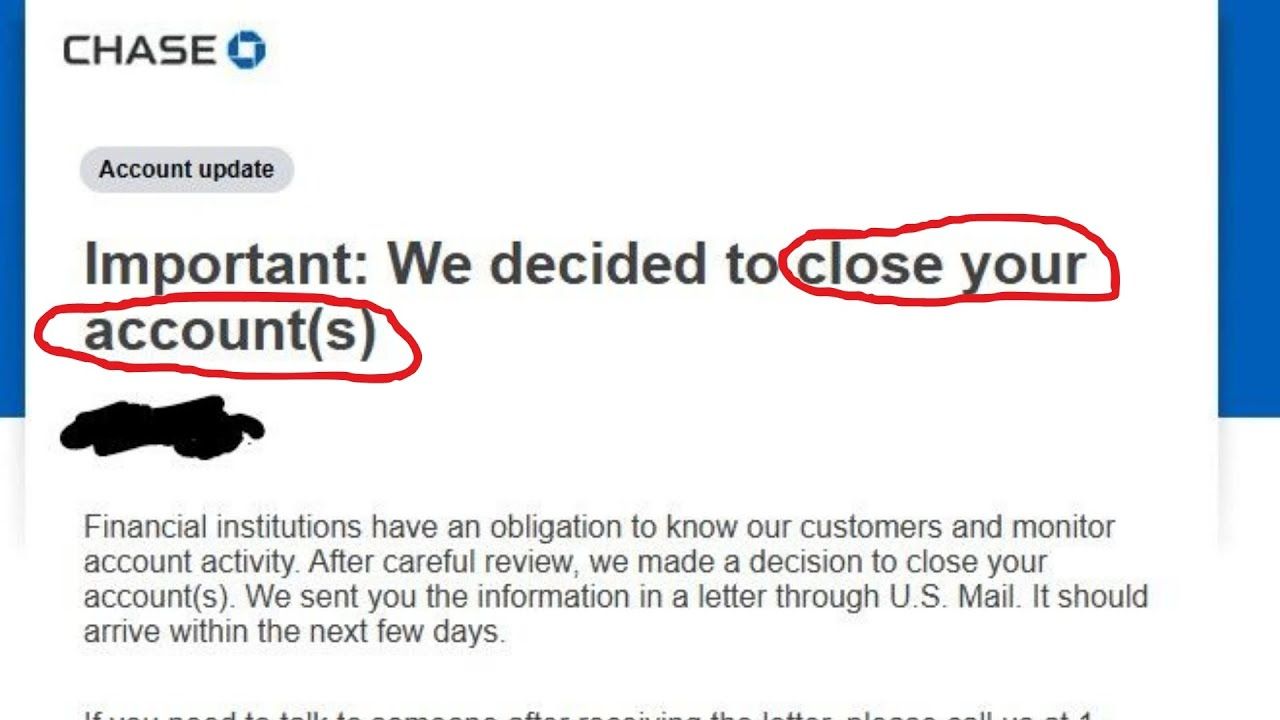
Chase is closing more credit card accounts without warning.
And if you have Ultimate Rewards points saved up, this can get scary fast.
Imagine you saved thousands of Chase points for a bucket-list trip later this year.
You go to swipe your Sapphire Preferred, and the card gets declined.
So you call Chase.
Then the rep tells you all three of your Chase cards were canceled.
No warning.
No real explanation.
Just “wait for the letter.”
Now your points are in danger, your cards are dead, your autopays are broken, and customer service does not have answers.
That sounds extreme, but these shutdown stories are becoming harder to ignore.
Disclosure: This article may contain affiliate links, which means I may earn compensation if you click or apply through certain links.
Quick Answer
Chase can close credit card accounts without warning if its risk systems flag activity it does not like. Recent shutdown datapoints point to triggers like credit cycling, aggressive new-account activity, large purchases followed by instant paydowns, unusual authorized-user behavior, and too much exposure inside one bank. If Chase closes your account for certain reasons, Chase says you may forfeit Ultimate Rewards points, so it is risky to keep your entire credit card and points strategy inside one issuer.
Chase Can Close Accounts Without Warning
This is the part people do not like hearing:
Banks can close accounts.
They can reduce credit limits.
They can restrict accounts.
And they do not always give you a detailed warning first.
Chase’s own Ultimate Rewards education page says points do not expire as long as your account remains open, but if the account is closed for missed payments, program misuse, or other reasons listed in the user agreement, you may forfeit those points. That is why a shutdown is not just about losing a card. It can also mean losing the rewards you were saving.
That is what makes these stories hit so hard.
People are not just losing plastic.
They are losing access.
Credit lines.
Payment methods.
Travel plans.
And sometimes, points they spent years building.
Five Chase Shutdown Datapoints That Show How Fast It Can Happen
These datapoints are the kind of stories that make people nervous.
Some had perfect payment history.
Some paid huge balances early.
Some had multiple Chase cards.
One was even a Chase Private Client.
And still, the accounts were closed.
1. When Paying Early Looked Like Fraud
One business owner had a $35,000 Chase business card and needed to make a large inventory purchase.
They put about $30,000 on the card, paid it off immediately, and then tried to run more charges.
From the business owner’s side, this looked responsible.
Use the card.
Pay it down.
Free up the limit.
Keep business moving.
But from Chase’s side, that pattern may have looked very different.
Large charge.
Immediate paydown.
More large charges.
That can look like credit cycling, manufactured spending, or liquidity risk.
Instead of freeing up the limit, the account froze. Available credit dropped to zero. New swipes were flagged. Multiple phone calls later, the issue still was not fixed.
That is the problem with bank algorithms.
What feels responsible to you can look risky to them.
2. Doing Everything “Right” Still Ended With Closed Cards
Another long-time Chase customer logged in and found every card closed.
No warning.
No clear reason.
Just account-closed notices.
Their setup looked strong from the outside: multiple personal and business cards, managed carefully, and still under 5/24.
They had also used a new Ink Cash card for an Airbnb stay connected to a bachelor party and hit a signup bonus.
Then the whole Chase ecosystem was wiped out.
Co-branded cards.
Transferable points.
All of it.
When they called, the reps could not give real answers and said to wait for the letter.
That is the part that frustrates people most.
You can lose the accounts first and only get the explanation later.
3. Even Chase Private Client Status Did Not Save Them
One Chase Private Client reportedly lost four cards and more than 350,000 Ultimate Rewards points.
That should make people pay attention.
Because a lot of people assume VIP status protects them.
But banks still have risk systems.
And when those systems decide an account is too risky, relationship status may not save you.
The rep reportedly said the decision was final and that a letter would arrive.
That is brutal.
Especially when points built over five years disappear with the cards.
4. One Inquiry, One Authorized User, Then Shutdown
Another Chase user had their Sapphire Preferred closed after adding their mom as an authorized user abroad.
One day, the card disappeared from Apple Pay.
Then the account showed closed.
The letter reportedly gave vague reasons like “not enough credit information” and “too many credit reviews.”
The weird part?
They reportedly only had one inquiry from the Sapphire Preferred itself.
They lost about 8,000 Ultimate Rewards points and were left trying to understand how such a thin set of facts could trigger a shutdown.
This is why authorized-user activity matters.
Especially if the authorized user is spending overseas, using different devices, or creating activity that looks unusual compared with the primary cardholder.
5. The E-Commerce Owner Who Looked Too Aggressive
Another e-commerce owner was making larger inventory purchases as the business grew.
That part is normal.
Inventory gets bigger.
Orders get bigger.
Spending grows.
But they also paid balances immediately, sometimes before the statement even cut.
Then Chase closed all cards without warning.
No real explanation.
No second chance.
Months later, reapplications were still denied despite a strong credit profile and history.
Again, the pattern is the same:
Large spend.
Fast paydowns.
More spend.
From the business owner’s perspective, that is cash flow management.
From the bank’s perspective, it may look like risk.
Banks Are Getting Stricter
This is not happening in a vacuum.
Credit is getting tighter.
The Federal Reserve’s July 2025 Senior Loan Officer Opinion Survey said banks reported tighter standards and weaker demand for several types of loans, including business loans and commercial real estate loans.
The Fed’s Senior Loan Officer Opinion Survey is a quarterly survey that tracks lending standards, loan terms, and demand across major banks.
So when people say, “Banks feel stricter right now,” that is not just a vibe.
It shows up in the data.
I am seeing it too.
Approvals that used to come back with $20,000 to $30,000 starting limits are sometimes coming back at $1,000 to $3,000.
Business funding that used to come with monthly repayments is more often showing weekly or even daily payment structures.
More people are reporting surprise credit limit decreases, sometimes huge cuts, even when they were paying on time.
That is what happens when banks get more risk-sensitive.
They lend less aggressively.
They watch accounts more closely.
And they move faster when something looks off.
What Likely Triggers Chase Shutdowns?
Nobody outside Chase knows the full internal formula.
But when you line up these datapoints, a few patterns jump out.
Trigger 1: Credit Cycling
Credit cycling is when you spend close to your limit, pay it down, then spend again in the same billing cycle.
For example, if you have a $10,000 credit limit but run $30,000 through the card in one month by constantly paying it down, that can look risky.
Even if you are paying in full.
Even if you are not late.
Even if your business really does have the cash.
To Chase, that behavior can look like you are forcing more spending through the credit line than they approved.
That can trigger fraud concerns, liquidity concerns, or manufactured spending concerns.
How to Avoid Credit Cycling Problems
If you need to make a large purchase, do not try to force it through a card that is too small.
Instead:
-
Call Chase before the purchase
-
Ask about a temporary or permanent credit limit increase
-
Explain the business purpose
-
Use a card with a higher limit
-
Split spend across issuers instead of cycling one line
-
Let statements cut normally when possible
Paying early is not automatically bad.
But paying early to run way more than your approved line through the card can make the bank nervous.
Trigger 2: Large Purchases Followed by Instant Paydowns
This is related to credit cycling, but slightly different.
A single large purchase followed by an immediate paydown may not be a problem.
But repeated large charges and fast paydowns can look unusual.
Especially on a newer account.
Especially on a business card.
Especially if the spending pattern suddenly changes.
Banks like predictable behavior.
A sudden jump from normal spend to huge inventory purchases can trip alarms.
If your business is growing and your spend is increasing, it may be better to communicate with the bank instead of surprising the algorithm.
Trigger 3: New-Account Velocity
New-account velocity is when you open too many accounts too quickly.
Chase already has the famous 5/24 rule, where too many recently opened personal credit cards can block new approvals.
But the risk goes beyond approvals.
If you stack multiple Chase cards, hit signup bonuses quickly, carry balances, and move on to the next card, that can look aggressive.
A new Ink card, a co-brand card, a big Airbnb charge, a bonus hit, and a balance all close together can create a red-flag combo.
From your perspective, you are optimizing.
From Chase’s perspective, you may look like someone extracting value fast.
How to Avoid New-Account Velocity Problems
Slow down.
Space out applications.
Use new cards organically after the bonus.
Avoid opening multiple Chase cards too close together.
Do not hit a bonus and immediately abandon the card.
And be careful carrying balances on brand-new promo APR cards right after approval.
Banks can get nervous when a new card quickly turns into a balance vehicle.
Trigger 4: Too Much Chase Exposure
One of the biggest risks is having everything with one bank.
Multiple Chase personal cards.
Multiple Chase business cards.
Chase checking.
Chase points.
Chase autopays.
Chase travel strategy.
That can feel efficient until something goes wrong.
Then one shutdown can wipe out the whole setup.
That is what happened in several of these datapoints.
People did not lose one card.
They lost the entire Chase ecosystem.
That is why diversification matters.
Do not let one bank own your entire financial life.
Trigger 5: Authorized User Risk
Authorized users can be useful.
But they can also create risk.
Especially if the authorized user is overseas, spending in different regions, using different devices, or creating patterns that do not match the main account.
If your credit profile is thin, even small oddities may matter more.
To you, it is just your mom using the card.
To Chase, it may look like unusual access, mismatched geography, or fraud risk.
That does not mean you should never add authorized users.
It means you should be thoughtful.
Especially with international use.
Trigger 6: Activity That Looks Like Manufactured Spending
Manufactured spending is when someone tries to generate rewards, bonuses, or volume without normal organic spending.
Banks hate this.
Even if you are not doing manufactured spending, certain behaviors can look similar:
-
Large gift card purchases
-
Repeated large charges
-
Immediate paydowns
-
Bonus chasing
-
Unusual merchant patterns
-
Sudden spending spikes
-
Heavy spend that does not match your stated income or history
The painful part is that innocent behavior can get caught in the same net.
The algorithm does not know your intentions.
It sees patterns.
What to Do If Chase Shuts You Down
If you log in and see “account closed,” do not freeze.
Move fast.
You may not be able to reverse the decision, but you can reduce the damage.
1. Secure Your Points Immediately
If you still have access to Ultimate Rewards, try to redeem or transfer your points immediately.
Chase says Ultimate Rewards points do not expire as long as your account stays open, but if the account is closed before redeeming or transferring rewards, you may no longer have those points. Chase also says you may forfeit points if the account is closed for missed payments, program misuse, or other reasons listed in the user agreement.
So do not wait.
If you can still move points, move them.
If you can still redeem them, redeem them.
If you have another eligible Chase card still open, check whether points can be combined or preserved there.
But move quickly because once access is gone, options get limited fast.
2. Stabilize Your Autopays
Next, fix your bills.
Go through:
-
Streaming subscriptions
-
Phone bills
-
Insurance
-
Business software
-
Utilities
-
Memberships
-
Vendor payments
-
Digital wallets
-
Any recurring payments tied to Chase cards
A shutdown is bad enough.
You do not need late fees, missed subscriptions, business interruptions, or failed payments on top of it.
Update payment methods immediately.
3. Download Statements and Records
If you still have access, download everything.
Statements.
Receipts.
Payment confirmations.
Reward balances.
Messages.
Any documents that show your spending was legitimate.
If you need to escalate later, documentation matters.
Do not rely on Chase keeping everything easy to access after the shutdown.
4. Call Chase and Ask for the Reason
Start with the number on the back of the card or Chase customer service.
You may not get much.
Frontline reps may only tell you the decision is final or that a letter is coming.
Still, call.
Create the record.
Ask what happened.
Ask whether the decision can be reviewed.
Ask whether points can be redeemed.
Ask whether any cards can be reinstated.
Stay calm.
Do not rant.
You need information, not a fight.
5. Escalate to the Executive Office
If the shutdown looks like a mistake, escalate.
The Executive Office is where you want your case reviewed more seriously.
Be factual.
Explain the activity.
Provide receipts, invoices, purchase orders, travel details, or anything that makes the transactions make sense.
For example:
“I made a $40,000 inventory purchase for my business. Here is the invoice. Here is proof of payment. Here is the vendor. Here is why the charge was legitimate.”
That is stronger than:
“You guys are ruining my life.”
Emotion is understandable.
Evidence is more useful.
6. Read the Adverse Action Letter
The letter is the official reason.
It may be vague.
It may feel useless.
But read it carefully.
Look for the exact wording.
That wording tells you what Chase is claiming.
Too many credit reviews.
Insufficient credit information.
Program misuse.
Risk concerns.
Account activity.
Whatever the reason, save the letter.
You may need it if you file complaints or try to rebuild later.
7. File Complaints If There Is a Real Error
If the shutdown is based on inaccurate credit report data, identity confusion, fraud mix-ups, or another clear mistake, you can file a complaint with the CFPB.
You can also consider your state banking regulator or attorney general’s office if the situation is serious.
But be honest with yourself.
Regulators are not magic.
They may force a written response.
They may help if there is a real error.
But they may not force Chase to reopen accounts just because you disagree with the decision.
8. Rebuild Somewhere Else
This is the hard part.
Once Chase makes a final shutdown decision, it may be difficult to get back in quickly.
You may need to rebuild elsewhere.
That could mean:
-
American Express
-
Capital One
-
U.S. Bank
-
Citi
-
Bank of America
-
Discover
-
Local credit unions
-
Business credit unions
-
Regional banks
Do not let one shutdown destroy your entire credit plan.
Rotate spend.
Build new relationships.
Protect your profile.
And do not keep all your points, cards, and banking power in one place again.
Helpful resource: If you want to compare cards before applying elsewhere, my Free Credit Card & Loan Pre-Approval Master List includes soft-pull pre-approval options so you can check offers before risking unnecessary hard pulls.
How to Protect Yourself Before a Shutdown Happens
The best time to prepare is before anything goes wrong.
Here is what I would do.
Keep Backup Cards With Other Issuers
Do not rely on one bank.
Have cards from at least two or three issuers.
If Chase shuts you down, you should still have spending power elsewhere.
That is especially important for business owners.
Do Not Hoard Too Many Points in One Program
I know it feels good to watch points stack up.
But points are not cash in your bank account.
They are loyalty currency controlled by the bank.
If you have a huge Ultimate Rewards balance, have a plan for those points.
Use them.
Transfer them when you have a real redemption.
Do not let years of points sit there forever with no exit plan.
Avoid Aggressive Credit Cycling
If you need more limit, ask for more limit.
Do not force $50,000 of spend through a $10,000 card unless you are willing to accept the risk.
Especially on business cards.
Especially with Chase.
Keep New Applications Spaced Out
Do not stack too many Chase applications too quickly.
Do not hit bonuses and disappear.
Do not make your profile look like you are extracting value and moving on.
Banks notice patterns.
Be Careful With Authorized Users
Only add authorized users you trust.
Be careful with international activity.
If someone is going to use the card overseas, understand that it may look unusual.
When possible, notify the bank before travel or major changes in usage.
Keep Documentation for Large Business Purchases
If you run a business, keep invoices and receipts ready.
Large purchases can look risky without context.
If Chase questions a charge, you want to be able to prove it was real business activity.
Frequently Asked Questions
Can Chase close my credit card without warning?
Yes. Banks can close or restrict credit card accounts based on internal risk reviews. Chase may not explain the full reason immediately and may tell you to wait for a letter.
What happens to Chase Ultimate Rewards points if my account is closed?
Chase says points do not expire as long as your account remains open, but you may lose points if your account is closed before you redeem or transfer them. Chase also says points may be forfeited if the account is closed for missed payments, program misuse, or other reasons listed in the user agreement.
What is credit cycling?
Credit cycling is when you spend near your credit limit, pay the balance down, and then spend again in the same billing cycle. It can make the bank think you are forcing more volume through the account than the approved limit was meant to support.
Why would Chase shut down a business credit card?
Possible triggers include unusual spending spikes, credit cycling, large purchases followed by immediate paydowns, suspected manufactured spending, fraud concerns, new-account velocity, or internal risk concerns. Chase does not publicly disclose every shutdown trigger.
Can Chase reinstate a closed credit card?
Sometimes a bank may review a decision, but many shutdown datapoints suggest Chase decisions can be final. If you believe the closure was a mistake, call, escalate, provide documentation, and wait for the official letter.
How can I avoid losing all my cards from one bank?
Diversify. Keep cards with multiple issuers, maintain backup payment methods, avoid storing all rewards in one program, and do not rely on one bank for your entire personal or business credit setup.
Conclusion
Chase shutdowns are scary because they can happen fast.
One day everything works.
The next day, the card declines, the accounts are closed, and customer service tells you to wait for a letter.
That is a terrible place to be.
Especially if you have Ultimate Rewards points sitting there.
The lesson is not that Chase is bad for everyone.
Chase still has some of the best credit cards, business cards, and travel rewards in the game.
But you cannot treat one bank like it is untouchable.
Do not credit cycle aggressively.
Do not stack new accounts recklessly.
Do not let one issuer hold your entire points balance hostage.
Do not ignore authorized-user risk.
And do not run your whole financial life through one bank.
Because when banks get nervous, they move fast.
And by the time you get the letter, the damage may already be done.