
How Joseph Got $71,000 in Chase Business Credit With a New LLC
Jul 03, 2026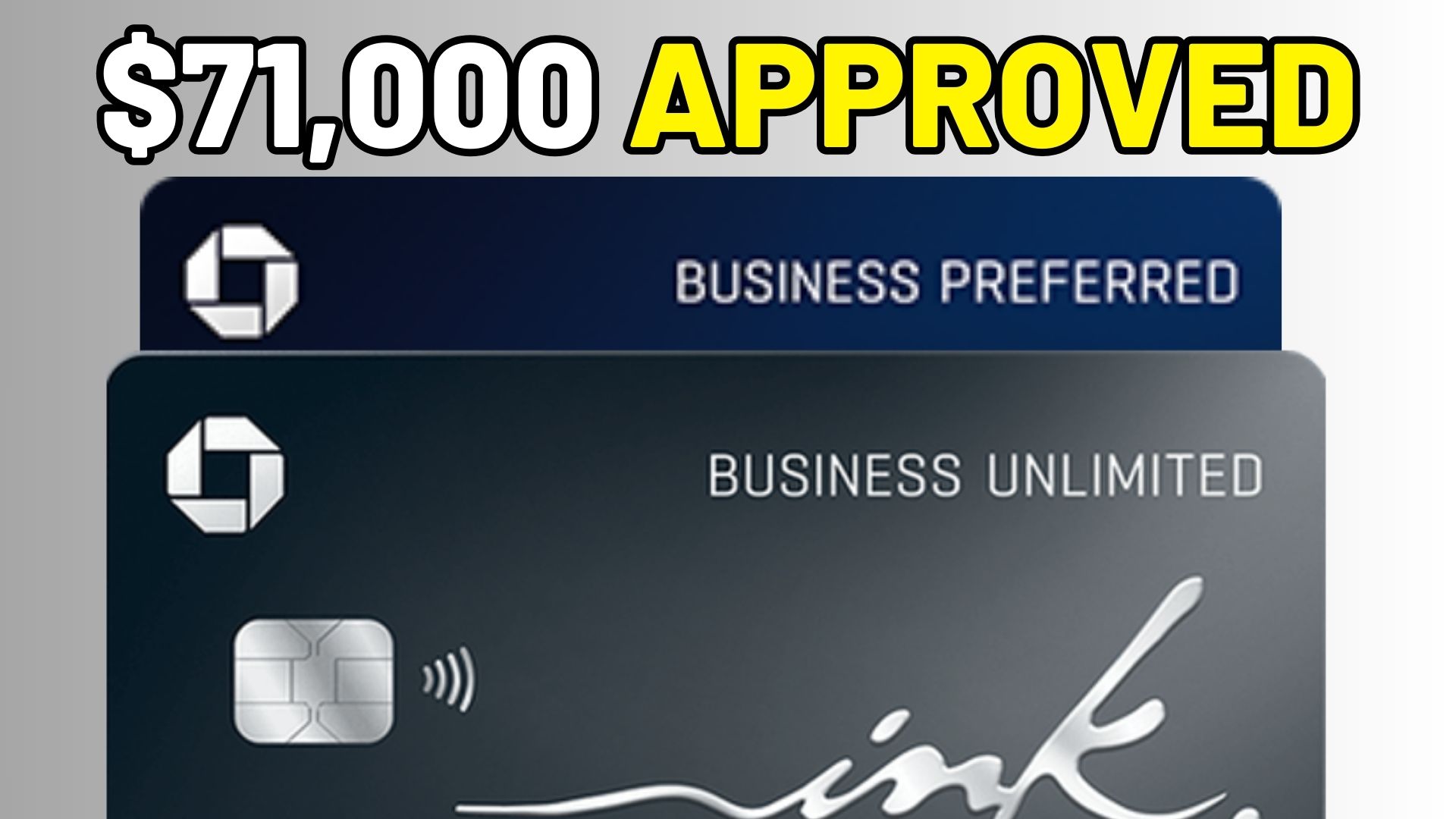
There is a big difference between being fundable in real life and looking fundable on paper.
That difference can decide whether the bank says yes or no.
One person can have a real business, work hard every day, serve customers, and still get denied because the file looks thin.
Another person can have a newer business, but the credit profile, bank relationship, balances, and story look clean enough for the lender to take them seriously.
That is what happened with Joseph.
He had a fresh LLC, a $2,500 Chase business checking deposit, and a strong personal credit profile.
Two weeks later, he was approved for $71,000 in Chase business credit.
That does not mean everyone can copy his result exactly.
But his story shows how business funding really works: banks do not just look at your hustle.
They look at what your profile says on paper.
Disclosure: This article may contain affiliate links, which means I may earn compensation if you click or apply through certain links.
Quick Answer
Joseph got approved for $71,000 in Chase business credit with a three-month-old LLC after opening a Chase business checking account, depositing $2,500, letting the account season for two weeks, and applying through a Business Relationship Manager. His personal credit profile was strong, with mid-700 scores, about 6% utilization, $177,500 in available credit, and household income above $200,000. Chase pulled Experian and TransUnion in his case, and the approval came from strong personal credit plus a cleaner business banking story.
Banks Care About What You Look Like on Paper
Here is the truth a lot of business owners do not want to hear:
Banks do not care how hard you work.
At least not directly.
You could be working 12-hour days, juggling invoices, dealing with customers, running payroll, and still get denied for funding.
Not because your business is fake.
Not because you are lazy.
Not because you do not deserve money.
But because the bank’s system cannot see your grind.
To a lender, you are not just a person.
You are a profile.
A set of numbers.
A credit report.
A business checking account.
A balance history.
A payment pattern.
A risk score.
That is the game.
And if your profile does not look stable, the bank may not care how much potential you have.
What Lenders Actually See
When a lender reviews a business funding application, they are looking for signs of stability.
That usually means:
-
Clean personal credit
-
Low utilization
-
Higher credit limits
-
Strong payment history
-
Stable banking activity
-
Consistent deposits
-
Few or no overdrafts
-
A believable business story
-
Reasonable stated revenue or projections
-
Enough income to support the request
Chase’s own business credit card application guidance says business card applicants may need to provide information such as business type, annual revenue, number of employees, years in business, estimated monthly spend, and personal information from the business owner.
That is why your file needs to make sense.
A lender is not just asking, “Does this person want funding?”
They are asking, “Does this person look like they can handle funding?”
That is a completely different question.
Why Entrepreneurs Get Denied Even When Business Is Good
A lot of entrepreneurs get denied because they look broke on paper.
That does not mean they are broke.
It means the file looks weak.
Maybe the business has revenue, but the business checking account is always drained.
Maybe the owner is profitable, but the credit limits are tiny.
Maybe the credit score is decent, but utilization is high.
Maybe the business is growing, but there is no clean banking relationship.
Maybe the revenue is real, but deposits look inconsistent.
Banks do not see your full story.
They see the documents and data in front of them.
That is why profitable businesses can still get denied.
The business may be doing fine, but the profile does not look fundable.
The Power of Comparable Credit
Comparable credit is one of the most important concepts in funding.
The basic idea is simple:
Lenders like to see that you have already handled credit limits close to what you are asking for.
If your highest credit card limit is $2,000 and you ask a bank for $50,000, that is a big jump.
It is like telling the bank:
“I know nobody has trusted me with more than $2,000 before, but trust me with $50,000 today.”
That is a tough sell.
But if your report shows a $20,000 card with low utilization, the story changes.
Now the bank sees proof.
You have already handled larger limits.
You have already shown restraint.
You have already managed bigger credit lines without maxing them out.
That makes a lender more comfortable.
Low-Limit Cards Can Hold You Back
This is why low-limit subprime cards can become a trap.
Cards like Credit One, First Premier, and Indigo may help some people start rebuilding, but they often come with low limits and fees.
The problem is that if your file is full of $300, $500, and $700 limits, bigger lenders may not see you as ready for larger approvals.
Even with a decent score.
That is why you eventually need to graduate.
You need lenders that can grow with you.
Prime banks.
Credit unions.
Higher-limit cards.
Business cards.
Lines of credit.
The goal is to make your profile show that other lenders already trust you with real money.
That is how you move from “thin file” to “fundable profile.”
Two Legal Ways to Strengthen Your Credit Profile
Before we talk about bank balances, let’s talk about the two cleaner ways to make your credit profile stronger.
These are not tricks.
These are normal credit-building moves.
1. Request Credit Limit Increases
If you have had a card for a while, paid on time, and kept utilization low, ask for a credit limit increase.
A move from $2,000 to $10,000 can change how your profile looks.
Not because you borrowed more money.
But because your available credit increased.
That can lower utilization and make your file look stronger.
Just make sure you know whether the request is a soft pull or hard pull before asking.
Some issuers make this easy.
Others may require a hard inquiry.
Do not guess.
Ask first.
2. Use Authorized User Accounts Carefully
Authorized user accounts can also help when used correctly.
If a trusted family member adds you to an old, high-limit card with perfect payment history and low utilization, that account may appear on your credit report.
That can help your file look older, stronger, and deeper.
But this can backfire.
If the account has high utilization, missed payments, or messy history, it can hurt more than it helps.
So be selective.
You are borrowing someone else’s history.
Make sure it is a history worth borrowing.
The Bank Balance Problem
Business owners love focusing on revenue.
But lenders often care about balances too.
If your business account constantly drops to $200, even after big deposits, the bank may see instability.
If your account holds a healthier balance consistently, the business looks safer.
Business funding providers often review bank statements to understand cash flow, deposit activity, average balances, negative days, overdrafts, and repayment ability.
That is why bank statements matter.
They are not just records.
They are a snapshot of how stable your business looks.
The “$10K on Paper” Concept
The source content calls this the “$10K on paper” strategy.
Here is how I would clean that up:
The goal is not to fake money.
The goal is to legitimately capitalize your business account and keep the balance stable long enough for the bank statements to tell a stronger story.
That means money sitting in the account should be real, documented, and explainable.
It can come from:
-
Business revenue
-
Owner contribution
-
Savings moved into the business
-
A properly documented capital injection
-
A legitimate loan you can afford
-
Business profits retained instead of immediately withdrawn
What you should not do is temporarily stage money to mislead a lender.
Do not borrow money for a few days just to fake a balance.
Do not move the same money around to create fake activity.
Do not misrepresent borrowed funds as revenue.
That is how a funding strategy turns into a problem.
Why Average Balance Matters
Lenders do not only care about one-day screenshots.
They want to see what your account looks like over time.
A healthy balance for one day is not the same as a healthy balance for 30, 60, or 90 days.
That is why the real strategy is consistency.
Keep money in the account.
Avoid overdrafts.
Avoid negative days.
Keep deposits steady.
Let the statements show stability.
A lender would rather see a business with consistent deposits and a stable average balance than a business that gets one big deposit and immediately drains the account.
How to Build a Stronger Business Bank Profile
Here is the cleaner version of the play.
Step 1: Open a Real Business Checking Account
Start with a business checking account at the bank you want to build with.
If your target is Chase, open Chase business checking.
Chase for Business offers business checking, savings, loans, business credit cards, and lines of credit, so it can be used as a full banking relationship instead of just a place to park money.
Do not treat the account like a prop.
Use it like a real business account.
Step 2: Deposit Money You Can Explain
Put money into the account that has a clean source.
Business revenue.
Owner contribution.
Savings.
A documented loan.
Whatever it is, make sure you can explain it.
If the bank asks where the money came from, you should have a clean answer.
Step 3: Keep the Balance Stable
Do not deposit money and drain it the next day.
Let the account season.
Thirty to ninety days is stronger than two days.
Even Joseph’s case used two weeks of seasoning before applying, but that was paired with a strong personal credit profile.
Most people should give the relationship more time.
Step 4: Run Real Business Activity Through the Account
A dead account with a balance can look staged.
A real account shows activity.
That can include:
-
Software subscriptions
-
Gas
-
Vendor payments
-
Client deposits
-
Merchant deposits
-
Business insurance
-
Business phone bill
-
Supplies
The key is real activity.
Not fake transactions.
Step 5: Avoid Overdrafts and Negative Days
Overdrafts are ugly.
Negative days are ugly.
NSF fees are ugly.
They make the business look like it cannot manage cash flow.
If you are preparing for funding, keep the account clean.
Step 6: Apply Through a Banker When Possible
Online applications can work.
But for bigger approvals, a banker or Business Relationship Manager can help tell the story.
Joseph did not just fill out a random online form.
He applied through a Chase Business Relationship Manager.
That matters because a real person can ask better questions, position the application, and sometimes help route the file more effectively.
Joseph’s $71K Chase Business Credit Story
Joseph’s story is the reason this strategy matters.
He did not have a long-established company.
He did not have years of business revenue.
He had a newer LLC, strong personal credit, a Chase business checking account, and a clear strategy.
And in about two weeks, he turned that setup into $71,000 in Chase business credit.
Joseph’s Setup
Here is what Joseph had:
-
LLC age: about three months old
-
Prior Chase relationship: none
-
Chase business checking deposit: $2,500
-
Credit scores: 773 Experian, 751 TransUnion, 753 Equifax
-
Utilization: about 6%
-
Total available personal credit: $177,500
-
Household income: a little over $200,000
That is important.
Joseph’s LLC was new, but his personal credit profile was not weak.
That is the difference.
New business does not automatically mean weak application if the personal guarantor looks strong.
Step 1: He Opened Chase Business Checking
Joseph started by opening a Chase business checking account.
He deposited $2,500.
That was not $10,000.
That was not $50,000.
It was $2,500.
But it created a relationship.
And it gave Chase something to see before the business card application.
Step 2: He Let the Account Season
He did not apply the same day.
He waited about two weeks.
That gave Chase’s system time to see the account and balance.
Was two weeks ideal?
Not for everyone.
Thirty to ninety days is safer.
But Joseph’s personal profile was strong enough that two weeks still worked.
Step 3: He Applied Through a Business Relationship Manager
This was the big move.
Joseph applied through a Chase Business Relationship Manager instead of a public online application.
That gave him a human channel.
A stronger presentation.
And a chance to explain the business.
Chase has Business Relationship Manager roles focused on serving small business clients with banking, lending, and payment solutions, so using a business banker fits the way Chase wants to manage business relationships.
That does not guarantee approval.
But it can help the application feel less random.
Step 4: He Framed the Business With Confidence
When asked about business projections, Joseph said he expected $300,000 to $500,000 in revenue.
That matters because new businesses do not always have much history.
So the bank may look at projections, industry, income, personal credit, and the overall story.
But be careful here.
Do not make up projections.
Do not inflate numbers just to sound impressive.
If you give revenue projections, they should be reasonable and supportable.
A confident story is good.
A fake story is not.
The Result: $71,000 in Chase Business Credit
Joseph got approved for:
-
$50,000 on the first Chase Ink Business Unlimited card
-
$21,000 on a second Chase business card two days later
-
$71,000 total business credit
The Chase Ink Business Unlimited is a no-annual-fee business credit card that earns unlimited 1.5% cash back on purchases, according to Chase’s official card page.
Chase pulled both Experian and TransUnion in Joseph’s case.
That is not what everyone sees.
Many Chase business card datapoints involve Experian only.
But in Joseph’s case, the dual pull was worth it because the approvals were massive.
Why Joseph’s Approval Worked
Joseph’s approval worked because the full profile made sense.
A new LLC by itself might look risky.
But a new LLC plus strong personal credit is different.
A $2,500 business checking deposit by itself might not matter much.
But a $2,500 deposit plus low utilization, high household income, and $177,500 in available credit looks stronger.
A projection by itself is not enough.
But a projection plus a Business Relationship Manager plus strong personal credit can create a better story.
That is why you cannot isolate one piece of the strategy.
It was the full stack.
Why Personal Credit Still Matters for Business Cards
A lot of business owners want business credit without using personal credit.
I get it.
But many business cards still rely on a personal guarantee.
That means the bank is looking at you as the backstop.
Your personal credit matters.
Your personal utilization matters.
Your recent inquiries matter.
Your available credit matters.
Your payment history matters.
If your business is new, your personal profile may be the strongest part of the application.
That is why Joseph’s mid-700 scores and low utilization mattered so much.
No-PG Business Cards Are a Different Route
If your business already has strong monthly revenue, you may not need the same personal-guarantee path.
Some no-PG business cards can approve based more heavily on business revenue, bank statements, or connected accounts.
That can be a better fit if your personal credit is not the strongest part of your profile.
Helpful resource: If your business has solid monthly revenue and you want cards that may not require a personal guarantee, my No PG Business Credit Card Master List can help you compare options.
The Funding Readiness Checklist
Before trying a Chase-style business credit play, I would want these boxes checked.
Personal Credit
Your personal credit should be clean.
That means:
-
No recent late payments
-
Low utilization
-
Solid scores
-
Manageable inquiries
-
Decent comparable credit
-
No messy recent derogatories
You do not need perfection.
But you need to look responsible.
Business Banking
Your business checking should look active and stable.
That means:
-
Consistent balance
-
Real deposits
-
Real business activity
-
No overdrafts
-
No negative days
-
No random staged transfers
-
Clean statements
Bank statements tell a story.
Make sure yours tells the right one.
Business Story
Your business story needs to make sense.
What does the business do?
How does it make money?
Why do you need credit?
How will you use the funds?
How will the business repay?
You do not need a 100-page plan.
But you do need a clean explanation.
Relationship
A relationship can help.
That could mean:
-
Business checking
-
Personal checking
-
Deposit activity
-
Prior cards
-
Prior loans
-
A Business Relationship Manager
-
Branch or banker contact
Banks like knowing who they are lending to.
What Not to Do
Do not run this play the wrong way.
Do not fake revenue.
Do not misrepresent borrowed money.
Do not borrow money you cannot afford just to impress a bank.
Do not take a high-fee cash advance unless you fully understand the cost.
Do not apply with high utilization.
Do not apply right after opening too many accounts.
Do not apply through five random links hoping one sticks.
Do not treat business credit like free money.
Business funding should create leverage.
Not chaos.
Frequently Asked Questions
Can a new LLC get business credit cards?
Yes, a new LLC can get business credit cards, especially when the owner has strong personal credit and is willing to provide a personal guarantee. Joseph’s LLC was about three months old when he got approved for $71,000 in Chase business credit.
Does Chase pull personal credit for business cards?
Chase business credit card applications can involve personal credit because many business cards require a personal guarantee. In Joseph’s case, Chase pulled both Experian and TransUnion.
Does opening a Chase business checking account help with business card approvals?
It can help create a banking relationship, but it does not guarantee approval. Joseph opened Chase business checking, deposited $2,500, waited two weeks, and applied through a Business Relationship Manager before getting approved.
What is comparable credit?
Comparable credit means lenders like to see that you have already managed credit limits similar to what you are asking for. If your highest card is $2,000, asking for $50,000 is a big leap. If you already have high-limit cards with low utilization, the request looks more believable.
Is it okay to borrow money to show a higher bank balance?
Only if the money is legitimate, documented, affordable, and not misrepresented. Do not temporarily stage funds or mislead a lender. A stronger strategy is to build real business cash reserves, keep consistent balances, avoid overdrafts, and document any owner contributions or loans properly.
What are no-PG business cards?
No-PG business cards are business cards that may not require a personal guarantee. They often rely more on business revenue, cash flow, connected accounts, or company financials. They can be useful for businesses with strong monthly revenue.
Conclusion
Joseph’s $71,000 Chase approval was not magic.
It was positioning.
He had a new LLC, but his personal credit was strong.
He had a small business checking deposit, but it created a relationship.
He waited before applying.
He worked through a Business Relationship Manager.
He had low utilization, high available credit, strong income, and a believable business story.
That is what made the file work.
The bigger lesson is simple:
Banks do not fund effort.
They fund profiles.
So build the profile.
Keep your utilization low.
Grow your comparable credit.
Season your business banking relationship.
Keep stable balances.
Avoid fake activity.
And when you apply, make sure the lender sees a business that looks ready for the money you are asking for.