
Capital One Bought Discover: What This Merger Really Means for Customers
Jul 01, 2026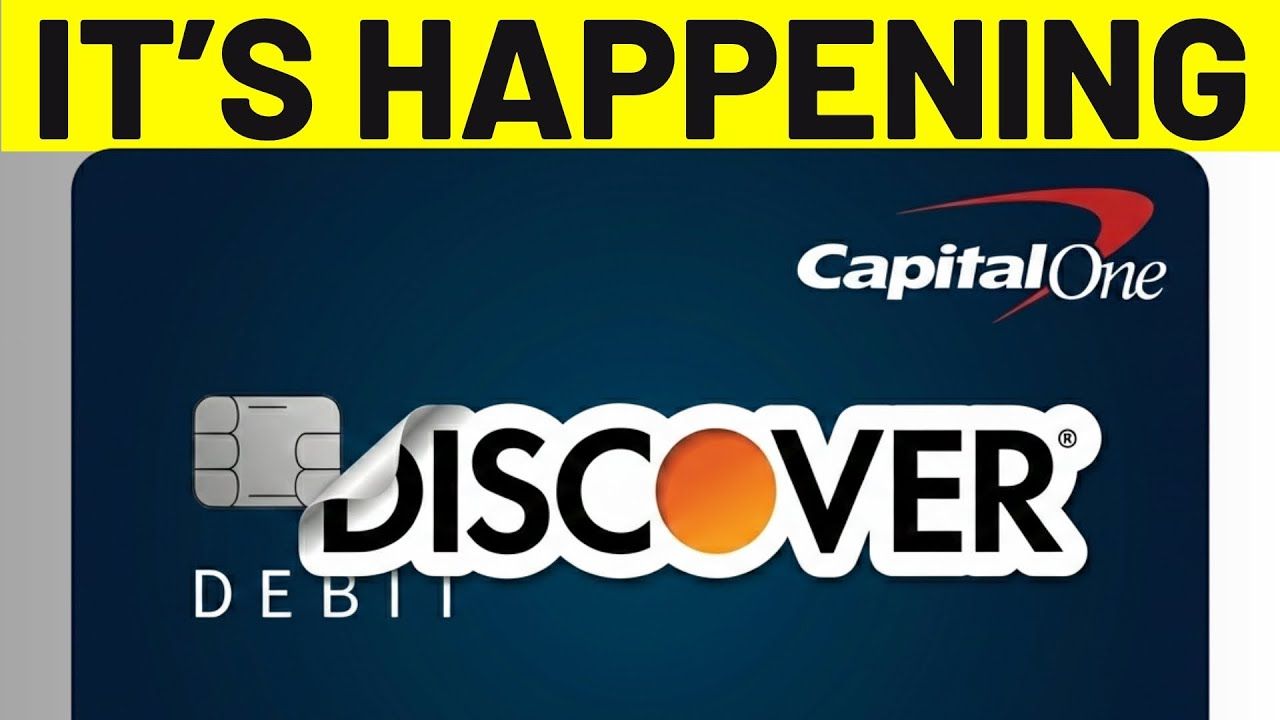
I’ve been flooded with messages about the Capital One and Discover merger.
Screenshots.
Emails.
Panic DMs.
“Cal, is this good?”
“Is this bad?”
“Do I need to switch banks?”
“Is my card still safe?”
“Should I move my money out?”
And look, I get it.
This is one of the biggest banking shifts we’ve seen in years.
This is not just a card update.
This is not just a minor rebrand.
This is not just Capital One buying another credit card portfolio.
Capital One completed its acquisition of Discover on May 18, 2025, and Capital One says customer accounts and banking relationships remain unchanged for now. Customers are supposed to receive information before future changes happen.
But the real story is bigger than card designs, rewards programs, or app changes.
Capital One did not just buy Discover customers.
Capital One bought Discover’s payment network.
And that is the part that changes the entire game.
Disclosure: This article may contain affiliate links, which means I may earn compensation if you click or apply through certain links.
Quick Answer
Capital One completed its Discover acquisition in May 2025, but most customer accounts are not changing immediately. The biggest long-term change is that Capital One now owns Discover’s payment network, including Discover Network, PULSE, and Diners Club International. That could help Capital One compete more directly with Visa and Mastercard, but customers should watch for debit card network changes, instant-transfer issues, international acceptance problems, customer service changes, and possible product or underwriting shifts.
Most People Are Looking at the Wrong Part of the Merger
Most headlines focus on the obvious stuff:
Capital One bought Discover.
Capital One gets Discover cardholders.
Discover is now part of Capital One.
That is true.
But it is not the most important part.
Most people are looking at the card side:
-
What happens to Discover it?
-
What happens to Venture and Savor?
-
Will rewards change?
-
Will card designs change?
-
Will Discover cards become Capital One cards?
Those are fair questions.
But they are surface-level.
The deeper story is the payment network.
That is the real reason this deal matters.
Capital One Bought a Payment Network
Most banks issue cards that run on someone else’s payment network.
Chase issues Visa and Mastercard cards.
Bank of America issues Visa and Mastercard cards.
Citi issues Visa and Mastercard cards.
Capital One has historically issued many cards on Visa or Mastercard rails.
That means those banks issue the card, but Visa or Mastercard helps run the network those transactions move through.
Discover is different.
Discover is both:
-
A card issuer
-
A payment network
That means Discover does not just hand out cards.
Discover owns payment rails.
Capital One’s official acquisition materials say Discover operates Discover Network, PULSE, and Diners Club International. PULSE is one of the major ATM/debit networks, while Diners Club International gives Discover a global network component.
That is the real asset.
Capital One did not just buy a stack of credit card accounts.
It bought infrastructure.
Why the Network Matters
Payment networks are the roads your transactions drive on.
When you swipe, tap, dip, or enter a card number online, that transaction needs to move through a network.
That network affects things like:
-
Acceptance
-
Routing
-
Fraud rules
-
Dispute rules
-
Merchant costs
-
Data
-
Network economics
-
Debit card compatibility
-
ATM access
-
Instant transfers
Visa and Mastercard have been the dominant highways for a long time.
Capital One now has its own road.
That gives Capital One more control over how transactions move, how merchants are charged, and how the bank captures value from each swipe.
That is why this deal is bigger than most people realize.
The Debit Card Network Change Is Already Real
This is where customers may actually feel the merger.
Capital One says it is switching its debit card network, and customers receiving new debit cards may see changes to instant transfers. Some merchants or payroll providers may no longer support instant transfers into Capital One checking accounts with the new debit card because of the network change.
That is not theory.
That is Capital One’s own help center saying it.
This can affect people who use debit-card instant transfers from:
-
PayPal
-
Venmo
-
Payroll apps
-
Merchant platforms
-
Gig work platforms
-
Business payout services
-
Other apps that move money instantly to debit cards
Capital One says some services may still work, while others may require another method, such as ACH, which usually takes 1 to 3 business days.
That matters.
Because if your Capital One debit card is your money hub, even a one-day or two-day delay can cause real problems.
Why Capital One Wants Debit on Discover Rails
Here is the business logic.
If Capital One can move more debit volume onto a network it owns, it can potentially keep more of the payment economics inside the company.
That does not automatically mean every customer gets better rewards.
But it gives Capital One more control.
The bank can control more of the payment chain instead of relying as heavily on Visa or Mastercard for certain transactions.
That is why I strongly believe debit rewards could eventually become more interesting again.
Not because Capital One suddenly loves customers more.
Because the economics may make more sense when Capital One owns the rail.
Could we see things like 1% cash back debit offers or selective perks for checking customers?
I think it is possible.
But that is a prediction, not a confirmed product launch.
Discover Customers May Eventually Get a Branch Upgrade
Discover has always had one major weakness:
No real branch footprint.
For many people, that was fine.
Discover’s online banking experience worked well enough for normal situations.
But when something goes wrong, online-only banking can feel limited.
Think about:
-
Fraud
-
Stolen debit cards
-
Identity verification
-
Cashier’s checks
-
Urgent account issues
-
Emergency card replacement
-
Complex account problems
Capital One has branches and Capital One Cafés located primarily in New York, Louisiana, Texas, Maryland, Virginia, and Washington, DC.
That does not mean every Discover customer suddenly gets full in-person help tomorrow.
Capital One’s FAQ still says Discover customers should continue using Discover’s normal tools, app, website, and phone number for Discover accounts.
But long term, the combination could give Discover customers access to more physical banking support than they had before.
That would be a real upgrade.
The Acceptance Problem Is the Big Risk
Inside the United States, Discover works in a lot of places.
For everyday U.S. purchases, many people will not notice a major issue.
Groceries.
Gas.
Online shopping.
Restaurants.
Most of that should be fine.
But the acceptance problem gets more complicated when you look at:
-
Discover credit
-
Discover debit
-
Discover ATM access
-
Discover international acceptance
-
PULSE debit network support
-
Instant transfer support
Just because a merchant accepts Discover credit does not mean every debit or ATM situation works the same way.
And just because a debit card works at checkout does not guarantee every app or payout platform supports instant transfers to that card.
That is exactly why Capital One had to publish guidance about some instant transfers no longer working with the new debit card network.
International Travelers Need a Backup Card
This is the group I would watch closely.
If you travel internationally often, you should not rely only on Discover or Discover-network debit.
Discover has international acceptance through its global network relationships, but it is still not Visa or Mastercard-level universal in many real-world travel situations.
That does not mean the card is useless overseas.
It means acceptance can be hit-or-miss.
If your debit card is your lifeline overseas, you need a backup.
At minimum, frequent travelers should carry:
-
One Visa
-
One Mastercard
-
One backup debit card
-
One backup bank account
-
Some emergency cash strategy
Do not let one network issue ruin your trip.
Payment App Users Should Test Before They Need the Money
The other group that needs to pay attention is anyone who depends on fast transfers.
If you use PayPal, Venmo, payroll apps, gig platforms, marketplace payouts, or business payment services, do not wait until rent is due to test whether your new debit card works.
Capital One specifically says some instant transfers may no longer work with the new debit card, while ACH may still be available but may take 1 to 3 business days.
That is the part people need to plan around.
If you rely on instant transfers for cash flow, test now.
Do not be the guinea pig when you need the money immediately.
Discover Customer Service Is the Culture Question
This is one of the biggest concerns.
Discover built a reputation for strong customer service, clean policies, and smoother dispute handling.
Capital One even describes Discover as having a legacy of award-winning customer service and customer advocacy.
That is not small.
People liked Discover because it felt more human.
Capital One, on the other hand, has a reputation for being more system-driven.
Strict approvals.
Robotic decisions.
Less room for reconsideration.
More “the system says no” energy.
Can Capital One merge apps, networks, products, and systems?
Yes.
Can it merge customer service culture overnight?
No.
That is the real concern.
A Discover customer who picked Discover because of service may not want a more Capital One-style experience.
And that is fair.
Credit-Focused Customers Should Watch Underwriting Changes
If you are credit-focused, this merger matters for another reason:
Underwriting.
Discover has historically felt more flexible to some customers.
Capital One is famous for tight internal models, unpredictable approvals, and limited reconsideration.
So if Discover accounts are eventually reviewed or managed under more Capital One-style risk models, some customers may not love the outcome.
That does not mean your limit will automatically get cut.
That does not mean your Discover account is doomed.
But if you care about credit limits, account age, utilization, and growth potential, you should pay attention to every notice you receive.
Watch for:
-
Limit changes
-
Product changes
-
APR changes
-
Reward changes
-
App migration notices
-
Customer service changes
-
New card network changes
-
Updated terms and conditions
Do not ignore the mail.
That boring notice might matter.
Capital One and Discover Balance Transfers Have Changed
One immediate rule already matters.
Capital One says you can no longer transfer a credit card balance or use a balance transfer check between a Discover and Capital One account. You can still transfer money between Capital One and Discover bank accounts.
That makes sense because they are now under the same company.
But it matters if you were planning to move a balance from one side to the other.
That strategy may no longer work.
FDIC Insurance Is Also Changing for Deposit Customers
Deposit customers need to pay attention too.
Capital One says that starting November 18, 2025, if you have both Capital One and Discover deposit accounts, they will be jointly insured by the FDIC up to the allowable limits. Some CD accounts may continue to be separately insured depending on maturity and renewal details.
That matters for people with large balances.
If you have a lot of cash spread between Capital One and Discover, do not assume you still have separate FDIC coverage forever.
Review your balances.
Talk to the bank if you are near FDIC limits.
Who Should Actually Be Worried?
Not everyone needs to panic.
Most customers can probably wait and watch.
But certain groups should pay closer attention.
Frequent International Travelers
If you leave the country often, network acceptance matters.
Do not rely only on a Discover-network debit or credit card.
Carry backups.
People Who Depend on Instant Transfers
If you move money through PayPal, Venmo, payroll apps, gig apps, merchant platforms, or payout services, test your new debit card before you depend on it.
Capital One already says some instant transfers may no longer be supported.
Discover Customers Who Chose Discover for Service
If Discover’s customer service is the reason you stayed, watch the integration closely.
If the service culture changes, you may want a backup bank or card issuer.
Credit-Focused Customers
If you care about credit limits, account age, and approval behavior, watch for any changes to underwriting, risk models, or credit line policies.
Do not close old accounts emotionally.
But do not ignore policy changes either.
People With Large Deposit Balances
If you have both Discover and Capital One deposit accounts, review FDIC coverage after the merger.
The insurance treatment changes after November 18, 2025, for many deposit accounts held at both institutions.
What You Should Do Now
Do not panic.
But do not sleepwalk through the transition either.
Here is what I would do:
-
Read every Capital One and Discover notice
-
Keep a backup Visa or Mastercard
-
Keep a backup debit card
-
Test PayPal, Venmo, payroll, and payout transfers
-
Review FDIC coverage if you hold large deposits
-
Avoid closing old cards without thinking about credit age and utilization
-
Monitor credit limits and terms
-
Keep screenshots of important notices
-
Use pre-approval tools before applying for replacement cards
-
Diversify across issuers
This is not the time to have your entire financial life sitting with one bank.
That was true before the merger.
It is even more true now.
Helpful resource: Capital One and Discover both offer credit card pre-approval tools that can let you check offers without impacting your credit score. If you want links to soft-pull pre-approval pages across multiple banks, my Free Credit Card & Loan Pre-Approval Master List can help you compare options before applying.
Frequently Asked Questions
Did Capital One officially buy Discover?
Yes. Capital One completed its acquisition of Discover Financial Services on May 18, 2025. Capital One says Discover is now part of Capital One, N.A.
Are Capital One and Discover accounts changing right away?
Capital One says customer accounts and banking relationships remain unchanged for now, and customers will receive information before future changes. Discover customers should continue using Discover tools and channels unless told otherwise.
Why did Capital One really buy Discover?
The biggest strategic reason is Discover’s payment network. Discover operates Discover Network, PULSE, and Diners Club International, giving Capital One ownership of payment rails instead of only relying on Visa and Mastercard.
Will Capital One debit cards move to Discover?
Capital One says it is switching its debit card network and that some customers will receive new debit cards. The network change may affect instant transfers from some merchants, payroll providers, PayPal, Venmo, and similar services.
Will Discover cards still work internationally?
Discover has international network relationships, but acceptance outside the U.S. can still be less consistent than Visa or Mastercard in many situations. Frequent international travelers should carry backup cards.
Can I transfer a balance between Discover and Capital One?
No. Capital One says you can no longer transfer a credit card balance, or use a balance transfer check, between a Discover and Capital One account.
Conclusion
The Capital One and Discover merger is bigger than a credit card rebrand.
Capital One bought Discover customers, yes.
But more importantly, Capital One bought Discover’s payment network.
That means more control over payment rails, debit economics, merchant relationships, network data, and long-term competition with Visa and Mastercard.
For most customers, nothing needs to change immediately.
But some people should pay very close attention.
Frequent international travelers need backup cards.
Instant-transfer users need to test their debit cards.
Discover loyalists need to watch customer service changes.
Credit-focused users need to monitor limits and underwriting.
Deposit customers need to understand FDIC coverage changes.
This merger is not automatically good or bad.
It is a major shift.
And when banks make major shifts, the smartest customers do not panic.
They prepare.