
7 Capital One Credit Card Rules Most People Miss
Jun 28, 2026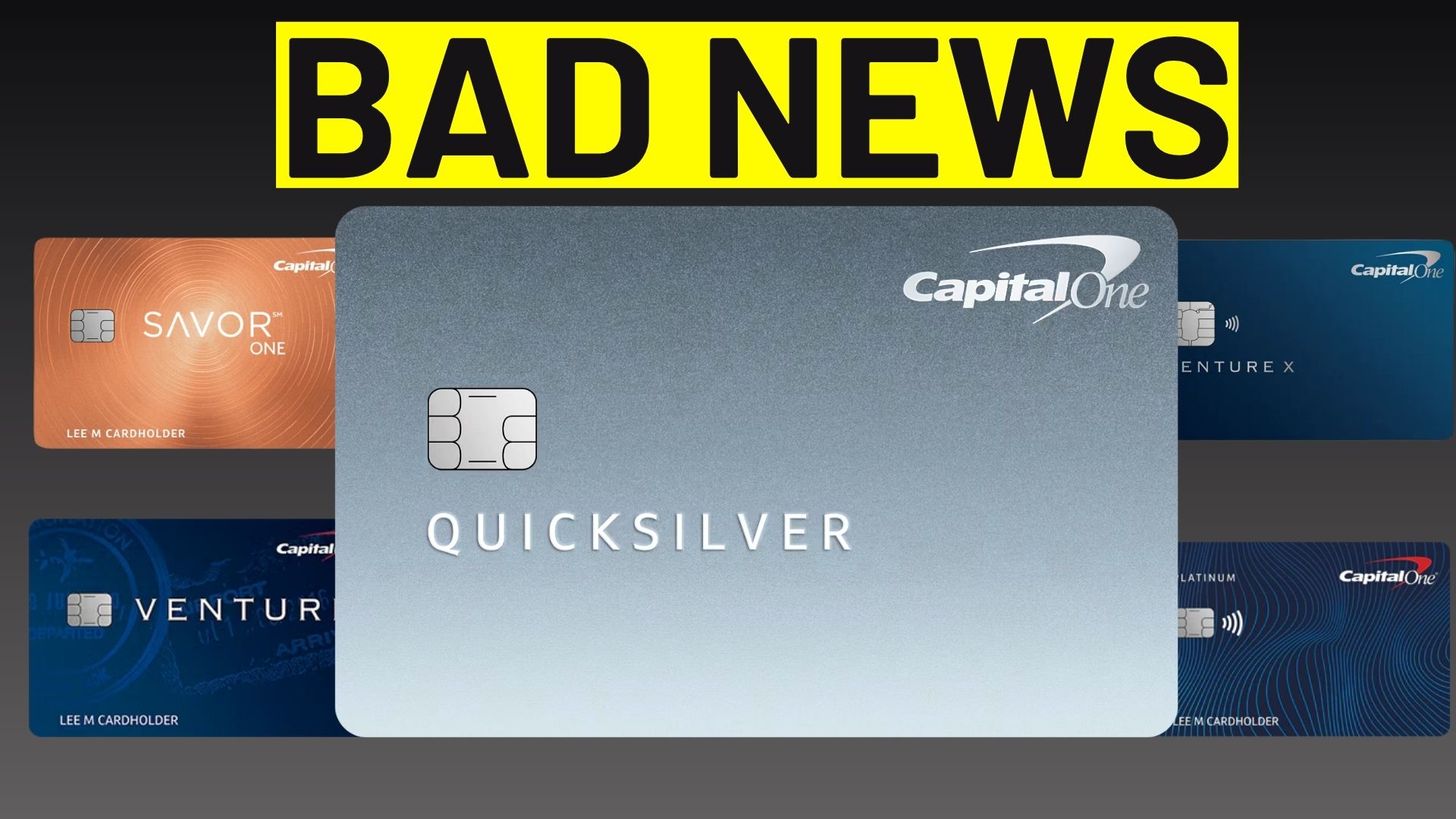
Capital One is one of the most confusing credit card issuers out there.
You can have a perfect payment history.
You can use your card for years.
You can have a long relationship with them.
And somehow, your credit limit still refuses to grow.
That is what frustrates people about Capital One.
The system often feels random, but it is not really random. It is just highly automated, heavily risk-based, and not very transparent.
Once you understand how Capital One works, a lot of the confusion starts to make sense.
This article breaks down seven Capital One rules and behaviors that can help you avoid bad applications, low-limit cards, unnecessary hard pulls, and frustrating product decisions.
Disclosure: This article may contain affiliate links, which means I may earn compensation if you click or apply through certain links.
Quick Answer
Capital One is best understood as an algorithm-driven credit card issuer. They are known for soft-pull pre-approval, possible triple-bureau hard pulls when you fully apply, strict internal risk tiers, limited reconsideration, and a hidden product-change path that may let some cardholders upgrade without opening a new account. The biggest strategy is simple: check pre-approval first, apply only when your profile is strong, and avoid getting stuck with low-tier cards too early.
Helpful resource: If you want to check offers before risking unnecessary hard pulls, my free Credit Card & Loan Pre-Approval Master List includes Capital One pre-approval resources and other cards that may show offers upfront: https://courses.calbartoncashback.com/pre-approval-master-list-Blog
1. Capital One May Pull From All Three Credit Bureaus
Most banks pull from one credit bureau.
Sometimes two.
Capital One is known in the credit community for pulling from all three major credit bureaus when you fully apply for a card.

That means instead of one hard inquiry, you may take a hit on:
-
Experian
-
Equifax
-
TransUnion
This matters if you are trying to build credit aggressively or apply for multiple cards in a planned order.
A triple pull can throw off a credit card stacking strategy because it touches every bureau at once.
So if you apply for Capital One first, then try to apply somewhere else later, that next lender may see a fresh inquiry on the bureau they check.
That is why Capital One blind applications can be expensive.
If you are going to apply, you want to be confident.
The safest first step is to use Capital One’s pre-approval tool.
A pre-approval is not a guarantee, but it can give you a strong signal before you move forward with a full application.
2. The “Bucket” System Is Real
This is one of the biggest reasons Capital One frustrates people.
When Capital One approves you, the card can land in a certain internal risk tier.
People in the credit community often call this a “bucket.”
That bucket may influence:
-
Your starting limit
-
How fast the card can grow
-
Whether large credit limit increases are realistic
-
Whether the card behaves like a starter card long term
This is why someone can open a Capital One card with a $500 or $1,000 limit, use it perfectly for years, and still struggle to grow the card past a few thousand dollars.
The issue may not be their current credit score.
The issue may be the profile they had when the card was originally approved.
If you opened the card when your score was weak, the account may continue acting like a lower-tier product even after your credit improves.
That is why product changes do not always fix the problem.
Changing a Platinum to a Quicksilver may improve the rewards structure, but it does not necessarily move the account into a stronger underwriting tier.
Sometimes the better move is to apply for a brand-new Capital One card when your profile is stronger.
3. Capital One Does Not Reward Loyalty Like Some Banks
A lot of people assume a long relationship will help them.
With some banks, it can.
With Capital One, relationship does not always move the needle the way people expect.
You can have:
-
A checking account
-
A savings account
-
Multiple cards
-
Years of on-time payments
-
A long account history
And still get denied or receive a weak credit limit increase.
That is because Capital One is extremely data-driven.
The algorithm matters more than the story.
You usually cannot call in and plead your case the way you might with a credit union or relationship-based bank.
Manual reconsideration is limited.
So if Capital One denies you, it is usually not because they forgot you were loyal.
It is because the model did not like something in the application.
That could be recent inquiries, utilization, income, existing exposure, payment behavior, credit history, or internal risk scoring.
4. Capital One Card Limits Can Be Tricky
You may hear people talk about a Capital One five-card rule.
The reality is more complicated.
Capital One has internal limits, but they do not always apply the same way to every person or every product.
Some people may be limited by the type of card they already have.
Some starter cards may count differently.
Some co-branded or business products may be treated differently.
Some stronger profiles may see exceptions.
The point is not to memorize one rule as if it applies to everyone.
The point is to be intentional.
Do not fill your Capital One profile with low-tier cards early if your goal is to eventually qualify for stronger products.
A $300 or $500 starter card may help you rebuild credit.
But later, it can become dead weight if it takes up space and never grows.
That is why timing matters.
Capital One can be great when you are rebuilding.
It can also be great when your profile is excellent.
The awkward zone is the middle, where you may get approved, but not with the kind of limit you actually want.
5. Capital One Business Cards Can Affect Personal Credit
Business owners need to pay close attention here.
Many business credit cards from major issuers do not report normal monthly activity to your personal credit report unless you default.
Capital One has been different with many of its business cards.
That means some Capital One business cards may report balances, limits, and payment activity to your personal credit reports.
Why does that matter?
Because business spending can be large.
If you run $20,000 through a business credit card and that balance reports to your personal credit, your personal utilization can spike.
That can temporarily hurt your score even if you pay the card off.
This can affect:
-
Mortgage applications
-
Auto loans
-
Personal credit card approvals
-
Credit limit increase requests
-
Personal loan approvals
This does not mean Capital One business cards are bad.
It means you need to understand how the specific card reports before using it heavily.
Some newer or higher-tier Capital One business products may report differently, so always check the terms for the exact product.
Helpful resource: If your goal is business credit that may avoid reporting normal activity to personal credit, my No PG Business Credit Card Master List can help you compare options: https://calbarton.link/NoPG
6. Capital One Has a Hidden Product Change Path
Capital One has a product-change path that many cardholders never find.
This can sometimes let you upgrade or change an existing card without applying for a brand-new account.
Depending on your account, you may see options like:
-
Platinum to Quicksilver
-
QuicksilverOne with an annual fee to a no-annual-fee version
-
Venture to Venture X
-
Other eligible Capital One card swaps
This can be a huge win if you are stuck paying an annual fee on a starter card.
The big benefit is that a product change usually keeps the existing account open.
That means you may keep the same account age instead of opening a brand-new tradeline.
But there are trade-offs.
You usually do not get a new sign-up bonus.
Your credit limit may stay the same.
Your APR may stay the same.
And if your card is stuck in a low bucket, the product change may not magically turn it into a high-limit card.
Still, if you are paying an annual fee unnecessarily, checking for product-change options is one of the easiest Capital One wins.
7. Capital One Is Mostly Algorithm Driven
Capital One feels like a tech company because most decisions are automated.
That is why two people with similar credit scores can get completely different results.
One person gets instant approval with a high limit.
Another person gets denied with a similar score.
The difference is usually not just the score.
Capital One may also care about:
-
Utilization
-
Recent inquiries
-
New accounts
-
Income
-
Existing Capital One exposure
-
Payment history
-
Credit age
-
Account behavior
-
Internal risk signals
-
Whether you fit the model for that card
This is why the strategy is not about convincing Capital One after the fact.
The strategy is to make the profile look strong before applying.
You want low utilization.
You want fewer recent inquiries.
You want clean payment history.
You want income that supports the limit you are asking for.
And you want to use pre-approval first.
With Capital One, preparation matters more than persuasion.
Who Capital One Is Best For
I think Capital One is strongest for two types of people.
The first group is people rebuilding credit.
Capital One is one of the more forgiving major issuers when your credit profile is not perfect.
If you are coming back from mistakes, collections, thin credit, or lower scores, Capital One may approve you when other banks will not.
That makes them a useful rebuilding bank.
The second group is people with excellent credit.
If your profile is strong, clean, and low-risk, Capital One’s premium cards can be very competitive.
The Venture X and Savor combination can be a simple setup for people who want travel rewards, dining rewards, entertainment rewards, and everyday value without juggling ten different cards.
Capital One becomes much harder to recommend for people in the middle.
You might get approved, but the limit may not be exciting.
You might get $2,000 or $3,000 from Capital One when another bank might have given the same profile $10,000 or $20,000.
That is the awkward Capital One zone.
Approved, but not really rewarded.
When You Should Wait Before Applying
Sometimes the smartest Capital One move is to wait.
I would be careful applying if:
-
Your utilization is high
-
You have recent missed payments
-
You opened several cards recently
-
You have a lot of recent inquiries
-
Your pre-approval offers are weak
-
Your credit score is in the middle but improving
-
You already have low-limit Capital One cards that are not growing
Capital One can lock in how it views you early.
So if you apply too soon, you may get approved into a low tier and then spend years trying to grow the card.
It may be better to build your profile somewhere else first.
Then come back when your credit is stronger.
How to Approach Capital One the Smart Way
Here is the simple Capital One strategy.
First, check pre-approval.
Do not apply blind if you can avoid it.
Second, apply when your profile is strong.
Third, avoid opening too many low-tier Capital One cards early.
Fourth, check the product-change page if you already have a weak card with an annual fee.
Fifth, be careful using Capital One business cards heavily unless you know exactly how that card reports.
Sixth, do not expect a customer service rep to override the algorithm.
Capital One gets much easier to understand when you stop thinking of it like a relationship bank.
It is not really about loyalty.
It is about model fit.
Capital One Pre-Approval Should Be Your First Step
The pre-approval tool is one of the most important things Capital One offers.
It lets you see potential offers before submitting a full application.
That matters because Capital One applications can be more painful than most if they trigger hard inquiries across multiple bureaus.
A pre-approval still does not guarantee final approval.
But it gives you a much better signal than guessing.
If you see strong offers, you may be in a better position.
If you do not see offers, or the offers are weak, that may be a sign to wait.
Helpful resource: If you want cards that may reveal more information before you apply, my 9 Credit Cards That Reveal Your Starting Limit Before Approval list can help you compare other upfront-offer options: https://offers.calbartoncashback.com/Links
Frequently Asked Questions
Does Capital One pull all three credit bureaus?
Capital One is widely known in the credit community for pulling all three major credit bureaus on many credit card applications. Because bureau-pull behavior can change, always treat this as something to verify before applying.
Does Capital One pre-approval hurt your credit score?
Capital One says checking for pre-approved credit card offers has no impact on your credit score. A full application can still result in a hard inquiry.
Can you upgrade a Capital One card without a hard pull?
Capital One may offer product-change options on eligible accounts. Changing card types alone may not affect your credit score, but you should review the specific offer terms before accepting.
Why won’t Capital One increase my credit limit?
Your card may be in a lower internal risk tier, often called a “bucket” by the credit community. If the card was approved when your profile was weaker, it may be harder to grow even if your current score is much better.
Do Capital One business cards report to personal credit?
Many Capital One business cards have historically reported normal activity to personal credit, though some products may be exceptions. Always check the reporting terms for the specific business card before applying.
Is Capital One good for rebuilding credit?
Yes, Capital One can be useful for rebuilding because they offer products for people with fair, thin, or rebuilding credit. Just understand that starter cards may not always grow into high-limit cards later.
Final Thoughts
Capital One is not random.
It just does not work the way people expect.
They may pull from all three bureaus.
They may place your card into a lower internal bucket.
They may not reward loyalty the way a relationship bank would.
They may report certain business card activity to your personal credit.
And they may give you very limited ability to argue your case after a denial.
But once you understand the system, Capital One becomes easier to deal with.
Use pre-approval first.
Apply when your profile is strong.
Do not waste slots on cards you do not actually want.
Use the product-change path when it makes sense.
And be careful with business card reporting.
Capital One can be a great issuer for the right person at the right time.
The mistake is applying blind and hoping the algorithm likes you.
With Capital One, hope is not the strategy.