
How to Get Business Credit With Bad Personal Credit
Jun 25, 2026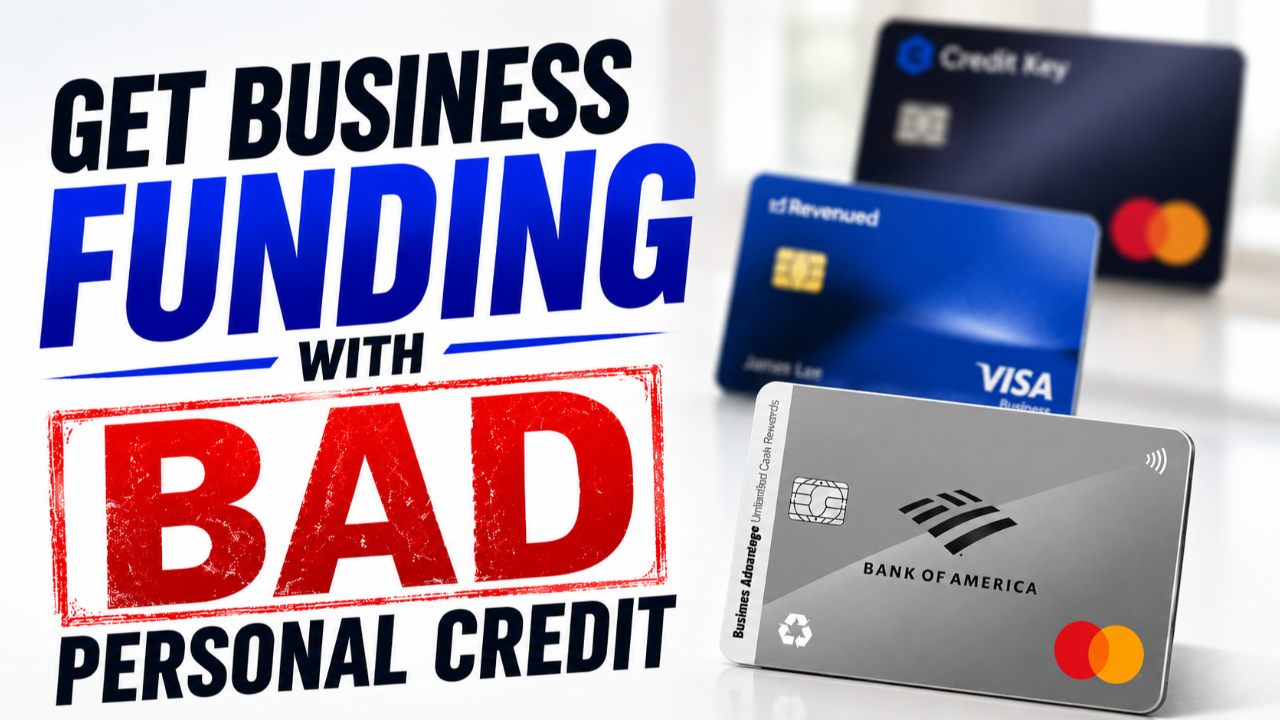
It’s an open secret that you can get business credit with bad personal credit.
A lot of business owners think bad credit closes every funding door.
But that is not always true.
Depending on your business, your revenue, your setup, and the lender you are dealing with, there may still be options available.
The key is understanding that personal credit and business credit are not the same thing.
Yes, personal credit still matters in many situations.
But business credit is its own ecosystem.
And if you build your business profile the right way, you may be able to create funding opportunities even if your personal credit score is not where you want it to be yet.
Disclosure: This article may contain affiliate links, which means I may earn compensation if you click or apply through certain links.
Helpful resource: If you are looking for business credit cards that may not affect your personal credit to get approved, my No-PG Business Card Master List can help you compare options.
The Biggest Business Funding Myth
One of the biggest misconceptions in the business world is that personal credit and business credit are basically the same thing.
They are not.
Personal credit is tied to you as an individual.
Business credit is tied to the company.
The problem is that most business owners never properly separate the two.
They form an LLC.
They open a business bank account.
Maybe they get a logo.
And then they stop there.
But lenders, vendors, suppliers, and business credit bureaus are looking for signs that your business is actually operating like a real company.
That is why one of the first steps toward getting business credit with bad personal credit is creating separation.
That means having:
-
A legal business entity
-
An EIN
-
A dedicated business phone number
-
A business address
-
A professional website
-
A business email address
-
A business bank account
Think about it.
If you were lending money to a business, would you feel more comfortable lending to a company that looks and operates like a real business?
Or someone running everything through a personal Gmail account and a cell phone?
The more legitimate your business appears, the easier it becomes for lenders to view the business separately from your personal credit challenges.
Why Business Credit Matters
The next thing many business owners overlook is business credit reporting.
Most people know about Experian, Equifax, and TransUnion.
But business credit has its own reporting system.
The major business credit bureaus include:
-
Dun & Bradstreet
-
Experian Business
-
Equifax Business
One of the first things many business owners look into is getting a D-U-N-S Number from Dun & Bradstreet.
Without business credit reporting, lenders have very little information to judge your business.
And that is a bigger problem than most people realize.
According to SBA data, roughly 20% of small business loan applications are denied because of poor business credit.
At the same time, about 86% of small business owners rely on personal credit to fund their businesses.
Think about that for a second.
Most business owners are relying on personal credit.
But many loan denials are happening because lenders do not see a strong business credit profile.
That is exactly why building business credit matters.
The goal is to give lenders something besides your personal credit score to evaluate.
Unfortunately, this is where many business owners get stuck.
They know they need business credit.
But they do not know which accounts actually report.
They do not know which vendors are worth opening.
They do not know what order to build everything in.
And six months later, they are still in the same position they started in.
Helpful Resource: Before applying for business funding, it may help to understand whether your business actually looks fundable from a lender’s perspective. My Business Credit Buildout System is designed to help business owners build their profile and prepare for funding.
Start With Accounts That Build Business Credit
One of the easiest ways to start building business credit is through vendor accounts.
These are companies that may extend credit to your business even if your personal credit is not perfect.
A couple examples are Uline and Grainger.
The process is simple:
-
Buy products your business actually needs
-
Pay the invoice quickly
-
Let the account report to the business credit bureaus
-
Build a positive payment history over time
At first, it might not seem like a big deal.
But every on-time payment starts building a track record for your business.
That matters because lenders eventually want evidence that your business can manage credit responsibly.
One account will not change everything.
But once you have several positive accounts reporting, lenders start seeing something they can trust.
And trust is what creates more funding opportunities.
Helpful resource: If you want more vendor account options, my Net 30 Vendor Master List can help you find accounts that may report to business credit bureaus.
Secured Business Credit Cards Can Help Too
Another slept-on option is a secured business credit card.
A secured card requires a deposit, and that deposit usually becomes your credit limit.
Because the bank has your deposit as collateral, approval can be easier than with a traditional unsecured business credit card.
One example is the Bank of America Business Advantage Unlimited Cash Rewards Secured Credit Card.
This can be a practical option for business owners rebuilding their financial profile.
The goal is not to stay with secured credit forever.
The goal is to create positive business credit history so you can qualify for stronger funding products later.
Think of it as a stepping stone.
Not the destination.
Alternative Lenders May Look Beyond Your Credit Score
Many business owners assume bad personal credit means every lender will say no.
That is not true.
Traditional banks usually care heavily about credit scores.
But many alternative lenders evaluate different factors.
Things like:
-
Revenue
-
Cash flow
-
Business deposits
-
Time in business
-
Collateral
For example, companies like Fundbox and Revenued often focus heavily on business performance and cash flow.
Credit Key provides financing based more on the strength of the business itself than a perfect personal credit profile.
That does not mean personal credit does not matter.
It means personal credit is not the only thing that matters.
If your business is generating revenue, maintaining healthy deposits, or producing consistent cash flow, you may have more options than you think.
And some lenders may report your payment activity to the business credit bureaus.
So you are not just getting access to capital.
You may also be building business credit at the same time.
One Question Every Business Owner Should Ask
Whenever you are evaluating a lender, vendor, or financing company, ask this:
Do you report payment history to the business credit bureaus?
Most business owners never think to ask.
But the answer matters.
Because if the lender reports your payments, every on-time payment can strengthen your business credit profile.
In other words:
Funding today.
Better funding options tomorrow.
That is the real power of business credit.
Final Thoughts
Bad personal credit does not automatically mean your business has no options.
It does mean you need to be more strategic.
You need to separate your business from your personal finances.
You need to build a real business profile.
You need accounts that report.
You need to know which lenders care mostly about credit scores and which ones may care more about revenue, deposits, or cash flow.
Most importantly, you need to stop treating business credit like it is the same thing as personal credit.
It is not.
Your personal credit can still matter.
But if your business is set up correctly, operating legitimately, and building its own credit profile, you may be able to create opportunities that your personal credit score alone would not give you.