
5 Business Credit Cards That Pull TransUnion
Jun 29, 2026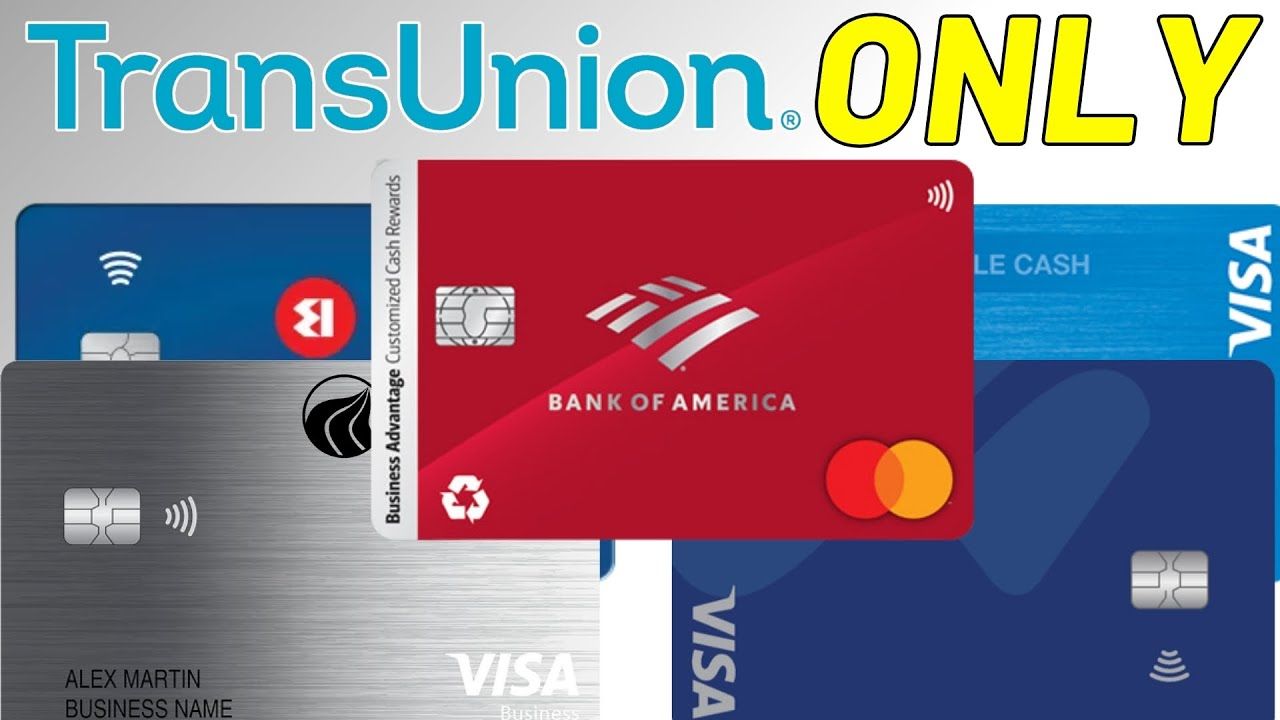
Finding business credit cards that pull TransUnion can feel like striking gold.
Most business card applicants are used to seeing banks hammer Experian over and over again. Then you apply for more business funding, and suddenly your Experian report looks like you’ve been begging every bank in America for money.
That matters.
Hard inquiries can make you look riskier to lenders, especially if you are stacking business credit cards, going after 0% APR business funding, or trying to keep your personal credit profile clean before a bigger approval.
So if you can spread applications across bureaus instead of loading everything onto Experian, that can be a smarter strategy.
But let’s be clear before we get into the list: credit bureau pulls are based on data points. Banks can change their behavior, and pulls can vary by state, product, business profile, relationship, and underwriting.
Quick Answer
Based on the data points reviewed, the five business credit card options to watch for TransUnion hard pulls are Bank of America, U.S. Bank, BMO, SouthState Bank, and Journey Bank. Several of these cards also offer 0% intro APR periods, which can make them useful for business funding or balance transfer strategies.
Do not treat any of these as a guaranteed “TransUnion only” rule. Before applying, verify the current credit pull behavior, card terms, 0% APR length, and whether the card is available in your state.
Why TransUnion Business Credit Card Pulls Matter
When you apply for a business credit card, most banks still look at your personal credit.
That means the hard pull usually lands on one of your personal credit reports:
-
Experian
-
Equifax
-
TransUnion
The problem is that a lot of popular business credit card issuers lean heavily on Experian.
So if you apply for card after card, your Experian report can get messy fast.
And when lenders see a bunch of recent inquiries, they may think:
“This person is chasing credit.”
Even if you are being strategic.
Even if your income is good.
Even if your business is real.
That is why knowing which banks may pull TransUnion can help. It gives you another lane instead of piling every application onto the same bureau.
This does not mean you should apply recklessly.
It means you should apply with a plan.
Important Warning Before You Apply
The original angle here is “business credit cards that only pull TransUnion.”
That is the goal.
But in real life, bureau pulls are not always that clean.
A bank may pull TransUnion for one person and Experian for another. A branch application may behave differently than an online application. A business card underwritten by one bank may behave differently depending on the partner bank.
So here is the rule:
Use these as strong data points, not guaranteed laws.
Before applying, ask the banker if possible:
“Which credit bureau do you usually pull for this business card?”
They may not always tell you. But if you are applying in branch or working with a banker, it is worth asking.
Disclosure: This article may contain affiliate links, which means I may earn compensation if you click or apply through certain links.
Helpful resource: If you want to compare more 0% APR business credit card options by bank, state, bureau pull, and underwriter, my 0% APR Business Credit Card Database can help you map out the strategy before applying.
1. Bank of America Business Advantage Unlimited Cash Rewards
Bank of America is one of the first banks I would put on the TransUnion watchlist for business credit cards.
The card I like most from their business lineup is the Bank of America Business Advantage Unlimited Cash Rewards Mastercard.
It is simple.
It earns unlimited 1.5% cash back on purchases, has no annual fee, and Bank of America’s current page lists a $500 online cash rewards bonus after spending at least $5,000 in the first 90 days. Bank of America also says rewards do not expire as long as the account stays open. (Bank of America)
That makes it a clean card for business owners who do not want to track categories.
The original data point showed a TransUnion hard pull when applying for an LLC. The approval was not instant, and the applicant had to provide extra verification for address and personal information, but no major business documents were requested.
That is a good reminder.
A TransUnion pull does not mean instant approval.
Bank of America may still verify identity, address, business details, or relationship information before approving the card.
Why Bank of America Can Be Interesting for Business Credit
Bank of America’s business side can be more interesting than their personal cards, especially if you already bank with them.
Their Preferred Rewards for Business program can boost rewards if you have qualifying business deposit or investment balances. Bank of America says Preferred Rewards for Business starts at $20,000 in qualifying three-month combined average daily balances, with higher tiers at $50,000 and $100,000. (Bank of America)
That means relationship can matter.
If you already have business checking, deposits, or other accounts with Bank of America, this card may fit naturally into your setup.
Credit Limit Increase Note
The data point from the original content also mentioned a Bank of America rep saying they like to see businesses use a lot of their available credit and pay it off in full.
That makes sense from a lender’s point of view.
If you are barely using a card, the bank may not see a strong need to give you more credit.
But do not force spending just to chase a limit increase.
Use the card responsibly, keep clean payment history, and make sure the activity looks like real business use.
2. U.S. Bank Business Cards
U.S. Bank is one of the stronger names in the 0% APR business card world.
The U.S. Bank Triple Cash Rewards Visa Business Card currently offers a $750 cash back bonus after spending $6,000 on the account owner’s card in the first 180 days. It earns 3% cash back in select categories, including restaurants, office supply stores, cell phone service providers, and gas or EV charging transactions of $200 or less. It also has a 0% intro APR on purchases and balance transfers for 12 billing cycles. (U.S. Bank)
That is a strong combination:
Cash back.
Bonus.
Intro APR.
No annual fee.
The original data point said U.S. Bank was a TransUnion puller for that applicant. They were approved for the Triple Cash card with a $23,000 limit after receiving a mailer that said “preapproved to apply.”
That wording matters.
“Preapproved to apply” is not the same thing as approved.
It basically means the bank wants you to apply, but underwriting still gets the final say.
U.S. Bank’s 0% APR Angle
U.S. Bank also has the Business Shield Visa Card, which is the current low intro APR product on their business card page. U.S. Bank’s current card page lists 0% intro APR for 12 billing cycles on purchases and balance transfers. (U.S. Bank)
There is one extra detail worth watching.
U.S. Bank announced the Business Shield card with a 0% intro APR for up to 18 billing cycles when applying at a U.S. Bank branch, compared with 12 billing cycles through digital channels. (U.S. Bancorp Investor Relations)
That is a big difference.
So if you are chasing the longest possible 0% APR window, do not just apply online without checking branch terms first.
Credit Limit Increase Warning
The source material included a data point where someone got an instant $3,000 approval on the U.S. Bank Business Triple Cash, called underwriting later, took a second hard pull, and eventually saw the limit increased to $15,000.
That is the tradeoff.
Manual credit limit increase requests with U.S. Bank may involve another hard pull, based on data points.
Automated increases may be different.
Before asking for more credit, ask clearly:
“Will this be a soft pull or a hard pull?”
Do not guess.
3. BMO Business Credit Cards
BMO is another bank that showed up as a TransUnion puller in the data points.
The original data point involved someone opening a personal checking account with BMO, then getting approved for both a personal and business card. The reported TransUnion score was 753, and the applicant had many new accounts in the previous 24 months.
That is interesting because many banks get nervous when they see a lot of new accounts.
BMO did not seem scared off in that case.
BMO currently lists two main business credit card options on its site:
-
BMO Business Platinum Rewards Credit Card
-
BMO Business Platinum Credit Card
The plain BMO Business Platinum Credit Card currently has no annual fee and a 0% introductory APR on purchases for 12 months from account opening. (BMO)
That is different from older data points that mentioned longer 0% APR periods, so you need to check current terms before applying.
Why BMO Can Be Useful
BMO can be useful if you want a bank that is large enough to have real lending capacity but not as over-discussed as Chase, Amex, or Bank of America.
It also gives you another possible TransUnion lane.
But there are two things to watch.
First, the card may be branch-focused depending on your location and product.
Second, the data point said BMO can hard pull TransUnion again for credit limit increases.
So if you are applying for the card and later asking for more credit, do not assume the limit increase will be soft pull.
Ask first.
4. SouthState Bank Business Credit Cards
SouthState Bank is a regional bank, mainly serving the Southeast.
The reason it is worth knowing about is because its small business credit cards are issued by Elan Financial Services. SouthState’s own business credit card page says the creditor and issuer is Elan Financial Services, pursuant to a license from Visa. (SouthState Bank)
That matters because Elan underwrites credit card programs for many banks and credit unions.
So SouthState is not just “SouthState.”
It is also an Elan play.
The original data point said the SouthState Elan Business Visa produced a $10,000 starting limit with a TransUnion hard pull. Another data point mentioned an Elan Business Visa through SouthState with an 18-month 0% APR balance transfer offer.
That is exactly why regional banks can be worth researching.
They may not be flashy.
They may not have a huge YouTube presence.
But they can have real business credit card opportunities sitting quietly in the background.
The Catch With SouthState
This is not the easiest online application play.
The source material says you may need to visit a branch to open an account and apply for business credit.
That means SouthState may be better for people who live in its footprint or already have a reason to build a relationship with the bank.
Also, because SouthState uses Elan, you need to be careful if you already have several Elan-underwritten business cards.
Underwriters can have internal exposure limits.
So if you already hit Elan hard through other banks, do not expect unlimited approvals just because the bank name on the front is different.
5. Journey Bank Business Credit Cards
Journey Bank is based in Pennsylvania, but the original research flagged it as a bank where business credit may be available more broadly.
Journey Bank’s business credit card page also says its cards are issued by Elan Financial Services, pursuant to licenses from Visa and Mastercard. (Journey Bank)
That makes this another Elan-underwritten business credit card option.
The source material said Journey Bank may allow business credit applications from outside Pennsylvania and that the standard business card may offer 0% APR funding for up to 18 months.
That could make Journey Bank very interesting if you are trying to find lesser-known 0% APR business card options that are not the same five banks everybody talks about.
But this one needs extra verification before publishing or applying.
The bank’s public page confirms the Elan relationship, but you should verify:
-
Whether out-of-state applicants are currently accepted
-
Which card products are available
-
Whether the 18-month 0% APR offer is still active
-
Whether the pull is still TransUnion
-
Whether the application is online, phone, or banker-assisted
Small banks can be great.
But their rules can be less obvious.
Why Elan Financial Services Matters
Elan is important because it powers credit card programs for a lot of smaller banks and credit unions.
Elan says it offers business credit card products for businesses, nonprofits, and municipalities, with features like rewards, reporting, dedicated support, zero fraud liability, emergency card replacement, 24/7 online access, and account alerts. (Elan Financial Services)
That means you may see different bank names on the front of the card, but the same underwriter behind the scenes.
This is where people mess up.
They think:
“I applied at Bank A, now I’ll apply at Bank B.”
But if both are underwritten by Elan, the underwriter may still see your existing exposure.
That can limit how much credit you get.
So when you are stacking business credit cards, do not just track the bank name.
Track the underwriter.
That is where the real strategy is.
Why Smaller Banks Can Be Powerful for Business Funding
Big banks are convenient.
Small banks can be more personal.
That is the whole appeal.
With smaller banks and credit unions, you may have a better chance to build a real relationship. You may get a banker who understands the story behind the business instead of only seeing a score, income number, and automated risk model.
That can matter.
Especially for business funding.
A smaller bank may be more willing to look at:
-
Your banking relationship
-
Your business story
-
Local market knowledge
-
Your revenue pattern
-
Your use of funds
-
Your existing business deposits
That does not mean small banks are easy.
They can still deny you.
They can still request documents.
They can still require a personal guarantee.
They can still hard pull your credit.
But they give you another angle besides the same crowded national issuers.
The 0% APR Business Funding Strategy
The reason these cards matter is not just the bureau pull.
It is the funding window.
A 0% APR business credit card can give you time to float business expenses without paying interest during the intro period.
That can help with:
-
Inventory
-
Equipment
-
Marketing
-
Startup costs
-
Slow-paying clients
-
Seasonal cash flow
-
Balance transfers from existing business credit card debt
But this strategy only works if you are disciplined.
A 0% APR offer is not free money.
It is borrowed money with a timer attached.
If you do not pay it down before the intro period ends, the interest can come back hard.
So before using a 0% APR business card, know:
-
How long the intro period lasts
-
Whether it applies to purchases, balance transfers, or both
-
The balance transfer fee
-
The regular APR after the promo ends
-
Whether the card reports to personal credit
-
Whether a personal guarantee is required
-
Your payoff plan before the promo expires
That last part matters most.
Do not use 0% APR business funding without a payoff plan.
What If You Want Business Cards With No Hard Pull?
Every card in this article is based on TransUnion hard pull data points.
That means your personal credit report may still get hit.
If your goal is to avoid hard pulls altogether, you need a different category of business cards.
Helpful resource: If you want business card options that may not require a hard pull, may not report to personal credit, and may not require a personal guarantee, my No PG Business Card Master List can help you compare options before applying.
Just understand the tradeoff.
No-PG and no-hard-pull business cards often look at other things, like:
-
Business revenue
-
Bank account activity
-
Cash flow
-
Time in business
-
Business identity verification
-
Spending needs
-
Linked business accounts
So they can be great tools, but they are not magic approvals.
What I Would Do Before Applying
Before applying for any business credit card that may pull TransUnion, I would do this:
-
Check your TransUnion report first.
-
Freeze or unfreeze bureaus only if you understand the risk.
-
Verify the current bureau pull data.
-
Confirm whether the card reports to personal credit.
-
Check the 0% APR length before submitting.
-
Ask whether credit limit increases are soft pull or hard pull.
-
Track which underwriter each card uses.
-
Avoid stacking too many cards from the same underwriter.
-
Make sure your business information is consistent everywhere.
-
Have a payoff plan if using 0% APR funding.
That is the difference between applying strategically and just throwing applications at the wall.
Suggested internal links to add during publishing: Best 0% APR Business Credit Cards, Business Credit Cards That Don’t Report to Personal Credit, No-PG Business Credit Cards, Credit Cards That Pull TransUnion, and What to Do Before Applying for a Business Credit Card.
Frequently Asked Questions
What business credit cards pull TransUnion?
Based on the data points reviewed, Bank of America, U.S. Bank, BMO, SouthState Bank, and Journey Bank were all connected to TransUnion hard pull business card approvals. This is not a guaranteed rule, so verify before applying.
Do business credit cards always pull personal credit?
Most small business credit cards still check personal credit, especially when there is a personal guarantee. Some corporate or no-PG cards may use business revenue, bank data, or cash flow instead.
Does U.S. Bank pull TransUnion for business credit cards?
The data points reviewed showed U.S. Bank pulling TransUnion for business credit cards. U.S. Bank’s current Triple Cash card offers a $750 cash back bonus and 0% intro APR for 12 billing cycles on purchases and balance transfers, but bureau pulls should still be verified before applying. (U.S. Bank)
Does Bank of America pull TransUnion for business credit cards?
The source data point showed Bank of America pulling TransUnion for a business card application. Bank of America’s current Business Advantage Unlimited Cash Rewards card earns unlimited 1.5% cash back and has no annual fee. (Bank of America)
Are Elan business credit cards good for 0% APR funding?
They can be. Elan underwrites business credit card programs for banks and credit unions, including SouthState Bank and Journey Bank. The key is verifying the exact card offer, intro APR length, underwriter exposure, bureau pull, and application requirements before applying. (SouthState Bank)
Should I apply for every TransUnion-pulling business card I can find?
No. That is how people get sloppy. Pick cards based on your business needs, intro APR strategy, underwriter exposure, credit profile, and ability to repay. TransUnion pulls are useful, but they are not a reason to apply blindly.
Conclusion
Business credit cards that pull TransUnion can be extremely useful if you are trying to protect your Experian report from too many inquiries.
But the bureau pull is only one part of the strategy.
You still need to look at the card terms, intro APR window, underwriter, personal guarantee, credit reporting, business relationship, and documentation requirements.
Bank of America, U.S. Bank, BMO, SouthState Bank, and Journey Bank all stood out in the data points as TransUnion business card options.
The real move is not just finding the card.
The real move is knowing when to apply, which bureau is likely to get hit, which underwriter is behind the card, and how the funding fits into your business plan.
That is how you use business credit strategically.
Not emotionally.
Not randomly.
Strategically.