
Best Credit Cards for High Limits: 5 Banks That Stand Out
Jun 29, 2026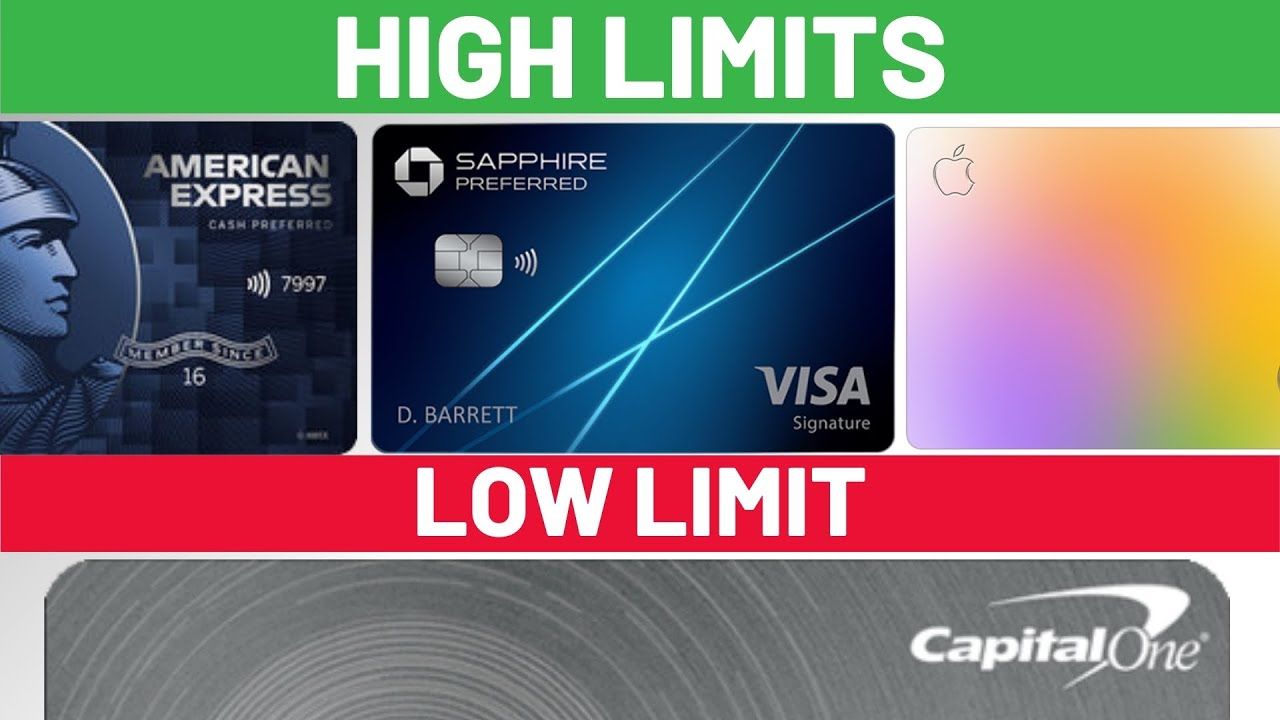
Nothing hits quite like getting instantly approved for a credit card with a high limit.
You hit submit.
The page spins.
Then BOOM!... approved for $20,000, $30,000, or more.
That is a completely different feeling than getting approved for a tiny $1,000 limit and wondering what the bank was thinking.
I reviewed 100 credit limit increase data points and looked at the details that actually matter:
-
Credit card company
-
Type of credit card
-
Starting limit
-
First credit limit increase timing
-
Last increase timing
-
Increase amount
-
Final credit limit
-
Credit score
-
Number of revolving accounts
And the results were interesting.
A few banks that people love to complain about showed up strong. One “bad” card beat out some of the most popular cards from Amex and Chase. And Amex ended up being the overall winner for high credit limits and credit limit growth.
Quick Answer
Based on the 100 credit limit data points reviewed, American Express, Navy Federal Credit Union, Capital One, Bank of America, and Goldman Sachs/Apple Card stood out for high credit limits or strong credit limit growth. Amex was the overall winner because it showed up for high starting limits, fast first increases, large increases, and multiple limits over $20,000.
This is still based on data points, not guaranteed lender rules. Your credit limit depends on your income, credit profile, current debt, existing limits, relationship with the bank, card type, and underwriting.
Why High Starting Limits Matter
Your starting limit matters more than people think.
In this data set, people who started with credit limits over $10,000 eventually raised those limits to an average of $26,193.
That makes sense.
A bank that starts you at $15,000 or $20,000 is already showing you they are comfortable with larger exposure. A bank that starts you at $500 may still grow with you, but you are usually climbing from a much lower floor.
That is why I care about starting limits so much.
A high starting limit can:
-
Lower your credit utilization
-
Give you more room for large purchases
-
Make future limit increases easier
-
Help other banks see you can manage larger lines
-
Improve your overall credit profile when managed responsibly
But do not confuse a high limit with free money.
A $30,000 limit only helps you if you manage it right. If you max it out and carry a balance, that same high limit can turn into a problem fast.
Capital One: Surprisingly Strong for High Starting Limits
A lot of people do not like Capital One because they are known for bucketing accounts and holding some people back with low limits.
But in this data set, Capital One showed up strong for high starting limits.
The main reason was the Capital One Venture X.
The Venture X appeared multiple times in the $10,000+ starting limit group. It also appeared more than once in the $20,000+ starting limit group.
That lines up with the kind of card it is. Venture X is a premium travel card with a $395 annual fee, and Capital One says it is designed for people with excellent credit. Capital One also lists benefits like 75,000 bonus miles after meeting the spend requirement, a $300 annual Capital One Travel credit, a 10,000-mile anniversary bonus, and access to Capital One Lounges and Priority Pass lounges after enrollment. (Capital One)
The rewards structure is strong too. Capital One says Venture X earns unlimited 10X miles on hotels and rental cars through Capital One Travel, 5X miles on flights and vacation rentals through Capital One Travel, and 2X miles on all other purchases. (Capital One)
One data point from the set said:
“I was approved for Venture X a month ago for $20K. I tried applying for a CLI and was instantly approved to $35K. I regret putting maximum desired limit $35K. I was expecting a denial or $10K increase maximum. Well next time I will ask a higher amount.”
That is exactly why Venture X is interesting.
Capital One can be stingy on some cards.
But with Venture X, they clearly have room to approve strong limits for the right profile.
Disclosure: This article may contain affiliate links, which means I may earn compensation if you click or apply through certain links.
Helpful resource: If you want cards where the starting limit may be shown before you fully accept the offer, check out my 9 Credit Cards That Reveal Your Starting Limit Before Approval.
Amex Blue Cash Preferred Had the Highest Starting Limit
Capital One did well overall.
But the highest starting limit in the full data set came from American Express.
The card was the Amex Blue Cash Preferred, with a starting limit of $31,300.
The data point said:
“In mid-December, I was approved for the AMEX BCP with a starting limit of $31,300. The starting limit was great but did not sit well with my OCD. Like the wise members of this board suggested, I waited 91+ days to ask for a CLI. I asked for and received $35K as a new limit.”
That is a serious starting limit.
And it shows why Amex deserves attention if your goal is to build higher credit limits over time.
Amex also has its Apply With Confidence feature on many cards, which can let you see whether you are approved before accepting the card, using a soft credit check that does not hurt your score. Amex says your credit score may be impacted if you accept the card after approval. (American Express)
That makes Amex one of the cleaner issuers to check before fully committing, when the feature is available on the card you want.
Helpful resource: If you like checking approval paths before risking unnecessary hard pulls, my Free Credit Card & Loan Pre-Approval Master List includes pre-approval and soft-check resources for multiple banks.
Amex Was Fast for First Credit Limit Increases
The general rule of thumb is to wait about six months before asking for a credit limit increase.
And in the data set, the median time to get the first increase was around six months.
But some banks moved faster.
The data points fell into two major groups:
-
Banks where people got first increases around 3 months
-
Banks where people got first increases around 6 months
Amex was the standout in the faster group.
One Amex data point said:
“I opened my AmEx BCE August 23 with a $2,000 starting limit, requested and received my first 3X CLI to $6,000 102 days later on December 3, and requested a CLI to $19,000 96 days later on March 8, which was partially approved in the amount of $18,000.”
That is the Amex growth pattern people talk about.
Start at $2,000.
Move to $6,000.
Then jump again.
Amex does not guarantee a 3X increase for everyone, and Amex’s official help page simply says you can request a credit limit increase on eligible personal or small business cards. (American Express)
But from data points, Amex is one of the best issuers for people trying to grow limits quickly.
Discover Was the Fastest for Repeat Credit Limit Increases
Discover stood out for something different.
Not the biggest limits.
Not the biggest increases.
But speed.
Discover was the main issuer in the data set where people were getting credit limit increases close to month-to-month.
I found multiple Discover data points where limits increased again within one or two months.
One person said they received a Discover credit limit increase in October, then another one on December 6.
Another said they got a $2,000 increase after getting a $1,750 increase the month before.
Another said they got a $2,500 increase on August 5, requested again on September 12, and got another $2,500 increase.
That is not normal with most banks.
Most issuers want you to wait three to six months between requests.
Discover’s own credit line increase guide says issuers may look at factors like debt-to-income ratio, on-time payments, credit score changes, employment history, and account behavior. Discover also says cardmembers may request a credit line increase through the mobile app, online portal, or by phone. (Discover)
So if you already have a Discover card and you are using it responsibly, it may be worth checking for increases regularly.
Just do not get reckless.
A higher limit is only a win if your balance does not grow with it.
Synchrony Had the Biggest Single Increase
Synchrony had the wildest credit limit increase data point.
A Lowe’s cardholder started with a $1,500 limit.
They used the card heavily, paid it off, then requested a $25,000 limit.
Instant approval.
That is a $23,500 increase.
That was the largest increase I found in the data set.
Here is the lesson with Synchrony:
They can be extremely generous when they like your profile.
But they can also be ruthless when they do not.
Synchrony issues a lot of store cards, and store cards can grow fast. But if you open too many accounts, run balances too aggressively, or your overall credit profile starts looking risky, Synchrony is known in data points for slashing limits or closing accounts.
So yes, Synchrony can give huge increases.
But I would not build my whole credit strategy around store cards.
Use them carefully.
Pay them cleanly.
Do not overdo it.
Navy Federal Was the Most Consistent
When it came to consistency, Navy Federal Credit Union looked strong.
The data points showed repeated increases of $6,000 to $8,000, which is a big deal.
Some banks make it feel like pulling teeth to get a $1,500 or $2,000 increase.
Navy Federal can be different for the right member.
One Navy Federal Flagship data point showed this kind of growth:
-
Starting limit: $10,000
-
Increased to $18,000
-
Then $22,000
-
Then $26,000
-
Then $34,000
-
Then $42,000
-
Then $50,000
-
Then $58,000
-
Then $66,000
That is real credit line growth.
The person waited around 190+ days and six statements between requests.
That conservative timing matters.
Navy Federal says credit card companies may look at factors like account age and standing, time since the last credit request, annual income, employment status, and payment history when deciding on a credit limit increase. Navy Federal also warns that a hard inquiry can temporarily lower your score. (Navy Federal Credit Union)
So the simple move is this:
Do not rush Navy Federal.
Use the account.
Pay on time.
Keep your utilization under control.
Then ask when your profile actually supports the increase.
Helpful resource: If you like high-limit credit union plays, my 150+ Credit Unions Anyone Can Join Database can help you find more credit unions beyond the obvious names.
Amex Had the Most Big Credit Limit Increases
When I looked at banks that gave increases over $10,000, Amex showed up more than anyone else.
One Amex data point said:
“Wanted to share an Amex CLI success. This card has really grown for me the last several months as I’ve been able to 3X it twice and then get another nice bump. 4/1 - 3X from $3,100 to $9,300. 7/1 - 3X from $9,300 to $27,900. 10/1 - from $27,900 to $44,500.”
That is why Amex is so powerful for limit growth.
It is not just the first increase.
It is the repeat growth.
But there is a warning.
When you start asking Amex for higher limits, especially around the $35,000+ range, you may trigger extra income verification or financial review requests. That exact threshold is based on community data points, not a clean public Amex rule, so I would treat it as a warning zone instead of a guaranteed trigger.
If you are going to ask for a large Amex limit, make sure your stated income is accurate and you can support it if asked.
Do not play games with Amex.
They are generous when they trust you.
They can get very serious when they do not.
Highest Final Credit Limits: The Results Were Surprising
I personally consider anything over $20,000 to be a high credit limit.
But based on reader feedback, a lot of people see $30,000+ as the real high-limit zone.
In the data set, there were 17 limits over $30,000.
For limits over $20,000, Amex and Navy Federal both showed up often.
For limits above $30,000, there was a five-way tie between:
-
American Express
-
Bank of America
-
Capital One
-
Goldman Sachs / Apple Card
-
Navy Federal Credit Union
That was interesting.
But the biggest surprise was the Apple Card.
The Apple Card had the second-highest credit limit in the data set at $80,000.
A lot of credit card people talk down on Apple Card because it has no traditional welcome bonus and is not a travel-hacker card.
But that misses the point.
Apple Card can be very accessible, it shows your credit limit and interest rate offer upfront before impacting your credit score, and Apple says it has no annual fees, no late fees, and no foreign transaction fees. (Apple)
Apple also says Apple Card earns 2% Daily Cash when used with Apple Pay and 3% Daily Cash at Apple and select merchants. (Apple)
So no, Apple Card is not the most exciting card in the rewards world.
But from a credit limit growth angle, it deserves more respect than people give it.
Bank of America Had the Highest Limit
The highest credit limit in the data set came from Bank of America.
The final limit was $96,000.
The data point said:
“I just decided to request an increase on the one BofA card that keeps giving me increases. Last one went from $66K to $81K on 12/15. I’ve been getting CLIs on it every 3 months, like clockwork. Got increased to $96K.”
That is a monster limit.
And it shows why Bank of America should not be ignored in high-limit conversations.
BofA may not always be flashy.
But for the right profile, especially with relationship depth and responsible usage, they can go very high.
This is also where having a strong overall credit profile matters.
In the data set, people with FICO scores above 800 had an average credit limit of $38,450.
For people with limits over $50,000, the average FICO score was 820, and they had an average of 23 revolving accounts.
That should kill the myth that having several credit cards automatically destroys your chances.
The real issue is not the number of cards.
The real issue is whether you can manage them responsibly.
My Overall Winner: American Express
After reviewing the data points, I give the win to American Express.
Here is why:
-
Amex had the highest starting limit in the data set.
-
Amex showed fast first credit limit increases around the 90-day range.
-
Amex showed the most increases over $10,000.
-
Amex showed up the most for limits over $20,000.
That is hard to beat.
Capital One Venture X was strong for starting limits.
Discover was strong for fast repeat increases.
Synchrony had the biggest single jump.
Navy Federal was the most consistent.
Bank of America had the highest final limit.
Apple Card was the surprise performer.
But Amex had the best overall combination.
What to Do Before Asking for a Credit Limit Increase
Before you ask for a credit limit increase, do not just smash the button because you feel like it.
Set yourself up first.
Here is what I would do:
-
Wait at least 90 days for Amex-style cards.
-
Wait closer to six months for most other banks.
-
Keep utilization low before requesting.
-
Update your income accurately.
-
Use the card enough to show activity.
-
Pay on time every month.
-
Avoid asking during a recent application spree.
-
Check whether the request may be a hard pull.
-
Ask for a number that makes sense for your profile.
-
Do not request a huge limit if you cannot support the income.
Some banks are soft-pull friendly.
Some banks may hard pull.
Some banks use confusing language.
Always read the screen before you submit, and ask a rep if you are requesting by phone.
Frequently Asked Questions
What credit card company gives the highest limits?
Based on this data set, American Express was the overall strongest for high limits and limit growth. Bank of America had the single highest final credit limit at $96,000, and Apple Card had a surprising $80,000 limit data point.
Is Amex good for credit limit increases?
Yes, Amex was the strongest overall in this review. The data points showed fast first increases, multiple large increases over $10,000, and several limits above $20,000. Amex also lets cardmembers request credit limit increases online. (American Express)
Does Capital One Venture X give high starting limits?
Venture X showed up multiple times in the $10,000+ and $20,000+ starting limit groups in this data set. Capital One describes Venture X as a premium travel card for people with excellent credit, with a $395 annual fee and elevated travel rewards. (Capital One)
How often should I request a credit limit increase?
For most banks, six months is a safe rule of thumb. Some issuers, like Amex, may show successful data points around 90 days. Navy Federal data points often use a more conservative 190+ day timing strategy.
Can a credit limit increase hurt my credit score?
It can if the issuer performs a hard inquiry. A higher limit can help your utilization if your balance does not increase, but some issuers may use a hard pull when reviewing your request. Navy Federal specifically warns that hard inquiries can temporarily lower your score. (Navy Federal Credit Union)
Do you need an 800 credit score to get a high credit limit?
No. A higher score can help, but you do not need to be in the 800 club to get a strong limit. Income, utilization, payment history, existing limits, account age, and bank relationship can all matter.
Conclusion
High credit limits do not happen randomly.
Yes, some approvals feel like magic.
But behind the scenes, banks are looking at your income, credit history, debt, current limits, account behavior, and relationship.
From the 100 data points reviewed, Amex was the best overall bank for high credit limits and credit limit growth.
But the other winners matter too.
Capital One Venture X was strong for starting limits.
Discover was fast for repeat increases.
Synchrony had the biggest single increase.
Navy Federal was consistent.
Bank of America hit the highest final limit.
Apple Card surprised everybody.
The real strategy is not chasing every card.
The strategy is picking the right issuer, using the card responsibly, waiting the right amount of time, and asking when your profile is ready.
That is how you turn a decent limit into a high limit.
And once you know which banks actually grow, you stop wasting time begging the wrong issuers for crumbs.