
AZEO Credit Card Strategy: How to Use It Before Applying for Credit
Jun 29, 2026
If you want to squeeze the best possible score out of your credit profile before applying for a credit card, loan, mortgage, or credit limit increase, there is one strategy you need to understand.
It is called AZEO.
That stands for:
All Zero Except One.
And no, this is not some magic credit repair trick.
It is a credit utilization strategy.
The goal is simple: make your credit reports show that you are using credit, but using very little of it.
That matters because FICO does not just care whether you pay on time. It also cares how much of your available revolving credit you are using when your credit card balances report.
Quick Answer
The AZEO strategy means all of your credit cards report a $0 balance except one card, which reports a small balance. This can help keep your credit utilization low while still showing active credit usage. The key is to let one small balance report, then pay it off by the due date so you avoid interest.
Disclosure: This article may contain affiliate links, which means I may earn compensation if you click or apply through certain links.
What Is the AZEO Method?
AZEO stands for All Zero Except One.
Here is how it works:
You pay all of your credit cards down to $0 before their statement closing dates.
Then you allow one credit card to report a small balance.
That one balance should usually be low enough to keep your overall credit utilization under 10%.
Then, after the statement closes and the balance reports, you pay the remaining balance by the due date.
That last part is important.
You are not carrying debt.
You are not paying interest.
You are simply controlling what balance gets reported to the credit bureaus.
Why AZEO Can Help Your Credit Score
Credit utilization is one of the biggest credit score factors.
Utilization measures how much revolving credit you are using compared with your total available limits.
For example:
If you have a $10,000 total credit limit and $500 reports across your cards, your utilization is 5%.
That looks much cleaner than having $3,000 report, which would be 30%.
FICO has said credit utilization is a major part of the “amounts owed” category, and higher utilization can signal higher future repayment risk.
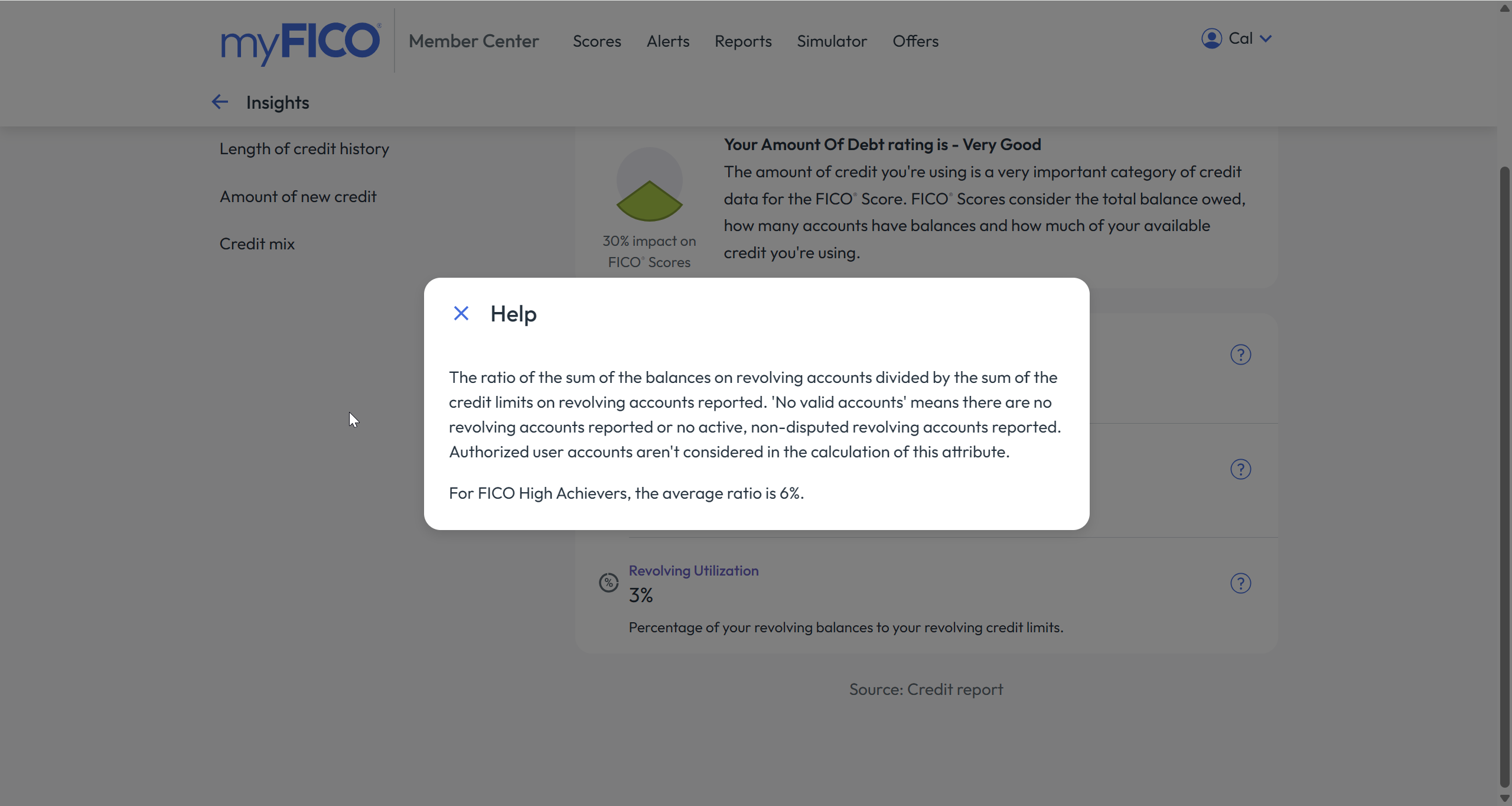
That is why keeping utilization low matters.
But here is the part people miss:
0% utilization is not always ideal.
If every credit card reports $0, the scoring model may not see active revolving credit usage.
That is why AZEO can work better than having every card report zero.
You are showing the system:
“I use credit, but I barely use any of my available credit.”
That is exactly the kind of behavior lenders like to see.
How to Use AZEO Step by Step
Here is the clean version.
Let’s say you have four credit cards.
Before the statement closing dates, you would:
-
Pay Card 1 to $0
-
Pay Card 2 to $0
-
Pay Card 3 to $0
-
Leave a small balance on Card 4
That one small balance might be something like $10, $25, $50, or another low amount depending on your credit limits.
Then once Card 4 reports that small balance, pay it off by the due date.
The goal is not to carry debt.
The goal is to control what the credit bureaus see.
Statement Closing Date vs. Due Date
This is where a lot of people mess up.
Your statement closing date is when your credit card issuer usually reports your balance to the credit bureaus.
Your due date is when your payment is due.
Those are not the same thing.
If you wait until the due date to pay everything off, your high balance may have already reported.
That means your score could still take a hit even if you pay in full.
So with AZEO, the timing matters.
You want most cards paid to zero before the statement closes.
Then you let one small balance report.
Then you pay that balance by the due date.
How Much Should You Leave on One Card?
The simple target is to keep your reported utilization under 10%.
But if you are trying to optimize your score as much as possible, lower can be better.
Many people using AZEO aim for a small balance that keeps utilization somewhere between 1% and 9%.
You do not need to leave a huge balance.
In fact, that defeats the point.
If your card has a $5,000 limit, you do not need to leave $500 just to show activity.
A much smaller balance may do the job.
The goal is not to impress the bank with spending.
The goal is to show low-risk usage.
Why You Should Not Pay Interest for AZEO
Let me make this clear:
You do not need to pay credit card interest to build credit.
That is one of the worst credit myths out there.
With AZEO, you are only allowing one small balance to report. After it reports, you pay it off by the due date.
That lets you show usage without carrying debt.
If you are paying interest, you are doing it wrong.
Credit card interest can eat you alive, especially if your APR is high.
So use AZEO for reporting strategy.
Not as an excuse to carry balances.
Who Should Use the AZEO Strategy?
AZEO is most useful when you are about to apply for something important.
For example:
-
A new credit card
-
A credit limit increase
-
A personal loan
-
A mortgage
-
An auto loan
-
Business credit that checks personal credit
-
Apartment approval
-
Any lender review where your score matters
If you are not applying for anything soon, you may not need to obsess over AZEO every single month.
But before a major application, it can be worth tightening up your reported balances.
A few points can matter when you are sitting near an approval threshold.
Who Should Not Obsess Over AZEO?
AZEO is helpful, but do not let it make you crazy.
You probably do not need to micromanage every balance every month if:
-
You are not applying for credit soon
-
Your utilization is already low
-
Your score is already strong
-
You pay in full every month
-
You are not near an approval cutoff
Credit is supposed to help your life, not become your whole life.
Use AZEO when timing matters.
Do not turn it into a monthly anxiety project unless you are actively optimizing for an application.
AZEO Works Best With Clean Credit Habits
AZEO can help with utilization, but it does not fix everything.
If you have late payments, collections, charge-offs, maxed-out cards, or too many recent inquiries, AZEO alone will not magically create an 800 score.
It is one piece of the puzzle.
The full credit score picture still includes:
-
Payment history
-
Amounts owed
-
Length of credit history
-
Credit mix
-
New credit
-
Derogatory marks
-
Account age
-
Recent inquiries
So yes, AZEO can help.
But it works best when the rest of your profile is already moving in the right direction.
What to Do Before Applying for Credit
If you are preparing to apply for a credit card, loan, or credit limit increase, here is the basic setup I would use:
-
Pay all cards down before statement closing dates
-
Let one card report a small balance
-
Keep total utilization under 10%
-
Avoid new hard inquiries
-
Do not open unnecessary accounts
-
Make sure every payment is on time
-
Check all three credit reports for errors
-
Wait for the updated balances to report before applying
That last step matters.
If you pay balances down today, your score may not update immediately.
You usually need to wait until your card issuers report the new balances to the bureaus.
Helpful resource: Before applying, my Free Credit Card & Loan Pre-Approval Master List can help you check soft-pull pre-approval options so you are not guessing with your credit.
Frequently Asked Questions
What does AZEO mean?
AZEO means All Zero Except One. It is a credit card balance reporting strategy where all cards report $0 except one card, which reports a small balance.
Does AZEO improve your credit score?
It can help optimize your score by keeping utilization low while still showing active revolving credit usage. The impact depends on your full credit profile.
Should I leave a balance on my credit card?
You can let one small balance report, but you should still pay it off by the due date. You do not need to carry debt or pay interest to build credit.
Is 0% utilization bad?
It is not “bad,” but low utilization can score better than every card reporting $0 because it shows active responsible use. That is why AZEO leaves one small balance reporting.
What utilization percentage is best?
A common goal is under 10%, but many people trying to optimize their score aim for a small single-digit utilization rate. The exact best number can vary by profile and scoring model.
When should I use AZEO?
Use AZEO before an important application, like a credit card, mortgage, auto loan, personal loan, or credit limit increase. You do not need to obsess over it every month if you are not applying for anything.
Conclusion
AZEO is one of the simplest credit score optimization strategies.
Pay every card to zero except one.
Let one small balance report.
Keep utilization low.
Then pay that balance by the due date.
That is it.
No tricks. No interest. No games.
Just smart balance reporting.
If your profile is already clean and you are preparing for an application, AZEO can help you show lenders the version of your credit profile they want to see:
Active credit usage, low utilization, and strong control.
That is the kind of borrower banks like.