
Why Applying for Too Many Credit Cards Can Backfire
Jul 01, 2026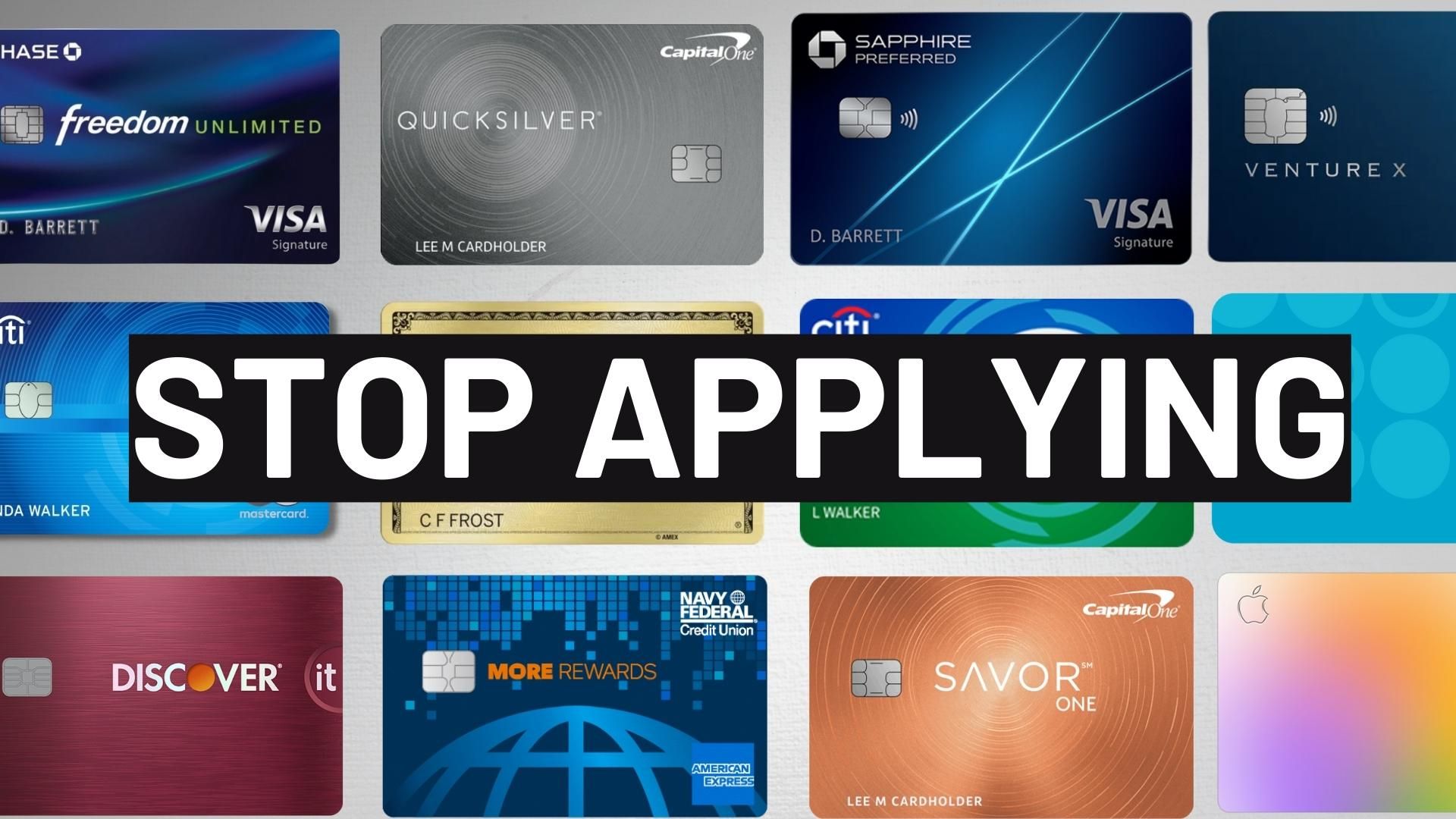
Applying for new credit cards can feel exciting.
You get the approval.
You get the sign-up bonus.
You get more available credit.
You get the travel perks.
You feel like you are winning.
And sometimes, you are.
But if you apply too often, the same credit cards that help you earn rewards can start working against you.
Banks can see frequent applications as risky. Your credit score can take a hit. Issuer rules can block future approvals. Sign-up bonuses can become harder to manage. And if you are trying to buy a house, too many recent credit card approvals can make your mortgage process way more stressful than it needs to be.
Credit cards are powerful tools.
But if you use them recklessly, it can feel like juggling chainsaws.
Disclosure: This article may contain affiliate links, which means I may earn compensation if you click or apply through certain links.
Quick Answer
Applying for too many credit cards too quickly can hurt you because it creates hard inquiries, lowers your average account age, increases debt risk, triggers issuer application limits, and can make banks view you as desperate for credit. It can also complicate mortgage approval if you are planning to buy a home. The safer strategy is to space out applications, use pre-approval tools when possible, and only apply when the card fits your real plan.
1. Too Many Applications Can Trigger Fraud Detection
Credit card companies are always watching for unusual behavior.
That includes sudden application sprees.
From the bank’s perspective, it is not normal for someone to suddenly apply for a bunch of credit cards in a short period. That kind of activity can look like fraud, identity theft, desperation for credit, or bonus-chasing behavior.
And once the bank’s risk systems start paying attention to you, things can get ugly.
They may:
-
Deny new applications
-
Put applications under review
-
Ask for identity verification
-
Lower existing credit limits
-
Restrict account activity
-
Close accounts completely
That sounds extreme, but it happens.
Banks are not just deciding whether to approve your next card.
They are also deciding whether they still trust you with the cards you already have.
Credit Limit Cuts Can Happen Fast
Imagine you have a credit card with a $10,000 limit.
Then one day, the bank drops it to $500.
That is not just annoying.
That can wreck your utilization.
If you had a balance on that card, your available credit just disappeared. Your utilization could spike overnight, which can hurt your credit score and make other lenders nervous too.
From the bank’s side, the logic is simple.
If they think you are getting riskier, they may reduce their potential loss before anything bad happens.
That is why too many applications can be dangerous even if every payment is still on time.
Account Shutdowns Are the Worst-Case Scenario
The worst-case scenario is a full account shutdown.
That means the bank does not just deny the next card.
They close the cards you already have.
If that happens across multiple cards with the same issuer, you could lose tens of thousands of dollars in available credit overnight.
One example people talk about is Scott LeRay, who reportedly had six American Express cards canceled. The exact reason is not something we can say with certainty, but the suspected combination included frequent applications, purchases in multiple countries, and a $2,000 cash advance.
The lesson is not that one international purchase or one cash advance will get you shut down.
The lesson is that when multiple risky signals stack together, banks can react hard.
That is why I always recommend diversifying across banks, credit unions, and card issuers.
Do not put your entire credit life in one bank’s hands.
2. Issuer Application Limits Can Block You
A lot of credit card issuers have rules around how often you can apply.
Some are published.
Some are based on years of data points.
But either way, if you ignore them, you can waste hard pulls and get denied automatically.
Chase Rules
Chase is famous for the 5/24 rule.
That means if you have opened five or more personal credit cards across most issuers in the last 24 months, Chase may deny you for many of its cards.
Chase also does not love aggressive application behavior.
So if Chase cards are part of your long-term strategy, do not burn your 5/24 slots on random cards you barely care about.
American Express Rules
American Express has its own application patterns.
Amex may limit how many cards you can be approved for in a short timeframe, and some applications can be delayed or held if you apply too aggressively.
Amex also cares about your internal relationship.
So even if your credit score looks fine, your behavior with Amex can matter.
Capital One Rules
Capital One is one of the most restrictive major issuers.
Capital One approvals are very model-driven, and many data points suggest they do not like frequent applications.
If Capital One’s system does not like your profile, calling in usually will not magically fix it.
Citi Rules
Citi is known for timing rules.
Common data points suggest Citi may limit applicants to one card every eight days and no more than two cards in a 65-day window, with additional timing rules for business cards.
These rules can change, but the big point stays the same:
Know the issuer before you apply.
Do not take a hard pull just to find out you broke a timing rule.
3. Credit Card Applications Can Lower Your Credit Score
Applying for new credit can affect your score in two main ways:
-
Hard inquiries
-
New accounts lowering your average age
This matters most when you are early in your credit journey or when your score is close to an important approval threshold.
Hard Inquiries Can Hurt Temporarily
When you apply for a credit card, the issuer usually performs a hard inquiry.
A hard inquiry can lower your score temporarily.
The exact drop depends on your profile. Some people barely notice it. Others may see a bigger hit, especially if they have fewer accounts or multiple recent inquiries.
Hard inquiries can stay on your credit reports for up to two years, though their scoring impact usually fades over time.
If you check your score daily and hate seeing any drop, you should keep new applications to a minimum.
New Accounts Lower Your Average Age
New cards also lower the average age of your accounts.
FICO looks at credit history length, including the age of your oldest account, newest account, and average account age.
Here is a simple example.
Let’s say you have four credit cards:
-
Card A: 10 years old
-
Card B: 8 years old
-
Card C: 5 years old
-
Card D: 2 years old
That gives you 25 total years across four cards.
Average age:
6.25 years.
Now you open one new card.
That new card is 0 years old.
Now you have 25 total years across five cards.
Average age:
5 years.
Open another new card, and now you have 25 total years across six cards.
Average age:
About 4.17 years.
That is a real drop.
The impact matters more when you only have a few accounts. Once your file is thicker and older, each new account has less impact.
Should You Open More Cards Early?
There is an argument for building a few strong accounts early in your credit journey.
If you open quality cards early and keep them long term, they can help your account age later.
But that is not the same as applying randomly.
A smart early strategy means choosing cards you actually want to keep.
A reckless strategy means grabbing anything with a shiny bonus.
Those are not the same thing.
4. More Cards Can Increase Your Debt Risk
More available credit can be good.
It can help utilization.
It can give you flexibility.
It can make your profile stronger if you manage it well.
But it also gives you more room to make expensive mistakes.
When you open several cards quickly, you also create more things to manage:
-
More due dates
-
More minimum payments
-
More 0% APR deadlines
-
More sign-up bonus deadlines
-
More annual fees
-
More categories
-
More balances
-
More apps and logins
That can get messy.
Fast.
Credit Cards Are Like Juggling Chainsaws
I heard someone describe managing credit cards as juggling chainsaws.
That is perfect.
They are powerful tools.
Credit cards can help you earn thousands per year in rewards, build a credit score past 800, unlock travel perks, and create financial flexibility.
But those same cards can also help you run up high balances, miss payments, pay interest, and destroy your credit score.
The tool is not the problem.
The management is.
0% APR Can Still Turn Into Debt
0% APR offers are useful when you have a real plan.
But if you open multiple 0% APR cards and start floating balances with no payoff strategy, you are just delaying the problem.
Eventually, the promo ends.
Then the interest starts.
And if you are only shifting debt from card to card, you may not be making progress at all.
You are just moving the fire around the room.
Helpful resource: If you are comparing business cards for real expenses, my 0% APR Business Credit Card Database can help you research offers, banks, and business credit card options before applying.
5. You Can Lose Sign-Up Bonus Value
Sign-up bonuses look great.
But they only work if you can hit the spending requirement without overspending.
The problem starts when you stack too many bonuses at once.
For example:
One card requires $3,000 in spending in three months.
Another card requires $4,000 in spending in three months.
Now you need $7,000 in spending in the same period.
That may be easy if you already had planned expenses.
But if you are forcing the spending, the bonus can become a trap.
You might:
-
Overspend
-
Miss the bonus deadline
-
Carry a balance
-
Pay interest
-
Forget which card needs spending
-
Lose track of due dates
-
End up with rewards that were not worth the stress
The best sign-up bonus is the one you can hit naturally.
If you have to spend money you would not have spent otherwise, the bank may be the one winning.
6. Too Many New Cards Can Complicate a Mortgage
If you are thinking about buying a home, this is where you need to be extra careful.
Mortgage lenders do not like surprises.
When you apply for a mortgage, they are looking at your credit score, income, assets, debts, employment, bank statements, and debt-to-income ratio.
New credit cards right before a mortgage can create questions.
The lender may ask:
Why did you open this card?
Did your monthly obligations change?
Are you about to carry new debt?
Did your score drop?
Are you still financially stable?
That can slow down the process.
My Mortgage Pre-Approval Got More Complicated
When my wife and I were trying to leave New York City and buy a home in the suburbs, we just wanted a simple mortgage pre-approval.
But the credit check showed a few recent credit card approvals from the prior four months.
That created extra work.
I had to give a real explanation for each card so the mortgage broker could build a case and show we were still reliable borrowers.
We still got the pre-approval letter a few days later.
But it added stress and time.
That is exactly what you want to avoid during the home-buying process.
If you are planning to buy a home, keep your credit boring.
Boring is beautiful to mortgage lenders.
How Long Should You Wait Before a Mortgage?
A safe rule is to avoid new credit card applications for 6 to 12 months before applying for a mortgage.
That gives your profile time to settle.
It also gives hard inquiries time to matter less, helps avoid new account questions, and keeps your debt-to-income ratio cleaner.
If you are already in the mortgage process, ask your lender before applying for anything.
Do not assume it is fine.
Ask first.
The Simple Rule: One Card Every 6 Months
If you want a simple rule that avoids most problems, apply for one credit card every six months.
Is that the fastest strategy?
No.
Can advanced users apply faster?
Yes.
But for most people, one card every six months is a clean, low-drama pace.
It gives you time to:
-
Hit the sign-up bonus
-
Learn the card
-
Manage payments
-
Watch your score recover
-
Avoid looking desperate
-
Stay under issuer limits
-
Keep your file cleaner for bigger loans
Credit card rewards are nice.
But clean approvals and long-term bank relationships are better.
When Applying Faster Might Make Sense
There are times when applying faster can make sense.
For example, if:
-
You are early in your credit journey and building account age
-
You have planned expenses that can hit bonuses naturally
-
You are not applying for a mortgage soon
-
You know each issuer’s rules
-
You can manage every due date
-
You pay in full
-
You are using business cards that do not report to personal credit
-
You are spreading applications across issuers and bureaus
But this is advanced.
If you are still learning, slow down.
There is nothing wrong with being patient.
What to Do Before Your Next Credit Card Application
Before applying, ask yourself:
-
Do I actually need this card?
-
Can I hit the bonus naturally?
-
Am I applying for a mortgage soon?
-
How many recent inquiries do I have?
-
How many new accounts have I opened?
-
Am I under Chase 5/24?
-
Does this issuer have timing rules?
-
Can I manage another due date?
-
Will this card help my long-term strategy?
-
Am I applying because of strategy or boredom?
That last one matters.
Do not apply because you are bored.
Apply because the card has a job.
Helpful resource: Before applying for another card, check whether you are pre-approved first when possible. My Free Credit Card & Loan Pre-Approval Master List can help you find cards and loans that may let you check offers before a hard pull.
Frequently Asked Questions
How many credit cards is too many?
There is no perfect number. The real issue is whether you can manage the cards responsibly, pay on time, avoid debt, and stay within issuer rules. Too many applications too quickly is usually more dangerous than having several well-managed older cards.
How often should I apply for a credit card?
For most people, one card every six months is a safe pace. More advanced users may move faster, but that requires understanding issuer rules, hard inquiries, bonus deadlines, and mortgage timing.
Do hard inquiries hurt your credit score?
Yes, hard inquiries can temporarily lower your score. They can remain on your credit reports for up to two years, though the scoring impact is usually strongest when they are recent.
Can applying for credit cards hurt a mortgage approval?
Yes. New cards can affect your credit score, debt-to-income ratio, and lender confidence. Mortgage lenders may also ask you to explain recent credit approvals.
Can banks close accounts if I apply for too many cards?
Yes, banks can close accounts or reduce limits if their risk systems view your behavior as risky. Frequent applications, high balances, cash advances, suspicious activity, or sudden spending changes can all increase review risk.
Is it better to use pre-approval before applying?
Yes, when available. Pre-approval tools may let you check whether you are likely to qualify before risking a hard pull, though pre-approval is not a guarantee.
Conclusion
Applying for credit cards too often can backfire.
It can trigger fraud reviews.
It can break issuer timing rules.
It can lower your credit score.
It can increase your debt risk.
It can make sign-up bonuses harder to manage.
It can complicate mortgage approval.
And in the worst cases, it can lead to credit limit cuts or account shutdowns.
That does not mean credit cards are bad.
It means you need a plan.
Apply when the card makes sense.
Space out your applications.
Track issuer rules.
Use pre-approval tools when possible.
Avoid new credit before a mortgage.
And never let a sign-up bonus talk you into spending money you did not already plan to spend.
Credit cards can absolutely help you win.
But only when you control the pace.